
If you’ve heard the term wet brain, you may be wondering whether it’s a real medical condition or simply slang. The answer is that “wet brain” is the informal name for Wernicke-Korsakoff syndrome (WKS), a serious neurological disorder most often caused by severe vitamin B1 (thiamine) deficiency related to chronic heavy alcohol use. The most important thing to understand is that wet brain develops in two stages—and the opportunity to reverse the damage can close quickly. If alcohol use has become difficult to control, learning about alcohol addiction treatment can help you understand how medical care supports both withdrawal and long-term recovery.
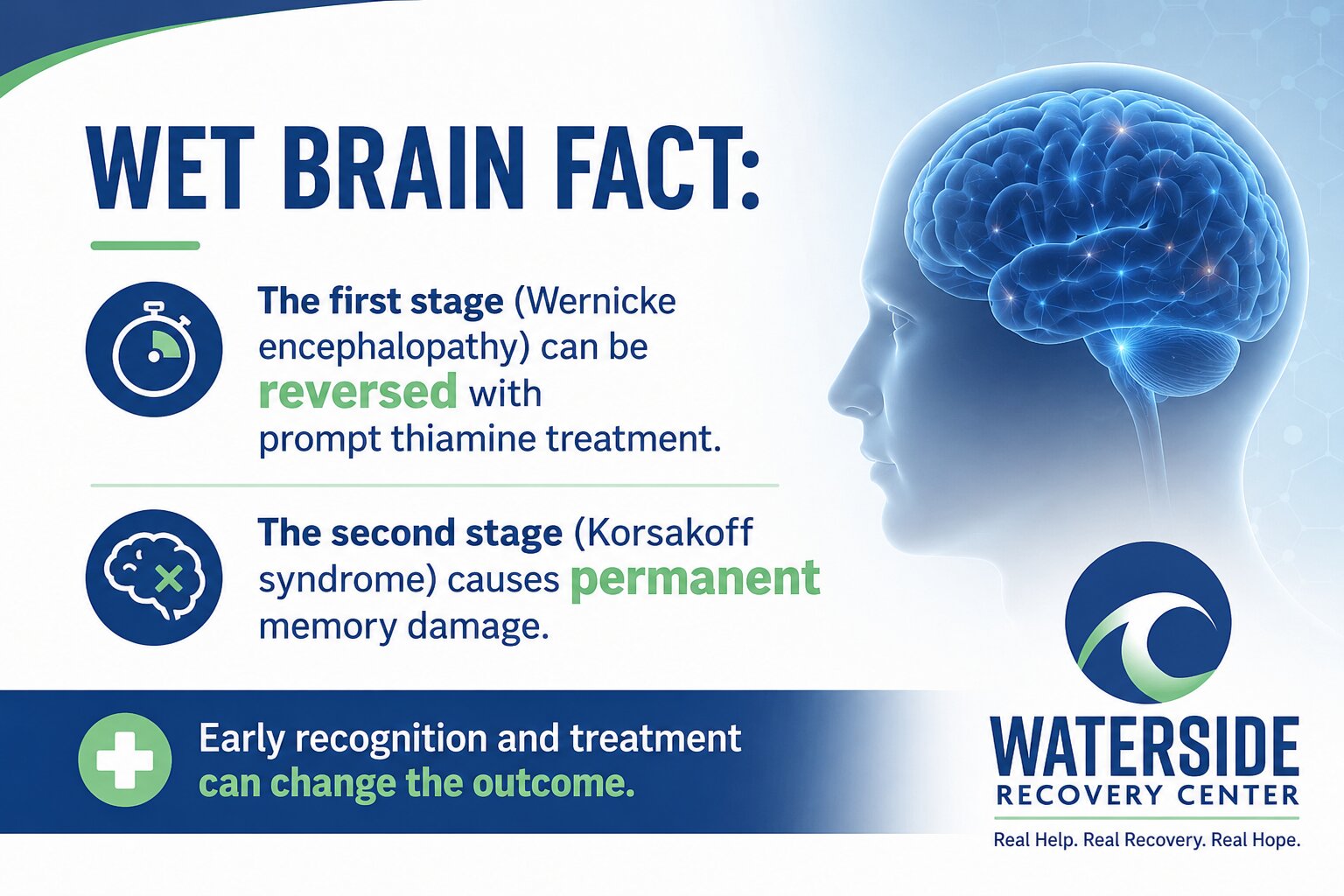
Early recognition matters. The first stage of wet brain is considered a medical emergency that may improve significantly with prompt treatment. Without timely care, it can progress to a second stage where memory damage is often permanent.
What Is Wet Brain?
Wet brain is the common name for Wernicke-Korsakoff syndrome (WKS), a neurological disorder caused by severe thiamine (vitamin B1) deficiency.
Although thiamine deficiency can develop for several reasons, the condition is most commonly associated with long-term heavy alcohol use.
Alcohol contributes to thiamine deficiency in several ways by:
- Reducing thiamine absorption in the digestive tract
- Decreasing the body’s ability to store thiamine
- Interfering with how cells use thiamine
- Contributing to poor nutrition and inadequate vitamin intake
Thiamine is essential for helping brain cells produce energy. Without enough of it, brain tissue becomes damaged, particularly in areas involved in memory, coordination, and thinking.
Importantly, Wernicke-Korsakoff syndrome is not one disease but two closely related conditions that often occur in sequence:
- Wernicke encephalopathy (the acute, potentially reversible stage)
- Korsakoff syndrome (the chronic stage with significant memory impairment)
Recognizing the first stage before it progresses is one of the most important factors influencing recovery.
The Two Stages: Wernicke Encephalopathy → Korsakoff Syndrome
Understanding the two stages of wet brain explains why early medical attention is so important.
Stage 1: Wernicke Encephalopathy
Wernicke encephalopathy is the acute phase of wet brain.
It develops when severe thiamine deficiency begins affecting brain function.
Common symptoms include:
- Confusion
- Disorientation
- Difficulty concentrating
- Abnormal eye movements
- Double vision
- Rapid involuntary eye movements (nystagmus)
- Weakness of the eye muscles (ophthalmoplegia)
- Poor balance
- Difficulty walking (ataxia)
- Problems with coordination
These symptoms can appear suddenly and should be treated as a medical emergency.
One important challenge is that many people do not develop all three classic symptoms—confusion, eye movement abnormalities, and coordination problems.
Because the full triad is often absent, Wernicke encephalopathy may be mistaken for intoxication, alcohol withdrawal, or another neurological condition.
Why Immediate Treatment Matters
When recognized early, Wernicke encephalopathy is potentially reversible.
Treatment generally involves:
- Immediate hospital evaluation
- Intravenous (IV) thiamine
- Nutritional support
- Management of alcohol withdrawal when appropriate
Prompt treatment can significantly improve or resolve many symptoms while preventing progression to the next stage.
Delaying treatment increases the likelihood of permanent brain injury.
Stage 2: Korsakoff Syndrome
If Wernicke encephalopathy is untreated—or treatment occurs too late—it may progress to Korsakoff syndrome.
Unlike the first stage, Korsakoff syndrome is primarily a disorder of memory.
People may experience:
- Severe difficulty forming new memories (anterograde amnesia)
- Loss of previously stored memories (retrograde amnesia)
- Difficulty learning new information
- Confusion about past events
- Problems carrying out everyday activities independently
One of the most distinctive features is confabulation.
Confabulation occurs when someone unknowingly fills memory gaps with inaccurate or invented details.
Importantly, this is not intentional lying.
The individual genuinely believes the information is accurate because the brain is attempting to compensate for missing memories.
Unfortunately, Korsakoff syndrome is considered largely irreversible.
While some people experience partial improvement with abstinence, nutritional support, and rehabilitation, many continue living with permanent memory impairment and may require long-term assistance.
Wet Brain Symptoms
Because Wernicke-Korsakoff syndrome often overlaps during its progression, symptoms may include features of both stages.
Possible wet brain symptoms include:
- Confusion
- Disorientation
- Difficulty paying attention
- Memory loss
- Difficulty forming new memories
- Gaps in past memories
- Confabulation
- Poor balance
- Unsteady walking
- Coordination problems
- Abnormal eye movements
- Double vision
- Apathy or reduced emotional responsiveness
It’s important to recognize that these symptoms should not automatically be dismissed as alcohol intoxication.
Wet brain may develop while someone is:
- Drinking heavily
- Reducing alcohol intake
- Going through withdrawal
- Already abstinent
If a heavy drinker suddenly develops confusion, vision changes, or difficulty walking, emergency medical evaluation is essential.
Is Wet Brain Reversible?
Whether wet brain can be reversed depends almost entirely on which stage has developed.
Wernicke Encephalopathy
The first stage is often reversible if treated quickly.
Early administration of IV thiamine can:
- Improve confusion
- Restore coordination
- Reduce neurological injury
- Prevent progression to Korsakoff syndrome
The sooner treatment begins, the better the chances of recovery.
Korsakoff Syndrome
Once Korsakoff syndrome develops, the outlook changes considerably.
Many individuals experience:
- Persistent memory impairment
- Long-term cognitive difficulties
- Ongoing need for supervision or support
Some improvement is possible with continued abstinence, nutrition, rehabilitation, and medical care, but full recovery is uncommon.
This is why recognizing the earlier Wernicke stage is so critical.
When to Seek Emergency Care
Someone who drinks heavily should receive immediate medical evaluation if they suddenly develop:
- Confusion
- Difficulty walking
- Problems with balance
- Vision changes
- Abnormal eye movements
- Severe memory problems
These symptoms should never be ignored or assumed to be “just drunkenness.”
Prompt treatment may prevent permanent neurological damage.
How Alcohol Treatment Helps
Preventing wet brain begins with addressing the underlying alcohol use disorder while restoring proper nutrition.
Medical detox programs commonly include:
- Careful medical monitoring
- Thiamine supplementation
- Nutritional assessment
- Management of alcohol withdrawal
- Treatment of dehydration and vitamin deficiencies
Beyond detox, comprehensive treatment focuses on helping people build long-term recovery through therapy, education, relapse prevention, and ongoing support.
If you or someone you love has developed health problems related to heavy alcohol use, seeking treatment early can help reduce the risk of serious complications—including Wernicke-Korsakoff syndrome.
Learn more about alcohol addiction treatment at Waterside Recovery, or call (866) 671-8620 to speak with a member of the admissions team. If you’re seeking addiction treatment in Bristol County, MetroWest, or Plymouth County, Waterside Recovery offers personalized care to support lasting recovery.
Frequently Asked Questions
What is wet brain?
Wet brain is the informal name for Wernicke-Korsakoff syndrome, a neurological disorder caused by severe thiamine (vitamin B1) deficiency, most commonly related to chronic heavy alcohol use. It consists of two stages: Wernicke encephalopathy and Korsakoff syndrome.
What are the symptoms of wet brain?
Common symptoms include confusion, memory loss, difficulty forming new memories, poor balance, coordination problems, abnormal eye movements, double vision, disorientation, and confabulation. Symptoms vary depending on whether the condition is in the Wernicke or Korsakoff stage.
Can wet brain be reversed?
The Wernicke encephalopathy stage can often be reversed with prompt treatment using intravenous thiamine and medical care. However, once Korsakoff syndrome develops, memory impairment is frequently permanent, although some people experience partial improvement with long-term treatment and abstinence.