
If you’ve searched for “alcoholic nose,” you may have seen claims that a large, red, bulbous nose is proof that someone drinks heavily. In reality, the truth is more complicated. The condition commonly labeled alcoholic nose is actually called rhinophyma, and it is caused by rosacea—not alcohol itself. However, alcohol can worsen rosacea symptoms in some people, making the relationship more nuanced than a simple myth. If alcohol use has become difficult to control, learning about alcohol addiction treatment can help you understand the support available for lasting recovery.
Understanding the difference between myth and medical fact can reduce unnecessary stigma while helping people recognize when alcohol may still be contributing to skin flare-ups.
What Is Rhinophyma?
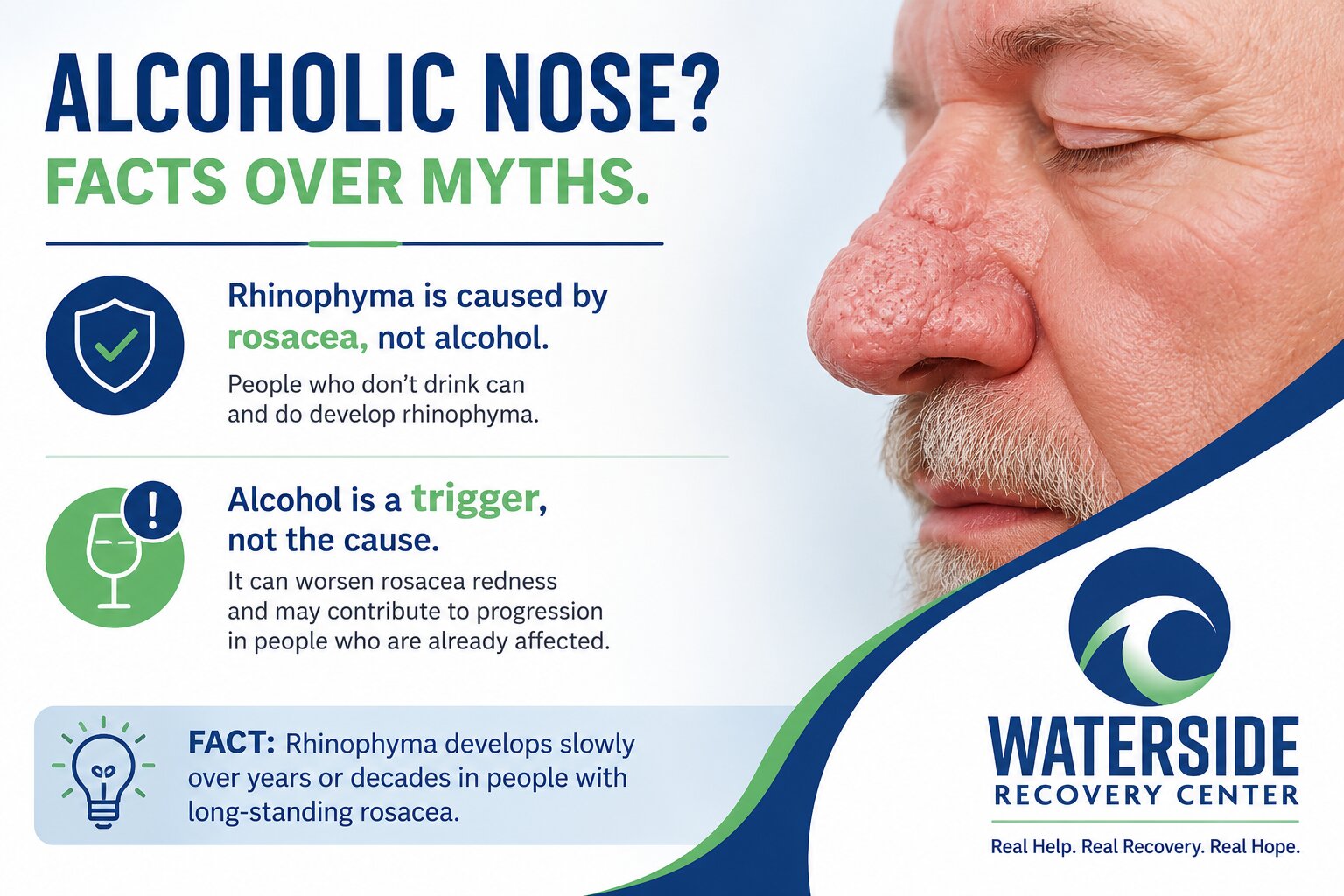
Rhinophyma is the medical term for the enlarged, thickened, and sometimes bumpy nose that is often mistakenly called an “alcoholic nose.”
It is considered an advanced form of rosacea, a chronic inflammatory skin condition that most commonly affects the face.
Rhinophyma develops gradually as the skin on the nose becomes thicker over time.
Common features include:
- Thickened skin on the nose
- Enlarged oil (sebaceous) glands
- Persistent redness
- A bulbous or rounded appearance
- An uneven or bumpy skin texture
- Visible enlarged blood vessels in some cases
The severity varies considerably.
Some people experience only mild thickening, while others develop significant structural changes that alter the shape of the nose.
Unlike sudden skin changes, rhinophyma usually develops slowly over many years or even decades.
Who Is Most at Risk?
Although anyone with rosacea can develop rhinophyma, it is:
- Much more common in men than women
- Usually seen in middle-aged or older adults
- Associated with long-standing, untreated rosacea
Many people with rosacea never develop rhinophyma at all.
The Myth: Does Alcohol Cause Rhinophyma?
The short answer is no.
Despite its nickname, alcohol does not cause rhinophyma.
Rhinophyma develops as a complication of rosacea, not because someone drinks alcohol.
Researchers believe rosacea results from a combination of factors that may include:
- Genetics
- Abnormal inflammatory responses
- Blood vessel dysfunction
- Environmental triggers
- Immune system changes
Alcohol is not considered the underlying cause.
This means:
- People who never drink alcohol can develop rhinophyma.
- Many heavy drinkers never develop rhinophyma.
- The condition is fundamentally a skin disorder—not a sign that someone has alcohol use disorder.
How the Myth Began
The misconception surrounding “drinker’s nose” became especially widespread during the twentieth century.
One reason was the public image of entertainer W.C. Fields, whose enlarged nose was frequently associated with his well-known alcohol use.
Although this association became part of popular culture, medical experts now recognize that rhinophyma is caused by rosacea—not drinking itself.
Historical portrayals helped reinforce a stereotype that continues today, even though the medical evidence does not support it.
Unfortunately, this misconception has caused many people living with rhinophyma to experience embarrassment, stigma, or unfair assumptions about their alcohol use.
What Does Alcohol Actually Do?
Although alcohol doesn’t cause rhinophyma, it can still play an important role for people who already have rosacea.
Alcohol Can Trigger Rosacea Flare-Ups
Alcohol is a well-recognized trigger for facial flushing in many individuals with rosacea.
This happens because alcohol causes vasodilation, meaning blood vessels widen.
As blood vessels expand, facial redness often becomes more noticeable.
For someone with rosacea, drinking alcohol may trigger:
- Facial flushing
- Increased redness
- Warmth
- More visible blood vessels
- Temporary worsening of symptoms
Not everyone with rosacea reacts to alcohol in the same way, but many people notice it as one of several common triggers.
Frequent Flare-Ups May Contribute to Progression
Rosacea is a chronic inflammatory condition.
Repeated inflammation over many years may contribute to worsening skin changes in susceptible individuals.
For someone who already has rosacea, frequent or heavy alcohol use may increase the number of flare-ups, which could potentially contribute to disease progression—including the development or worsening of rhinophyma.
This is the important distinction:
- Alcohol does not cause rhinophyma.
- Alcohol may worsen rosacea symptoms and contribute to progression in people who already have rosacea.
Understanding this nuance helps avoid both misinformation and unnecessary stigma.
Rhinophyma Treatment and Recovery
Treatment depends on how advanced the condition has become.
Managing Rosacea
For people with earlier stages of rosacea, treatment may include:
- Prescription topical medications
- Oral medications when appropriate
- Gentle skin care
- Identifying and avoiding personal triggers
Because triggers vary between individuals, some people benefit from limiting alcohol if they notice it consistently worsens facial flushing.
Other common rosacea triggers may include:
- Sun exposure
- Hot beverages
- Spicy foods
- Heat
- Emotional stress
Working with a dermatologist can help identify which triggers are most relevant.
Treating Advanced Rhinophyma
Once significant tissue thickening develops, medications alone usually cannot reverse the structural changes.
Dermatologists may recommend procedures such as:
- Laser resurfacing
- Dermabrasion
- Electrosurgery
- Surgical reshaping of the nose
These treatments remove excess tissue while improving both appearance and nasal function when necessary.
Addressing Alcohol Use
If alcohol has become difficult to reduce despite worsening rosacea symptoms—or if drinking is affecting other areas of life—professional treatment can help address the underlying patterns of alcohol use.
Reducing or stopping alcohol may decrease rosacea flare frequency while also supporting overall physical and emotional health.
Learn more about alcohol addiction treatment at Waterside Recovery, or call (866) 671-8620 to discuss available treatment options. If you’re seeking addiction treatment in Bristol County, MetroWest, or Plymouth County, Waterside Recovery offers personalized care to support lasting recovery.
Frequently Asked Questions
Does drinking alcohol cause rhinophyma?
No. Rhinophyma is caused by rosacea, not alcohol. However, alcohol can trigger rosacea flare-ups in some people, which may worsen symptoms or contribute to progression over time.
Is rhinophyma reversible?
Early rosacea symptoms can often be managed with medical treatment and lifestyle changes. Once significant tissue thickening develops, rhinophyma generally requires dermatologic procedures such as laser therapy or surgery to improve its appearance.
What are the signs of rhinophyma?
Common signs include a thickened, enlarged, bulbous nose, persistent redness, enlarged oil glands, a bumpy skin texture, and visible blood vessels. These changes usually develop gradually over many years.