
Not long ago, I spoke with a mother who was worried about her 20-year-old son.
He had been doing well for several months, then started drinking again.
Like many parents, she felt heartbroken, frustrated, and scared.
As we talked, she suddenly stopped and laughed softly.
“Honestly,” she said, “I’m spending so much time worrying about him that I haven’t really thought about myself.”
Then she paused.
“I don’t know if this sounds strange, but why do I feel like I need a drink every night just to feel normal?”
There was no judgment in the room.
No dramatic story.
No obvious crisis.
Just a thoughtful, caring person asking an honest question.
It’s a question more people ask than you might imagine.
Many individuals who eventually seek help for alcohol use don’t begin by worrying about how much they’re drinking.
They begin by wondering why alcohol feels so important.
Why it feels necessary.
Why the thought of skipping it feels uncomfortable.
Why evenings suddenly seem harder without it.
If you’ve been asking yourself similar questions, I want you to know that you’re far from alone.
In fact, many people who later explore alcohol addiction treatment services start exactly where you are now—not in crisis, but in curiosity.
When Alcohol Stops Feeling Optional
Most people don’t wake up one morning and decide they need alcohol every night.
The process is usually much quieter.
A drink after a stressful day.
A glass of wine while making dinner.
A beer while watching television.
A cocktail to help unwind.
At first, alcohol feels like a reward.
Something pleasant.
Something relaxing.
Then life becomes busier.
Stress increases.
Responsibilities pile up.
And suddenly alcohol isn’t just enjoyable.
It becomes expected.
This shift is important.
The concern isn’t always how much someone drinks.
It’s whether alcohol has moved from something they enjoy to something they rely on.
Many people don’t notice that transition until they attempt to skip a night and discover they don’t really want to.
Why the Brain Loves Predictable Relief
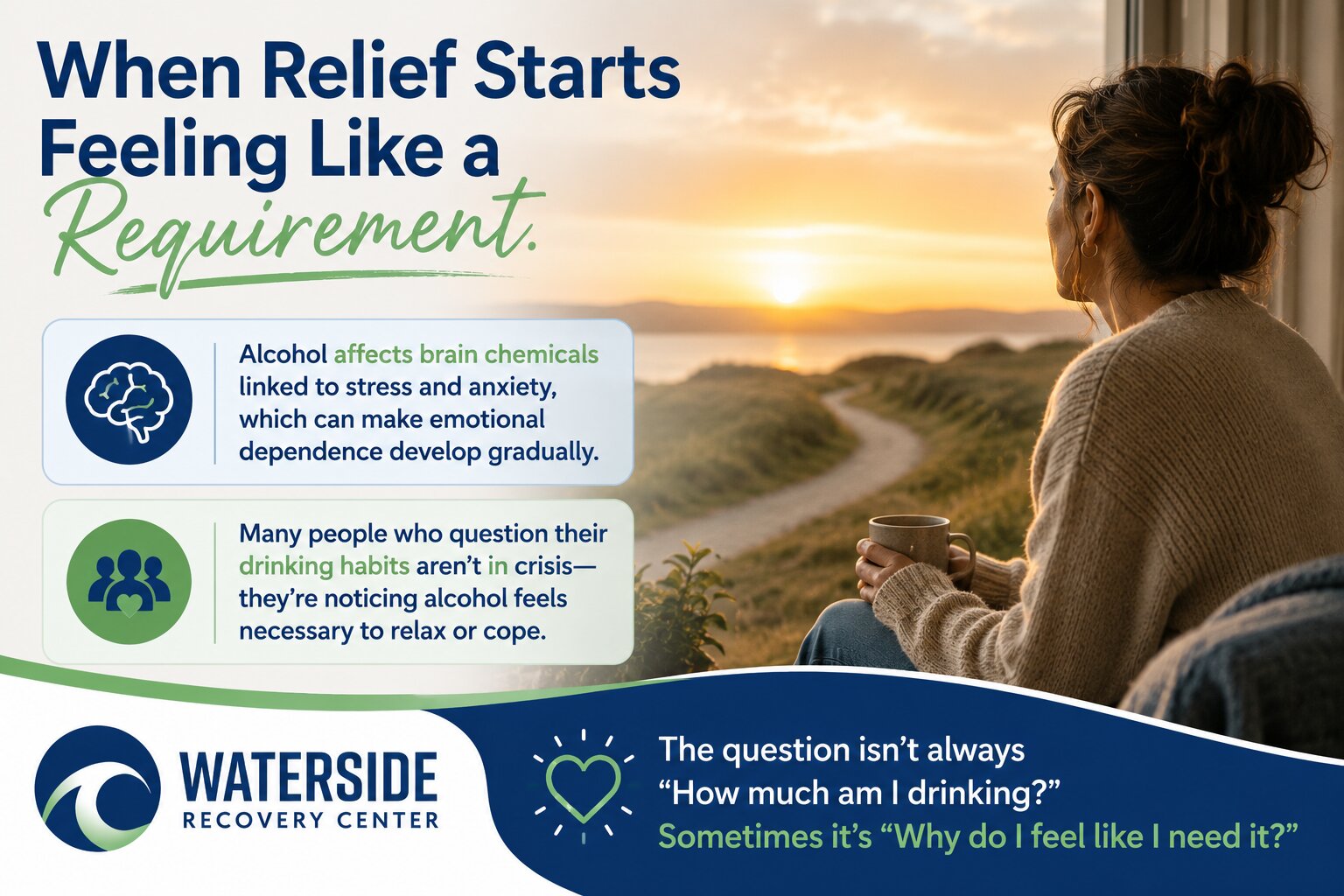
One of the most misunderstood aspects of alcohol use is that it often has less to do with pleasure than people think.
The brain loves relief.
When something consistently reduces discomfort, the brain pays attention.
Imagine you’ve had a difficult day.
You’re overwhelmed.
Tense.
Emotionally exhausted.
Then you have a drink and feel calmer.
The brain notices.
The next evening, the same thing happens.
Then again.
And again.
Eventually the brain starts connecting alcohol with safety, comfort, and relief.
It becomes part of a routine.
Not because you’re weak.
Not because you’re irresponsible.
Because your brain is doing exactly what human brains are designed to do:
Repeat behaviors that reduce discomfort.
The problem is that over time the line between relief and dependence can become blurry.
Why This Pattern Often Shows Up in Parents
Parents carry a unique kind of stress.
Even when children become adults, the worrying rarely stops.
If anything, it sometimes becomes more complicated.
You worry about their decisions.
Their relationships.
Their future.
Their health.
Their happiness.
Parents of young adults struggling with alcohol or drug use often carry an especially heavy burden.
Many spend years operating in a state of constant vigilance.
Waiting for the next phone call.
The next setback.
The next sign that something is wrong.
That level of stress can be exhausting.
And exhaustion tends to seek relief.
Sometimes that relief looks like scrolling on a phone.
Sometimes it looks like overeating.
Sometimes it looks like alcohol.
The coping mechanism itself isn’t always the issue.
The question is whether it has become the primary way you’re managing difficult emotions.
The Difference Between Habit and Dependence
People often ask me:
“How do I know if this is just a habit?”
The answer isn’t always found in the amount you’re drinking.
It’s often found in your reaction when you can’t drink.
Consider these questions:
Do you feel irritated when alcohol isn’t available?
Do you think about drinking throughout the day?
Do evenings feel incomplete without it?
Do you struggle to relax in other ways?
Do you feel anxious at the thought of taking a break?
The more “yes” answers someone gives, the more important it becomes to explore the role alcohol is playing.
Dependence often develops emotionally before people recognize it physically.
Why Evening Drinking Feels Different
There is a reason this pattern tends to emerge after sunset.
Daytime provides structure.
Work keeps you occupied.
Tasks require attention.
Responsibilities create momentum.
Then evening arrives.
The house becomes quiet.
The emails stop.
The distractions disappear.
What’s left is often the emotional residue of the day.
Stress.
Loneliness.
Worry.
Disappointment.
Fear.
For some people, alcohol becomes a shortcut past those feelings.
The challenge is that shortcuts don’t teach us how to travel the road.
They simply help us avoid it temporarily.
Over time, the emotions remain while the dependence grows.
Sometimes the Real Question Is Hidden Beneath the Surface
One thing I’ve learned as a clinician is that people often ask one question when they’re really struggling with another.
Someone may ask:
“Why do I need a drink every night?”
But beneath that question might be:
“Why am I so stressed all the time?”
“Why do I feel overwhelmed?”
“Why can’t I relax?”
“Why am I carrying so much anxiety?”
“Why am I so lonely even when people are around me?”
Alcohol frequently becomes a solution to a problem that hasn’t been clearly identified.
That’s why understanding the underlying issue matters so much.
If stress is the problem, alcohol may temporarily help.
If loneliness is the problem, alcohol may temporarily distract.
If anxiety is the problem, alcohol may temporarily numb.
But temporary relief and long-term healing are not the same thing.
The Moment Many People Start Paying Attention
For some people, awareness arrives gradually.
For others, it arrives all at once.
Maybe it’s noticing you pour a larger drink than you used to.
Maybe it’s realizing you’ve consumed alcohol every night for months.
Maybe it’s seeing someone else’s struggle and recognizing part of yourself in it.
I’ve worked with many parents who began researching addiction because of their child and accidentally discovered concerns about their own drinking habits.
That realization can feel uncomfortable.
But awareness is not something to fear.
Awareness is the beginning of change.
You cannot address a pattern you don’t recognize.
What If You Feel Like You Can’t Stop?
One of the most common online searches people make is some variation of can’t stop drinking at night.
Most aren’t looking for a diagnosis.
They’re looking for reassurance.
They want to know whether anyone else feels trapped in the same cycle.
The answer is yes.
Many people experience this.
And many people successfully change it.
The key is understanding that needing support does not mean you’ve failed.
In fact, asking questions is often a sign of strength.
You’re paying attention.
You’re being honest.
You’re considering alternatives.
Those are all positive signs.
Change Usually Starts Smaller Than People Expect
People often imagine recovery beginning with a dramatic decision.
A declaration.
A life-changing moment.
In reality, change often starts much smaller.
A conversation.
A journal entry.
A week without alcohol.
A phone call.
An honest discussion with a professional.
A willingness to ask, “What else might help me feel okay?”
That curiosity is powerful.
Because curiosity creates movement.
And movement creates possibility.
There Is Hope in the Question
One thing I want you to remember is this:
People who feel completely comfortable with their relationship to alcohol rarely spend time wondering why they need it.
The fact that you’re asking questions matters.
The fact that you’re paying attention matters.
The fact that you’re curious matters.
You don’t need to wait until life becomes unmanageable.
You don’t need to compare yourself to someone whose situation looks worse.
You don’t need to prove that your struggle is serious enough.
You only need to be honest about what you’re experiencing.
That honesty can become the first step toward something healthier.
For individuals exploring treatment options in areas we serve or seeking care in areas we serve, support may be available long before alcohol creates a major crisis.
Frequently Asked Questions
Why do I feel like I need alcohol to relax?
Alcohol can temporarily reduce stress and anxiety, causing the brain to associate it with relief. Over time, this association can make relaxation feel difficult without drinking.
Is it normal to drink every night?
Many people drink regularly, but if alcohol feels necessary rather than optional, it’s worth exploring why the pattern has developed.
Does needing a drink every evening mean I’m an alcoholic?
Not necessarily. However, feeling emotionally dependent on alcohol for relaxation, comfort, or stress relief may indicate an unhealthy relationship with drinking.
Why does evening drinking become a habit so quickly?
Evenings are often when stress, fatigue, loneliness, and anxiety become more noticeable. Alcohol can provide temporary relief, making the habit easier to repeat.
What if I only drink wine or beer?
The type of alcohol matters less than the role it plays in your life. Any form of alcohol can become emotionally significant if it’s consistently used to manage feelings.
How can I tell if my drinking is becoming a problem?
Signs may include thinking about alcohol frequently, feeling uncomfortable when you can’t drink, increasing consumption, or relying on alcohol to cope with emotions.
Should I be concerned if I can’t imagine relaxing without alcohol?
That can be an important signal that alcohol has become closely tied to emotional regulation and stress management.
When should I seek professional help?
If alcohol is affecting your mood, relationships, sleep, health, or ability to feel in control of your choices, professional support may be helpful.
Call (866) 671-8620 or visit our alcohol addiction treatment services to learn more about our treatment, alcohol addiction treatment services in Bristol County, MA.