A mother sat across from me recently, exhausted in a way that sleep couldn’t fix.
Her 22-year-old son was in the middle of a behavioral health crisis. For months she had been operating in survival mode.
Answering phone calls.
Watching for warning signs.
Trying to stay hopeful.
Trying not to panic.
Trying to hold her family together.
At one point in our conversation, she stopped talking about her son and started talking about herself.
“I don’t know what’s happening,” she said. “I spend all day feeling anxious. Then every night I end up drinking more than I planned.”
She looked embarrassed.
Not because anyone had accused her of having a drinking problem.
Because she genuinely didn’t understand why the same thing kept happening.
If you’ve found yourself in a similar cycle, I want you to know something important:
You are not alone.
And you are not failing.
Many people who struggle with anxiety eventually discover that alcohol has become part of how they cope. They aren’t trying to get drunk. They aren’t trying to lose control.
They’re trying to feel okay.
They’re trying to get a break from the constant pressure inside their own minds.
For many people who later explore dual diagnosis services, the journey begins with a simple question:
“Why does this keep happening?”
The answer is often more understandable than they expect.
When Anxiety Becomes a Full-Time Job
Most people think anxiety is just worry.
In reality, anxiety can be exhausting.
It can feel like carrying an invisible backpack full of rocks.
Every thought weighs a little more.
Every decision takes a little more energy.
Every uncertainty feels bigger than it should.
Parents dealing with a child’s behavioral health crisis often know this feeling intimately.
They wake up worried.
They spend the day worried.
They go to bed worried.
Even during moments when nothing is technically wrong, their nervous system remains on high alert.
The brain starts acting like danger is always around the corner.
That level of vigilance is exhausting.
And exhausted people naturally look for relief.
Why Alcohol Feels Like It Works
One reason people become trapped in this cycle is because alcohol often delivers exactly what they’re looking for.
At least temporarily.
After a stressful day, alcohol can create a sense of calm.
Thoughts slow down.
Physical tension decreases.
Emotions feel less intense.
The mind finally gets quiet.
For someone who has spent twelve hours feeling overwhelmed, that relief can feel almost magical.
The brain notices.
It remembers.
And it starts creating a connection:
Stress → Drink → Relief
Anxiety → Drink → Relief
Over time, those connections become stronger.
Eventually the urge to drink can feel automatic.
Not because someone lacks discipline.
Because their brain has learned a shortcut to feeling better.
The Problem With Shortcuts
The challenge is that shortcuts don’t always lead where we think they will.
Imagine putting a bucket under a leaking ceiling.
At first, it seems like a solution.
Water stops hitting the floor.
The problem feels managed.
But the leak itself remains.
Eventually the bucket fills up.
The water overflows.
The damage continues.
Alcohol often works the same way.
It may temporarily reduce anxiety.
But it doesn’t resolve whatever is creating that anxiety.
In some cases, it actually makes it worse.
The next morning, the worries are still there.
The stress is still there.
The emotional burden is still there.
Now there may also be poor sleep, physical discomfort, regret, or frustration.
The result?
Even more anxiety.
Which creates an even stronger desire to drink later.
Why Anxiety and Drinking Often Become Connected
Many people are surprised to learn how common the relationship between anxiety and alcohol use actually is.
They assume they’re the only ones struggling with it.
They’re not.
In fact, mental health challenges and substance use frequently influence one another.
Anxiety can increase the desire to drink.
Drinking can increase anxiety.
One problem fuels the other.
Then the cycle starts feeding itself.
We’ve worked with countless individuals who initially believed they had a drinking problem, only to discover anxiety was playing a major role.
We’ve also worked with people who thought anxiety was the only issue, only to realize alcohol had become part of what was keeping them stuck.
That’s why understanding both sides of the equation matters.
The Signs People Often Miss
One reason this pattern becomes difficult to recognize is because it doesn’t always look dramatic.
Many people continue functioning.
They go to work.
Take care of their families.
Show up for responsibilities.
From the outside, everything appears fine.
But internally, they may notice things like:
Thinking about drinking earlier in the day.
Feeling disappointed if alcohol isn’t available.
Increasing the amount they drink over time.
Struggling to relax without alcohol.
Using alcohol to help them sleep.
Feeling anxious about the idea of not drinking.
These experiences don’t automatically mean someone has alcohol use disorder.
But they do suggest that alcohol may be playing a larger role than intended.
And that’s worth paying attention to.
Why Parents Are Especially Vulnerable
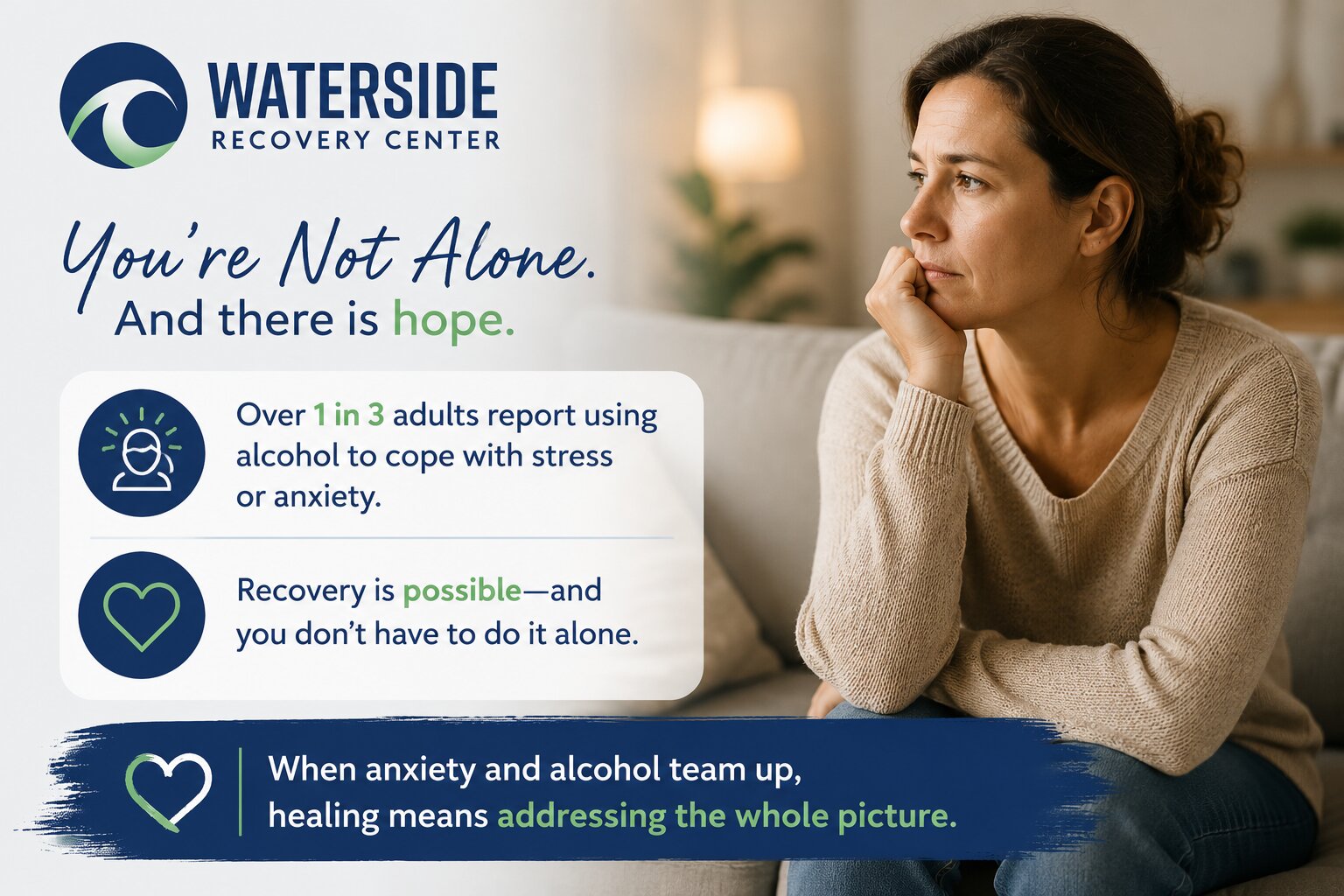
Parents often spend so much time caring for everyone else that they forget to check in with themselves.
When a child is struggling, self-care usually moves to the bottom of the list.
The focus becomes survival.
Parents learn to tolerate enormous amounts of stress.
They carry fears they rarely talk about.
They lose sleep.
They remain constantly alert.
Over time, many begin searching for something—anything—that helps them unwind.
For some people, alcohol becomes that thing.
Not because they’re irresponsible.
Not because they’re weak.
Because they are tired.
Emotionally tired.
Mentally tired.
Physically tired.
And relief feels desperately needed.
Why This Doesn’t Mean You’re Broken
This is one of the most important points I can make.
People often interpret this cycle as evidence that something is wrong with them.
That’s usually not true.
Your brain is designed to seek relief.
That’s what brains do.
When something consistently reduces discomfort, the brain remembers.
It encourages repetition.
That process is not a character flaw.
It’s human biology.
The real question isn’t:
“Why am I so weak?”
The better question is:
“What is my anxiety trying to tell me?”
That shift changes everything.
Because once you stop judging yourself, you can start understanding yourself.
And understanding creates opportunities for change.
What Healing Often Looks Like
Many people assume healing means simply drinking less.
Sometimes it’s more complicated than that.
Meaningful change often begins by understanding the anxiety itself.
Where is it coming from?
What keeps it going?
What needs aren’t being met?
What stressors have become overwhelming?
What emotions are being avoided?
Alcohol is often the visible part of the problem.
The anxiety underneath it is frequently where the deeper work begins.
When people start addressing both, they often discover that they no longer need alcohol in the same way they once did.
Not because someone forced them to stop.
Because the reason they were relying on it begins changing.
The Question Itself Is a Positive Sign
If you’ve searched for answers about anxiety and drinking, that’s meaningful.
The question itself matters.
People who never reflect on their habits rarely ask why they’re happening.
Awareness often comes before change.
Curiosity often comes before healing.
You don’t need to have everything figured out today.
You don’t need a diagnosis.
You don’t need certainty.
You simply need a willingness to explore what’s happening.
That’s where many recovery stories begin.
Not with confidence.
With curiosity.
For individuals seeking treatment options in areas we serve or looking for help in areas we serve, support may be available before anxiety and alcohol create larger problems.
Frequently Asked Questions
Why do I become more anxious later in the day?
Stress, emotional fatigue, and accumulated worries often build throughout the day, making anxiety feel stronger during the evening hours.
Why does alcohol seem to calm me down?
Alcohol can temporarily slow activity in the nervous system, creating a short-lived feeling of relaxation and relief from anxiety.
Can anxiety cause me to drink more than I intended?
Yes. Many people use alcohol to reduce anxious feelings, which can make it difficult to stop once they start drinking.
Is it common for anxiety and drinking to be connected?
Very common. Many individuals struggling with anxiety use alcohol as a coping tool, even if they don’t initially recognize the connection.
Does this mean I have an alcohol problem?
Not necessarily. However, if alcohol feels like your primary method for managing anxiety, it’s worth paying attention to that pattern.
Why do I keep repeating the same cycle?
Because alcohol may be providing temporary relief. The brain learns to associate drinking with feeling better, reinforcing the behavior.
Can treating anxiety help reduce drinking?
For many people, yes. When anxiety becomes more manageable, the urge to use alcohol as a coping strategy often decreases.
When should I seek professional help?
If anxiety, alcohol use, or both are affecting your relationships, sleep, emotional well-being, health, or daily functioning, professional support may be beneficial.
Call (866) 671-8620 or visit our dual diagnosis services to learn more about our treatment, dual diagnosis services in Plymouth, MA.