
For many people, drinking after work begins with one simple goal: to relax.
A drink helps the stress fade. Another makes it easier to stop thinking about work. Before long, what started as an occasional habit becomes part of every weekday. You leave the office already thinking about what you’ll drink when you get home. If something delays that first drink, you feel irritated, restless, or anxious.
If you’ve searched, “I keep getting hammered after work every day. How do I stop without checking into rehab?” you may already know something needs to change. What you may not know is how to make that change without putting your entire life on hold.
Many people hesitate to seek help because they believe treatment only means disappearing into a live-in facility for weeks or months. That belief keeps countless people stuck longer than they need to be.
The reality is that there are different paths toward recovery. Many people begin by exploring structured daytime care that allows them to continue living at home while receiving professional support several days each week.
If you’ve tried to stop before and didn’t succeed, this article is for you.
Not to judge you.
Not to scare you.
Simply to remind you that there may be more options than you’ve allowed yourself to believe.
The After-Work Routine Can Become Stronger Than You Realize
Most people don’t decide to become dependent on alcohol.
Instead, they create a routine.
You finish work.
You drive home.
You stop at the same liquor store.
You pour the same drink.
You sit in the same chair.
After repeating that routine hundreds of times, your brain begins expecting alcohol before you even get home.
That’s why cravings often start before you’ve had your first sip.
This isn’t because you lack willpower.
It’s because your brain has built a powerful association between finishing work and drinking.
Stress becomes the trigger.
Driving home becomes the cue.
Alcohol becomes the reward.
The encouraging news is that routines can be changed.
Not overnight.
But one small decision at a time.
You Don’t Need to Lose Everything Before You Ask for Help
One of the most damaging myths surrounding alcohol use is the belief that you have to “hit rock bottom.”
As a clinician, I’ve met people who owned businesses, raised families, and maintained successful careers while quietly drinking every evening.
From the outside, everything appeared fine.
Inside, they were exhausted.
Every morning began with regret.
Every afternoon ended with negotiations.
“Maybe I’ll skip tonight.”
“Only two drinks.”
“Just on weekdays.”
Then the cycle repeated.
If this sounds familiar, please know something important:
Needing support doesn’t mean you’ve failed.
It means you’ve recognized that what you’ve been doing is no longer working.
You don’t have to wait until your health suffers.
You don’t have to lose your marriage.
You don’t have to receive a DUI.
The best time to ask for help is when you realize your life could be healthier—not when it becomes impossible to ignore.
Why Quitting on Willpower Alone Often Doesn’t Last
Many people believe stopping drinking should simply be a matter of determination.
If only it were that simple.
Alcohol often becomes connected to much more than the drink itself.
It becomes connected to:
- Stress after work
- Anxiety
- Loneliness
- Burnout
- Depression
- Difficulty sleeping
- Social habits
- Emotional avoidance
Removing alcohol without replacing those coping strategies can leave people feeling overwhelmed.
That’s one reason so many people successfully stop for several days or weeks before returning to old habits.
The problem usually isn’t a lack of motivation.
The problem is that alcohol was solving a problem—even if only temporarily.
Understanding what it was helping you escape is often where lasting recovery begins.
Focus on Changing One Hour Instead of Your Entire Future
Thinking about never drinking again can feel overwhelming.
Thinking about getting through tonight is much more manageable.
Instead of asking yourself how you’ll stay sober forever, ask:
“What can I do differently between 5:00 PM and 6:00 PM?”
That single hour often determines how the rest of the evening unfolds.
You might:
- Call someone before leaving work.
- Eat dinner earlier instead of drinking on an empty stomach.
- Take a different route home.
- Go for a walk before entering your house.
- Attend a support meeting.
- Schedule an appointment during the hours you normally drink.
- Remove alcohol from your home.
These actions may sound simple.
Simple doesn’t mean easy.
But consistency often matters more than dramatic change.
Think of recovery like steering a ship.
A tiny adjustment to the wheel may seem insignificant today, but over time it leads to an entirely different destination.
If You Left Treatment Before, That Doesn’t Mean It Can’t Help Now
Many people stop attending treatment before they planned to.
Life gets busy.
Work becomes demanding.
Embarrassment creeps in.
Sometimes people feel better for a few weeks and convince themselves they no longer need support.
Then drinking slowly returns.
I’ve spoken with many individuals who disappeared midway through treatment only to come back months later.
Almost every one of them believed they had failed.
They hadn’t.
They had simply learned that recovery is rarely a straight line.
One gentleman shared that after leaving treatment, he kept hearing one sentence his counselor had repeated:
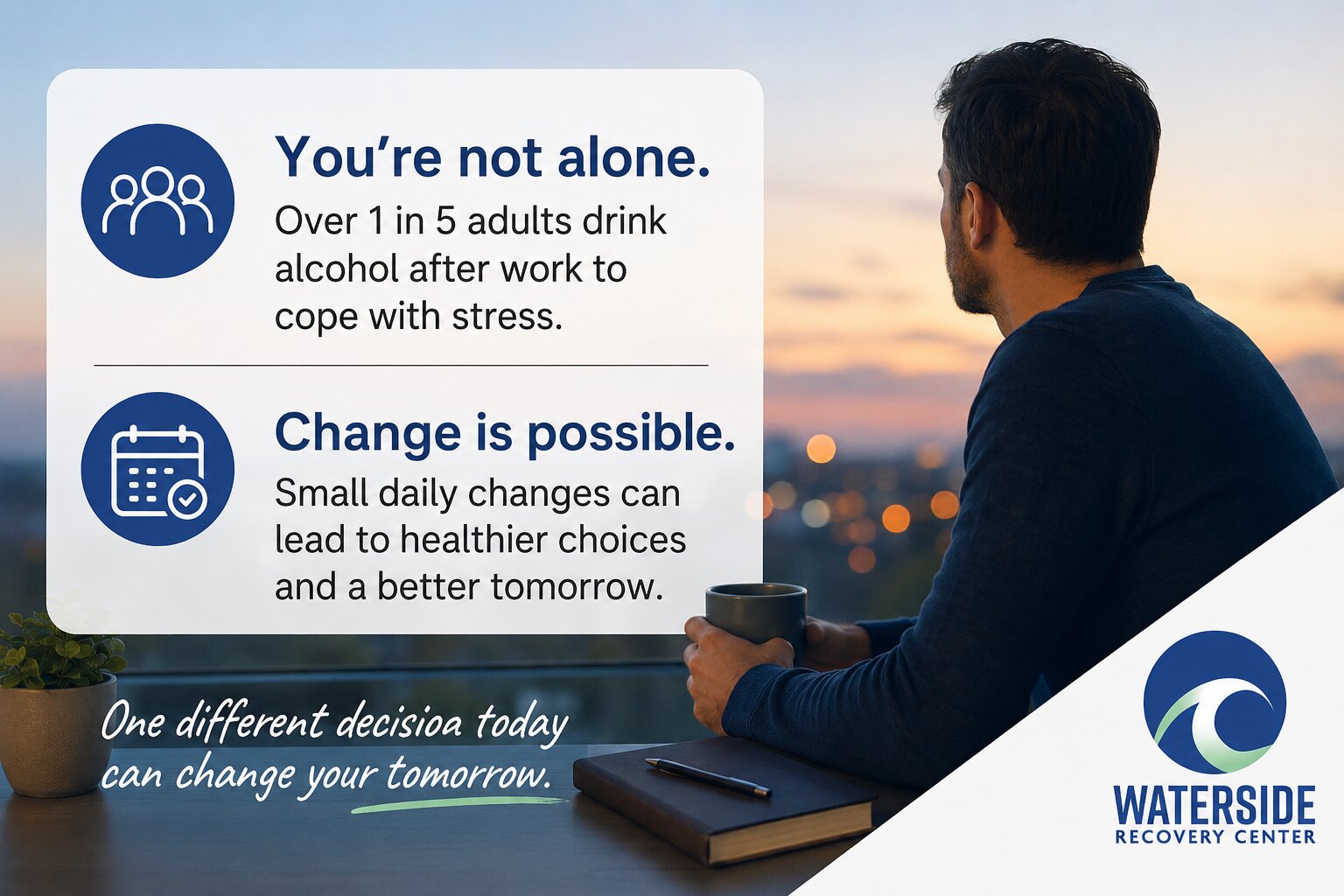
“You don’t have to believe you’ll stay sober forever. Just believe you can make one different decision today.”
Months later, that sentence helped him return.
He began attending appointments again.
He rebuilt trust with his family.
Most importantly, he stopped measuring success by perfection.
He measured it by progress.
That shift changed everything.
There Are Options Between Doing Nothing and Live-In Treatment
One reason people delay getting help is because they assume the only choices are:
- Continue drinking.
- Enter residential rehab.
There is often another option.
Many people explore addiction help without rehab because they need more support than trying alone but don’t require round-the-clock care.
Programs that meet several days each week can provide counseling, relapse prevention, coping skills, accountability, and peer support while allowing people to continue working, caring for family, and sleeping in their own beds.
For someone who drinks every evening after work, this type of structured support can provide enough consistency to interrupt the routine before it becomes another automatic week.
If you’re looking for support in Worcester or help in Framingham, know that professional guidance may be available closer to home than you realize.
Recovery Doesn’t Begin With Confidence
Many people believe they need to feel ready before asking for help.
The truth is almost the opposite.
Most people begin treatment feeling uncertain.
Scared.
Embarrassed.
Skeptical.
Hope often arrives later.
Recovery usually begins with one quiet decision:
“I don’t want tomorrow to look exactly like today.”
That’s enough.
You don’t need to have every answer.
You don’t need to promise you’ll never drink again.
You only need to become curious about whether life could feel different.
That curiosity has started thousands of recovery journeys.
Yours can begin there, too.
Frequently Asked Questions
Is drinking every day after work considered a problem?
Daily drinking isn’t automatically the same for everyone, but if alcohol feels difficult to control, affects your health, relationships, sleep, finances, or mood, or you’ve repeatedly tried to stop without success, it may be time to speak with a professional.
Can I stop drinking without checking into rehab?
Yes. Some people benefit from residential treatment, while others make meaningful progress through structured outpatient services that allow them to continue living at home. The right approach depends on your individual circumstances and safety needs.
Why do I only crave alcohol after work?
After-work cravings often develop because your brain associates the end of the workday with relief. Over time, this routine becomes automatic, but with support and new coping strategies, those patterns can change.
What if I’ve already tried to quit several times?
Many people require multiple attempts before achieving lasting recovery. Previous attempts aren’t proof that you can’t change—they often help identify triggers and show where additional support may be beneficial.
Do I have to hit rock bottom before getting help?
No. Seeking support early often prevents alcohol use from creating more serious consequences. You deserve help because your life matters today, not because you’ve reached a crisis.
What can I do tonight instead of drinking?
Try interrupting your normal routine. Call a trusted friend, eat dinner before heading home, exercise, attend a support meeting, or schedule another activity during the hour you usually begin drinking. Even one different decision can begin changing the pattern.
Every evening doesn’t have to end the same way. If you’re ready to explore a different path, call 866-671-8620 or visit our IOP services to learn more about our IOP services Plymouth, MA.