
I remember sitting alone late one night, scrolling through treatment websites and closing them almost as quickly as I opened them.
Not because I didn’t think I needed help.
Because I wasn’t sure I believed in it anymore.
I had already tried to stop before. I had made promises to myself. I had gone through miserable days of withdrawal. I had convinced myself that this time would be different.
Then it wasn’t.
So when people told me to get treatment, I didn’t immediately feel hopeful. I felt skeptical.
If you’re reading this, there’s a good chance you’re carrying some of that same skepticism. Maybe you’re searching because fentanyl has become harder to manage. Maybe someone you love keeps asking you to get help. Maybe you’re wondering whether treatment is actually worth it if you’ve already struggled before.
What I discovered is that many people don’t stay stuck because they don’t want recovery.
They stay stuck because they aren’t sure what comes first.
For many people exploring drug treatment services, that uncertainty becomes a major obstacle.
Most People Aren’t Afraid of Treatment
They’re afraid of disappointment.
That distinction matters.
When you’ve tried to quit before, the fear changes.
You stop worrying about whether treatment exists and start worrying about whether it will work for you.
You begin asking questions like:
“What if I go through all of this and end up using again?”
“What if I’m wasting everyone’s time?”
“What if nothing changes?”
Those questions can feel overwhelming.
But here’s something I’ve learned from talking to people in recovery:
Most people who eventually get better had those exact same doubts.
The difference wasn’t confidence.
The difference was taking action despite uncertainty.
The Search for the Perfect Answer Can Become a Trap
When fentanyl is involved, people often spend weeks or months researching every possible scenario.
They compare programs.
They read reviews.
They watch videos.
They ask strangers online for advice.
They try to gather enough information to eliminate risk.
I understand why.
The problem is that recovery doesn’t come with guarantees.
No article can tell you exactly how your experience will unfold.
No website can promise that you’ll never struggle again.
At some point, research stops being preparation and starts becoming avoidance.
I know because I lived there.
I kept searching for the answer that would make me feel completely certain.
That answer never arrived.
Why People Ask About the First Step So Often
One reason people search about detox before rehab fentanyl is because they’re trying to understand the sequence.
They want to know whether they’re supposed to quit on their own first.
Whether they need medical support.
Whether treatment begins immediately.
Whether they can handle what comes next.
Those are reasonable concerns.
The important thing to remember is that you don’t need to know everything about recovery before reaching out.
You don’t need a five-year plan.
You don’t need every future decision figured out.
You only need enough information to take the next step.
Recovery rarely starts with certainty.
It usually starts with curiosity.
Fentanyl Changes the Conversation
Many substances allow people to maintain the illusion that things are under control.
Fentanyl has a way of stripping away that illusion.
People often tell themselves they’ll stop next week.
Then next week becomes next month.
Then next month becomes next year.
Meanwhile, the risk continues growing.
Relationships become strained.
Finances suffer.
Physical health changes.
Mental health often becomes harder to manage.
The scary part is that these changes don’t always happen dramatically.
Sometimes they happen quietly.
Like water slowly wearing away stone.
One day you look around and realize life feels smaller than it used to.
Treatment Didn’t Fail Because You Struggled
This might be the most important thing in this article.
If you’ve been to treatment before and returned to fentanyl use, that does not automatically mean treatment failed.
People often treat relapse like a final verdict.
It isn’t.
Recovery is rarely a straight line.
Many people who now have years of sobriety experienced setbacks along the way.
Some returned to treatment.
Some needed additional support.
Some learned things from their first attempt that became crucial later.
A relapse can be painful.
It can be discouraging.
But it does not erase progress.
It doesn’t erase what you learned.
And it certainly doesn’t erase the possibility of a different future.
The Weight of Carrying It Alone
One thing I didn’t expect was how exhausting secrecy would become.
Keeping track of excuses.
Managing appearances.
Trying to convince other people everything was fine.
Trying to convince myself everything was fine.
Eventually it felt like carrying a backpack filled with bricks.
Every day added another one.
If you’re exhausted, that doesn’t mean you’re weak.
It means you’ve been carrying something heavy for a long time.
Seeking help isn’t giving up.
It’s setting the backpack down.
For people exploring treatment options, learning about support available in areas we serve can be one way to begin understanding what resources exist nearby.
You Don’t Need to Feel Ready
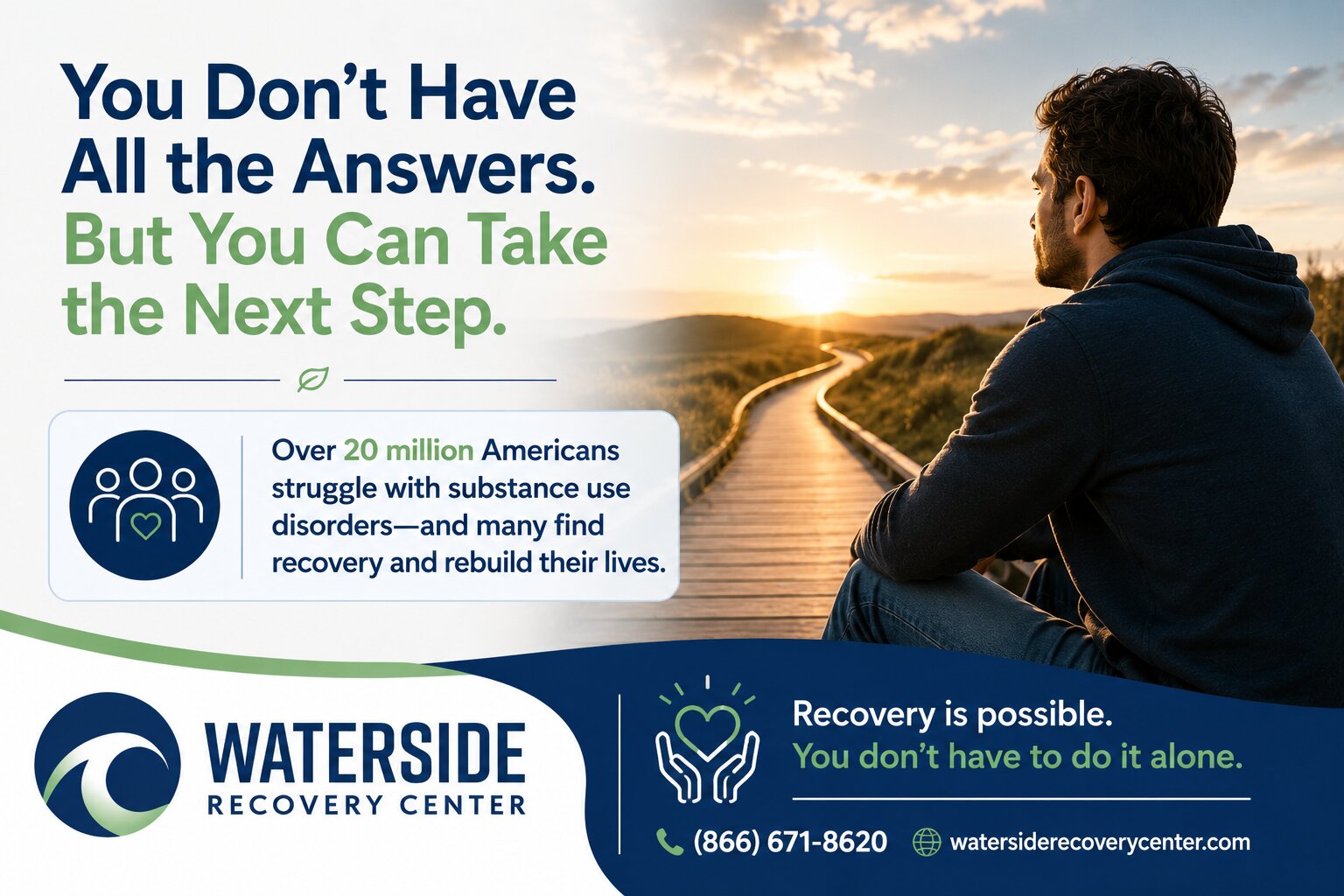
This is where many people get stuck.
They assume readiness comes first.
Then action.
But for many people, it’s the opposite.
Action creates readiness.
The phone call happens while you’re still scared.
The conversation happens while you’re still skeptical.
The appointment gets scheduled while you’re still uncertain.
Waiting to feel perfectly prepared often means waiting forever.
Nobody reaches a magical moment where all fear disappears.
Most people simply reach a point where staying the same feels harder than changing.
That’s enough.
More than enough.
Recovery Often Begins With One Honest Moment
Not a dramatic speech.
Not a life-changing revelation.
Just honesty.
Maybe it’s admitting you’re tired.
Maybe it’s admitting you’ve lost control.
Maybe it’s admitting that whatever you’ve been trying isn’t working anymore.
That honesty can feel uncomfortable.
But it’s also powerful.
Because once you stop spending energy pretending, you can start spending energy healing.
For individuals looking at treatment options in communities we serve, that first honest conversation often becomes the beginning of something much larger.
The Future Doesn’t Have to Be Perfect
One mistake I made was believing recovery needed to solve every problem immediately.
It doesn’t.
Recovery doesn’t guarantee a perfect life.
It doesn’t eliminate stress.
It doesn’t erase past mistakes.
What it can do is give you a chance to respond to life differently.
A chance to rebuild trust.
A chance to reconnect with people you care about.
A chance to wake up without wondering how you’re going to make it through another day.
That’s not perfection.
But it’s meaningful.
And sometimes meaningful is exactly what people need.
You Are Allowed to Try Again
If nobody has told you this recently, let me be the one to say it.
You are allowed to try again.
Even if you’ve struggled before.
Even if people are frustrated.
Even if you’re frustrated with yourself.
You don’t have to earn another opportunity.
You don’t have to prove you’re worthy of help.
You don’t have to wait until things get worse.
The fact that you’re searching for answers right now means part of you still believes things can improve.
Listen to that part.
It’s probably wiser than you think.
FAQs
Do I have to stop using fentanyl before reaching out for help?
No. Many people reach out while they are still actively using. Treatment professionals can help determine what level of support may be appropriate based on your situation.
What if I’ve already been through treatment before?
Previous treatment does not disqualify you from getting help again. Many people require multiple attempts before finding a recovery path that works for them.
Is it normal to feel skeptical about treatment?
Yes. Many people entering treatment are uncertain, frustrated, or doubtful. Skepticism is common, especially among individuals who have struggled with recovery in the past.
How do I know if I need more support?
If fentanyl use is affecting your relationships, work, health, finances, or daily life, it may be worth speaking with a professional about available treatment options.
What if I’m afraid of withdrawal?
Fear of withdrawal is extremely common. Reaching out for professional guidance can help you better understand your options and what support may be available.
Is it too late for me to get help?
No. As long as you’re still here and willing to consider change, it is not too late to take a different path.
Call (866) 671-8620 or visit our drug treatment services to learn more about our treatment, drug treatment services in MetroWest, Massachusetts.