
A speedball is one of the most dangerous combinations of drugs because it mixes a powerful stimulant with a powerful opioid. The greatest danger isn’t simply that both drugs are harmful—it’s that cocaine can temporarily mask the warning signs of an opioid overdose until breathing slows or stops. If you or someone you love is struggling with cocaine use, learning about cocaine addiction treatment can help you understand what recovery may involve and what treatment options are available.
Many people have heard the term speedball because it has been linked to several high-profile overdose deaths, including those of John Belushi, Chris Farley, and River Phoenix. While every case involved different circumstances, these tragedies helped bring public attention to the unique dangers of combining stimulants and opioids.
Understanding how a speedball works helps explain why this combination carries such a high risk of fatal overdose.
What Is a Speedball?
A speedball is the combination of a stimulant, most commonly cocaine, with an opioid, traditionally heroin.
The classic speedball contains:
- Cocaine
- Heroin
Today, however, heroin has increasingly been replaced in many illicit drug supplies by fentanyl, making modern speedballs even more unpredictable and significantly more dangerous.
A person may use the drugs:
- At the same time
- One immediately after the other
- Mixed together before use
Regardless of how they are taken, the drugs produce competing effects on the body.
Cocaine speeds up the central nervous system.
Opioids slow it down.
The term “speedball” has been used since at least the 1970s, but the danger associated with the combination has increased dramatically as fentanyl has become more common in the illicit drug supply.
Why People Use Speedballs
Although the combination is extremely dangerous, many people use speedballs because they believe each drug offsets the other’s unwanted effects.
Some hope cocaine will:
- Increase energy
- Reduce opioid-related drowsiness
- Improve alertness
- Extend feelings of euphoria
Others believe the opioid will:
- Reduce cocaine-induced anxiety
- Ease restlessness
- Lessen agitation
- Soften the emotional crash that follows cocaine use
The combination may create what users perceive as the “best of both worlds.”
In reality, neither drug truly cancels out the other’s harmful effects.
Instead, each drug hides some of the warning signs produced by the other while continuing to place tremendous stress on the brain, heart, lungs, and blood vessels.
Over time, this pattern can create a cycle in which each drug is used to manage the side effects of the other, increasing both dependence and overdose risk.
Why Speedballs Are Especially Lethal: The Masking Mechanism
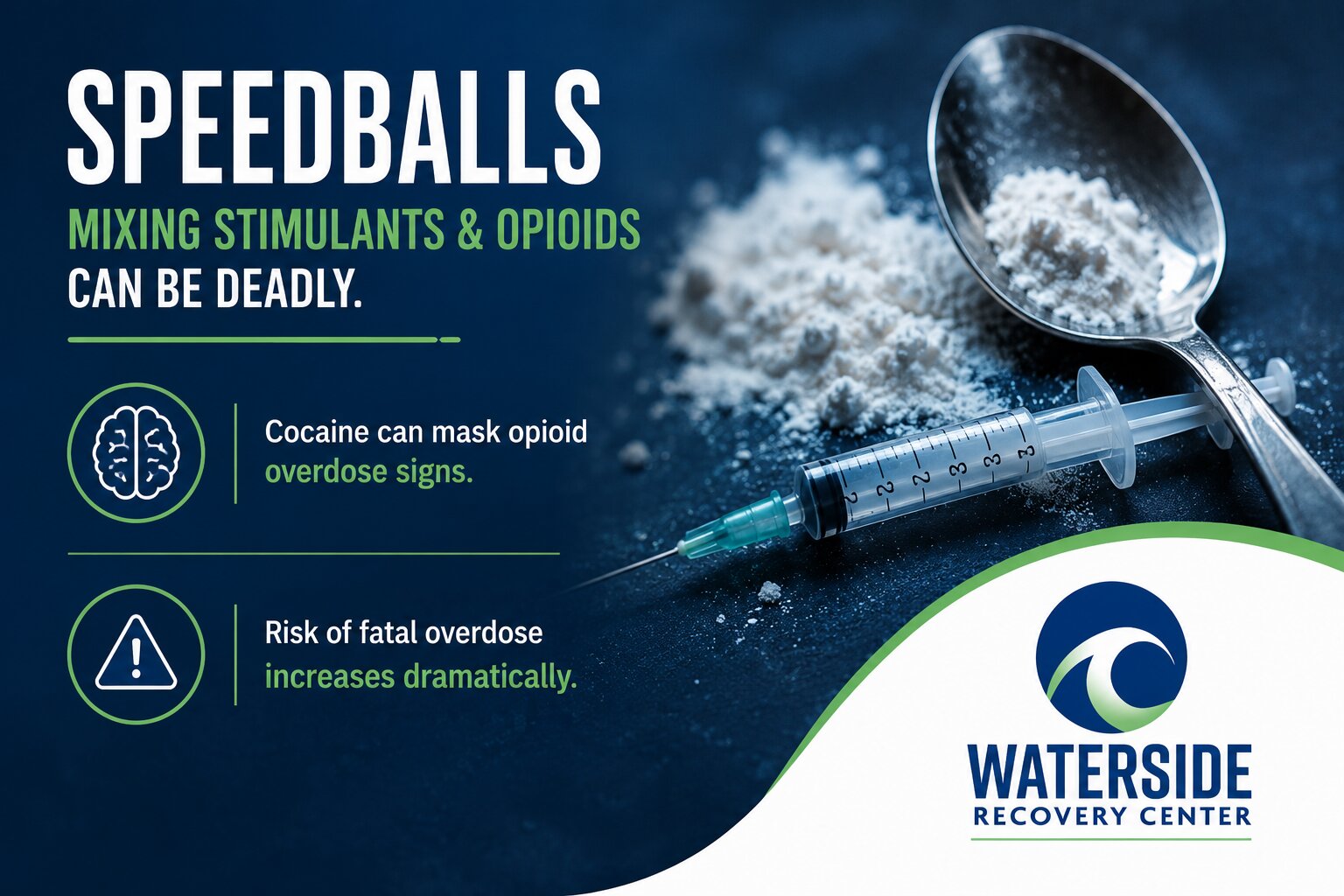
The greatest danger of a speedball isn’t simply that cocaine and opioids are both dangerous.
It’s that cocaine can temporarily hide the symptoms of an opioid overdose.
Cocaine Speeds the Body Up
As a stimulant, cocaine increases:
- Heart rate
- Blood pressure
- Alertness
- Energy
- Activity within the central nervous system
Someone using cocaine may appear awake, energetic, or unusually alert.
Opioids Slow the Body Down
Heroin and fentanyl produce the opposite effect.
They slow:
- Breathing
- Heart rate
- Brain activity
- Consciousness
The most common cause of death during an opioid overdose is respiratory depression, meaning breathing becomes dangerously slow or stops altogether.
Cocaine Can Temporarily Mask an Opioid Overdose
This is where speedballs become uniquely dangerous.
The stimulant effects of cocaine may temporarily counteract some outward signs of opioid intoxication.
Instead of appearing heavily sedated, a person may initially seem:
- More awake
- More responsive
- Less obviously impaired
Meanwhile, the opioid continues affecting the respiratory centers of the brain.
Breathing may already be slowing even though the person doesn’t appear to be experiencing a typical opioid overdose.
This masking effect can delay recognition of a life-threatening emergency.
Cocaine Wears Off First
Another major reason speedballs are so dangerous is that cocaine generally has a much shorter duration of action than heroin or many other opioids.
As cocaine levels rapidly decline:
- The stimulant effects disappear.
- The opioid remains active.
- Respiratory depression becomes much more pronounced.
Someone who initially appeared alert may suddenly become:
- Difficult to wake
- Blue around the lips
- Barely breathing
- Not breathing at all
Because the transition can happen quickly, there may be very little time to respond.
Fentanyl Makes the Risk Even Greater
Today’s illicit drug supply has changed dramatically.
Many products sold as heroin now contain fentanyl or other highly potent synthetic opioids.
Fentanyl:
- Is far more potent than heroin
- Can produce respiratory depression very quickly
- May vary significantly in strength from one batch to another
This unpredictability makes modern speedball overdoses especially dangerous.
Even experienced users often cannot accurately judge how much fentanyl is present.
Naloxone Can Save Lives—But It Has Limits
Naloxone (Narcan®) can reverse the opioid portion of a speedball overdose by displacing opioids from their receptors.
However, it does not reverse the effects of cocaine.
Someone who receives naloxone may still require emergency medical care because stimulant-related complications—such as irregular heart rhythms, chest pain, seizures, or stroke—can continue even after the opioid effects begin to reverse.
In cases involving fentanyl, multiple doses of naloxone may sometimes be needed before the opioid component is adequately reversed.
Anyone suspected of experiencing a speedball overdose should receive emergency medical attention immediately, even if naloxone has been administered and the person appears to improve.
Getting Help When Both Cocaine and Opioids Are Involved
Using cocaine and opioids together places enormous strain on multiple body systems while increasing the risk of dependence on both drugs.
Recovery often requires treatment that addresses:
- Cocaine cravings
- Opioid dependence
- Withdrawal symptoms
- Mental health concerns
- Relapse prevention
Because each substance affects the brain differently, comprehensive treatment is often more effective than trying to address only one drug in isolation.
If cocaine use—or the combination of cocaine and opioids—has begun affecting your health, relationships, work, or safety, professional care can help you begin recovery with medical and therapeutic support. Individuals across Bristol County, MetroWest, and Plymouth County can access comprehensive addiction treatment and recovery support through Waterside Recovery.
Learn more about cocaine addiction treatment at Waterside Recovery, or call (866) 671-8620 to speak with a member of the admissions team.
Frequently Asked Questions
What is a speedball?
A speedball is a combination of a stimulant, usually cocaine, and an opioid such as heroin or fentanyl. The drugs may be used together or in close succession, creating a particularly dangerous combination that increases the risk of overdose.
Why is a speedball so dangerous?
A speedball is especially dangerous because cocaine can temporarily mask the warning signs of an opioid overdose while the opioid continues slowing breathing. Once the stimulant wears off, respiratory depression may become severe very quickly, increasing the risk of fatal overdose.
What drugs are in a speedball?
Traditionally, a speedball contains cocaine and heroin. Today, many illicit speedballs may instead contain cocaine combined with fentanyl or another synthetic opioid, making the mixture even more unpredictable and potentially more dangerous.