Page summary: Opioid rehab at Waterside Recovery is outpatient, so you sleep at home every night. It starts with a confidential phone call and a clinical assessment, then a level of care that fits where you are: a full-day program, an afternoon program a few days a week, or weekly outpatient sessions. Most people move to less intensive care as they get steadier. Medication for opioid use disorder can be part of your plan.
If you’ve never been in treatment, the hardest part is often not knowing what happens once you walk through the door. Will you be stuck in a room with strangers? Will someone judge you for how bad things got? Will you lose your job?
This page walks through it step by step, from the first phone call to your last scheduled session, so you know exactly what you’re agreeing to before you agree to anything.
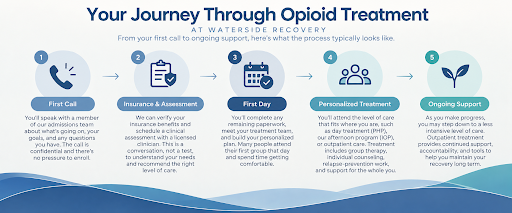
When you call (866) 671-8620, you’ll talk with someone on the admissions team. They’ll ask what’s going on, what you’ve been using, and what you’re hoping for. You don’t need the right words, and you don’t need to have decided anything yet. You can also call on behalf of someone you love.
The call is confidential. Asking questions doesn’t sign you up for anything.
Admissions can check your benefits before you start, so you know what your plan covers and what you might owe. You can also verify your insurance coverage online and someone will follow up with you.
Next comes an assessment with a licensed clinician. It’s a conversation, not a test. Expect questions about:
Honest answers help the team recommend the right level of care. Nothing you share is a reason to turn you away; it’s how they build a plan that fits.
If you’re using opioids daily, you may need medically supervised detox or medication to manage withdrawal before starting a full program. Waterside Recovery is an outpatient program and doesn’t provide detox on-site, but admissions can help you find a detox program and plan your start date at Waterside for right after.
Your first day is mostly about getting settled. You’ll finish any remaining paperwork, meet your primary clinician, and go over your schedule. You’ll also start building your treatment plan: the specific goals you’ll work on, written with you rather than for you.
Most people join their first group that day. You don’t have to share anything you’re not ready to. Many people spend their first group listening, and that’s fine.
The day treatment program, known nationally as a partial hospitalization program (PHP), is Waterside’s most structured level of care. It runs most of the day, several days a week, and you go home every evening. A typical day looks like this:
Time | What happens |
9:00 | Check-in and goals for the day |
9:15 | Process or skills group with a licensed clinician |
10:30 | Recovery education or wellness: cravings, triggers, and safety planning |
11:30 | Break |
12:00 | Individual counseling or case management (rotates through the week) |
1:00 | Family education group (select days) |
2:00 | Mindfulness, gentle movement, or creative activities |
3:00 | Wrap-up and a specific plan for the evening and next morning |
Groups use approaches like cognitive behavioral therapy, motivational interviewing, and relapse-prevention planning. Individual sessions are where you work on your own triggers and history. Case management helps with practical problems, like leave paperwork, appointments, or outside providers.
The afternoon treatment program is Waterside’s intensive outpatient program (IOP). It has the same clinical core as day treatment (group therapy, individual counseling, and relapse-prevention work) in fewer hours. Most people attend three to five days a week for a few hours at a time.
Because sessions are later in the day, many people keep working, go to school, or handle family responsibilities while they attend. That’s part of the point: you practice recovery skills in real life between sessions, then bring what went wrong (or right) back to group.
Some people start in the afternoon program. Others move into it after day treatment, once they’re more stable.
Outpatient care is the lightest level of structure, usually individual or group sessions about once a week. It’s for people who are steady but still want regular support, accountability, and a place to work through relapse warning signs before they turn into a relapse.
Your clinician will talk with you about stepping down before it happens, not spring it on you. Moving to less treatment is a sign of progress. If things get harder, you can also step back up.
Waterside also offers virtual care for people in Massachusetts who can’t make it in person consistently.
Medication can make a real difference in opioid recovery by reducing cravings and preventing withdrawal while you focus on treatment. Waterside’s team coordinates medication-assisted treatment as part of your plan when it’s clinically appropriate, working with prescribers to keep your medication and therapy connected.
If you’re already taking buprenorphine (Suboxone) or methadone, tell admissions on your first call. Being on medication is not a barrier to starting treatment.
Ask admissions whether to bring lunch for day treatment. Leave alcohol, drugs, and anything you wouldn’t want to explain at home.
You don’t have to tell your employer you’re in treatment for opioid use. You can say you need medical leave or a schedule change for health treatment. Several protections may apply:
Eligibility depends on your employer and situation, so talk with HR. Waterside’s case managers can help with the paperwork. If the afternoon program fits your schedule, you may not need leave at all.
Your treatment records are private. HIPAA protects your health information, and substance use treatment records have additional federal protection under 42 CFR Part 2. In most cases, Waterside can’t share that you’re in treatment (with your employer, family, or anyone else) without your written consent.
You decide who’s involved. If you’d like a spouse or parent to join a family session, you’ll sign a release that covers exactly what can be shared.
There’s no fixed length. Many people spend a few weeks in day treatment or the afternoon program, then step down to outpatient care for ongoing support. How long you stay at each level depends on your progress, your goals, and what your insurance authorizes.
No. Waterside Recovery is outpatient only. You go home every night, whether you’re in day treatment, the afternoon program, or outpatient care.
Often, yes. The afternoon program and outpatient care are built to fit around work. Day treatment takes most of the day, so some people use medical leave while they’re in it.
Tell your clinician. A return to use is information, not a reason to give up on you. Your team may adjust your plan, which can include more structure for a while.
Yes, with your permission. Day treatment includes family education on select days, and family sessions can help loved ones learn how to support you without taking over.
You don’t need to have everything figured out to start. Call (866) 671-8620 to talk through your options, ask questions, and find out what your first week would look like. When you’re ready, you can start opioid treatment at Waterside with day, afternoon, outpatient, or virtual care.
Verify Insurance Benefits
Find out if your insurance provider could cover your treatment
Find out if your insurance provider could cover your treatment with us.