
The first time I left treatment, I thought the hardest part was over.
I had thirty days sober. I could finally sleep through the night again. My family sounded relieved when they called. I wasn’t waking up sick, panicked, or trying to piece together what I said the night before.
Honestly, I thought I had fixed it.
Then life slowly started sounding louder than recovery.
Bills. Stress. Loneliness. The same uncomfortable silence at the end of the day that alcohol used to fill. Somewhere along the way, the confidence I felt at discharge started turning into pressure. I felt like I was supposed to know how to do sobriety now.
That’s the part nobody prepared me for.
A lot of alumni quietly wonder how long is alcohol rehab actually supposed to last before recovery feels stable instead of fragile. And for people who’ve relapsed after treatment, that question can carry a lot of shame underneath it.
Because sometimes relapse makes people feel like they wasted their chance.
They didn’t.
Sometimes they just needed more support than thirty days could realistically provide.
Thirty Days Is Often the Beginning — Not the Finish Line
A 30-day program can absolutely save someone’s life.
For many people, it’s the first moment things slow down enough to breathe again. The body starts recovering. Sleep improves. Emotions become less chaotic. Families reconnect. Hope comes back online.
But stabilization and healing are not always the same thing.
A lot of what drives alcohol use lives underneath the drinking itself.
The anxiety someone never learned to regulate.
The grief they’ve avoided for years.
The pressure to appear “fine” all the time.
The loneliness they only admit to themselves at 1 a.m.
Thirty days can interrupt destructive patterns. But deeper emotional rebuilding usually takes longer.
That doesn’t mean treatment failed.
It means human beings are more complicated than a calendar.
Some people leave treatment after 30 days feeling strong and ready. Others leave still emotionally raw, even if they look okay on the outside. Neither experience is unusual.
Recovery isn’t measured by how quickly someone improves. It’s measured by whether they keep coming back to themselves.
Why Some People Choose 60 Days Instead
The difference between 30 and 60 days often has less to do with “severity” and more to do with stability.
Around the first month, many people are only beginning to settle into honesty. The shock of detox and early sobriety starts fading, which can reveal emotions that alcohol had been covering up for years.
That’s when deeper work usually starts.
At sixty days, people often begin building routines that feel more natural instead of forced. Therapy conversations become less surface-level. Relationships start repairing more honestly. Cravings may still happen, but there’s usually more space between the urge and the reaction.
And maybe most importantly: people begin practicing recovery instead of just surviving withdrawal.
That distinction matters.
Because early sobriety can feel a little like learning how to walk after an injury. Technically, you’re moving forward. But everything still feels shaky and unfamiliar.
More time can help recovery stop feeling like constant emergency management.
Ninety Days Can Create Something Many Alumni Never Had Before: Consistency
For some people, ninety days is the first time they’ve experienced emotional consistency in years.
Not perfection.
Not endless happiness.
Just consistency.
Regular sleep. Honest conversations. Structure. Support. Time away from the chaos that kept feeding the addiction cycle.
People often imagine treatment is entirely about stopping alcohol use. But longer-term care frequently becomes more about learning how to exist without needing escape every few hours.
That’s a different kind of healing.
At the 90-day mark, many alumni describe finally feeling present enough to recognize patterns they couldn’t see earlier:
- People-pleasing that leads to resentment
- Isolation disguised as independence
- Anxiety masked by productivity
- Emotional numbness hidden under humor
- The constant exhaustion of pretending everything is okay
Sometimes alcohol wasn’t the only thing hurting them. It was just the thing helping them temporarily avoid what already hurt.
And unfortunately, those deeper struggles don’t disappear just because someone completed treatment quickly.
Relapse After Treatment Is More Common Than People Admit
This is important to say out loud.
Relapse can feel devastating. Especially after 30, 60, or even 90 days sober.
A lot of alumni describe relapse as emotionally confusing because part of them genuinely wanted recovery. They weren’t lying in treatment. They weren’t “not trying.”
They just returned to environments, stress, pain, or isolation they weren’t fully prepared to handle yet.
That’s not an excuse. But it is reality for many people.
Shame tends to tell the story like this:
“You blew it.”
“You should know better.”
“You already had your chance.”
Recovery usually sounds more like this:
“You learned something important about what you still need.”
There’s a difference between giving up and needing additional support.
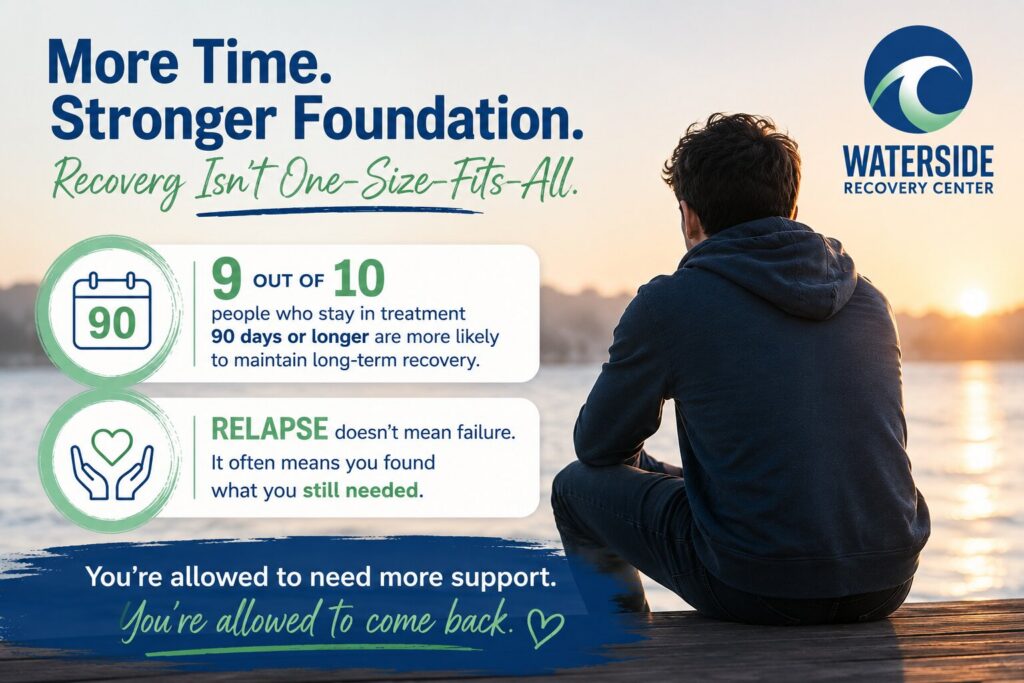
One of the hardest truths in recovery is realizing motivation alone sometimes isn’t enough. Community matters. Structure matters. Time matters.
And sometimes the second attempt feels different because the pressure to “do it perfectly” starts falling away.
“The second time I went back, I stopped trying to graduate recovery early. That changed everything.”
— Alumni perspective
More Time in Treatment Doesn’t Mean You’re Weak
A lot of people secretly view longer treatment as proof they’re failing.
Especially high-functioning adults.
People with careers.
Parents.
Professionals.
People everyone else depends on.
They often tell themselves:
“I should be able to handle this faster.”
“I can’t disappear for ninety days.”
“Other people recovered quicker.”
But healing isn’t a competition.
And honestly, many people who rush out of treatment aren’t doing it because they’re ready. They’re doing it because they’re uncomfortable receiving help for that long.
That discomfort is understandable.
Staying in treatment longer can bring up grief. Vulnerability. Fear of judgment. Fear of missing life outside. Fear of needing people.
But there’s also something quietly brave about deciding your life deserves more than the bare minimum amount of support.
Especially after relapse.
Especially after years of trying to white-knuckle it alone.
Recovery Changes After the Crisis Phase Ends
The first few weeks of sobriety are intense.
Physical cravings.
Sleep issues.
Mood swings.
Raw emotions.
Constant mental noise.
Then eventually, another phase begins.
And sometimes that phase catches people off guard.
The adrenaline of “getting sober” fades. Life becomes quieter. That’s often where people encounter the deeper emotional layers underneath addiction.
Loneliness.
Identity confusion.
Boredom.
Fear of the future.
Old relationship dynamics.
The realization that alcohol was helping numb more pain than they realized.
This stage can feel strangely disappointing for alumni who expected sobriety to feel immediately freeing.
But it’s also where meaningful recovery usually begins.
Not the dramatic moment.
Not the detox.
Not the discharge date.
The quieter rebuilding afterward.
That’s why many people continue care after residential treatment through structured daytime support, therapy, alumni programming, or multi-day weekly treatment. Others look for ongoing help in areas we serve because staying connected after treatment often matters more than people expect.
Recovery tends to grow better in community than in secrecy.
The “Right” Length of Treatment Is Different for Everyone
Some people genuinely thrive after 30 days.
Others need longer because:
- They’ve relapsed before
- Their home environment is unstable
- Mental health challenges are also present
- They’ve been drinking heavily for years
- They’ve never learned healthy coping skills
- They need more time rebuilding trust with themselves
None of those things make someone broken.
They make them human.
A person recovering from alcohol addiction isn’t just stopping a behavior. They’re often rebuilding routines, relationships, emotional regulation, self-worth, and identity all at once.
That’s a lot to carry in thirty days.
And honestly, some alumni discover that longer treatment doesn’t just help them stay sober—it helps them finally slow down enough to understand themselves.
You’re Allowed to Come Back
This part matters for the person reading this after relapse.
You are allowed to come back.
Even if you said you wouldn’t relapse again.
Even if people are disappointed.
Even if you disappeared after treatment.
Even if shame is telling you to isolate.
Especially then.
There’s a strange kind of courage in returning after things fall apart. It’s vulnerable. Humbling. Awkward sometimes.
But recovery has room for imperfect people.
Actually, imperfect people are the only people recovery has ever worked for.
If you’re reconsidering treatment, questioning whether you left too early, or trying to figure out what kind of support might help this time, there’s still support in areas we serve. More importantly, there’s still a future where your entire life doesn’t revolve around surviving cravings, hiding pain, or starting over every few months.
FAQ: Alcohol Rehab Length and Recovery
Is 30 days of rehab enough for alcohol addiction?
For some people, yes. A 30-day program can provide stabilization, medical support, therapy, and a strong recovery foundation. But others may benefit from additional time, especially if they’ve relapsed before, struggle with mental health challenges, or lack support at home.
Why do some people stay in rehab for 60 or 90 days?
Longer stays often allow more time for emotional healing, relapse prevention work, routine-building, and deeper therapy. Recovery isn’t only about stopping alcohol use—it’s also about learning how to manage life without relying on alcohol to cope.
Does needing longer treatment mean my addiction is worse?
Not necessarily. Every person’s recovery needs are different. Factors like stress, trauma history, family dynamics, mental health, and relapse history can all affect how much support someone needs.
What happens after residential treatment ends?
Many people continue recovery through outpatient therapy, alumni programs, peer support groups, sober living, or multi-day weekly treatment. Ongoing support can help people stay connected and reduce isolation after treatment.
Is relapse after rehab common?
Yes. Relapse is more common than many people realize, especially during early recovery. While relapse can feel discouraging, it doesn’t erase the progress someone made during treatment. Many people return to recovery with more insight and stronger long-term support afterward.
Can I go back to treatment after relapsing?
Absolutely. Returning to treatment after relapse is not failure. Many alumni re-engage with support after recognizing they need additional structure, therapy, or time to heal.
Call (866)671-8620 or visit our alcohol addiction treatment services to learn more about our treatment, alcohol addiction treatment services in MetroWest, Massachusetts.