
If you’re in your late teens or twenties and thinking about getting help for your drinking, it can feel like you accidentally skipped ahead in life.
Like everyone else is experimenting—and you’re over here researching therapy, structure, and support.
Before I entered alcohol addiction treatment, I kept telling myself I was too young for it to be “that serious.”
I wasn’t.
Here are 12 honest truths about starting recovery as a young adult—especially when you feel like the weird one.
1. You Will Feel Out of Place Before You Feel Strong
Let’s just say it.
Walking into a room where people are talking about sobriety when your friends are still planning bar crawls feels surreal. You might feel like you fast-forwarded your life while everyone else is still on Season One.
That awkwardness doesn’t mean you don’t belong.
It means you’re doing something uncommon. And uncommon things often feel lonely at first.
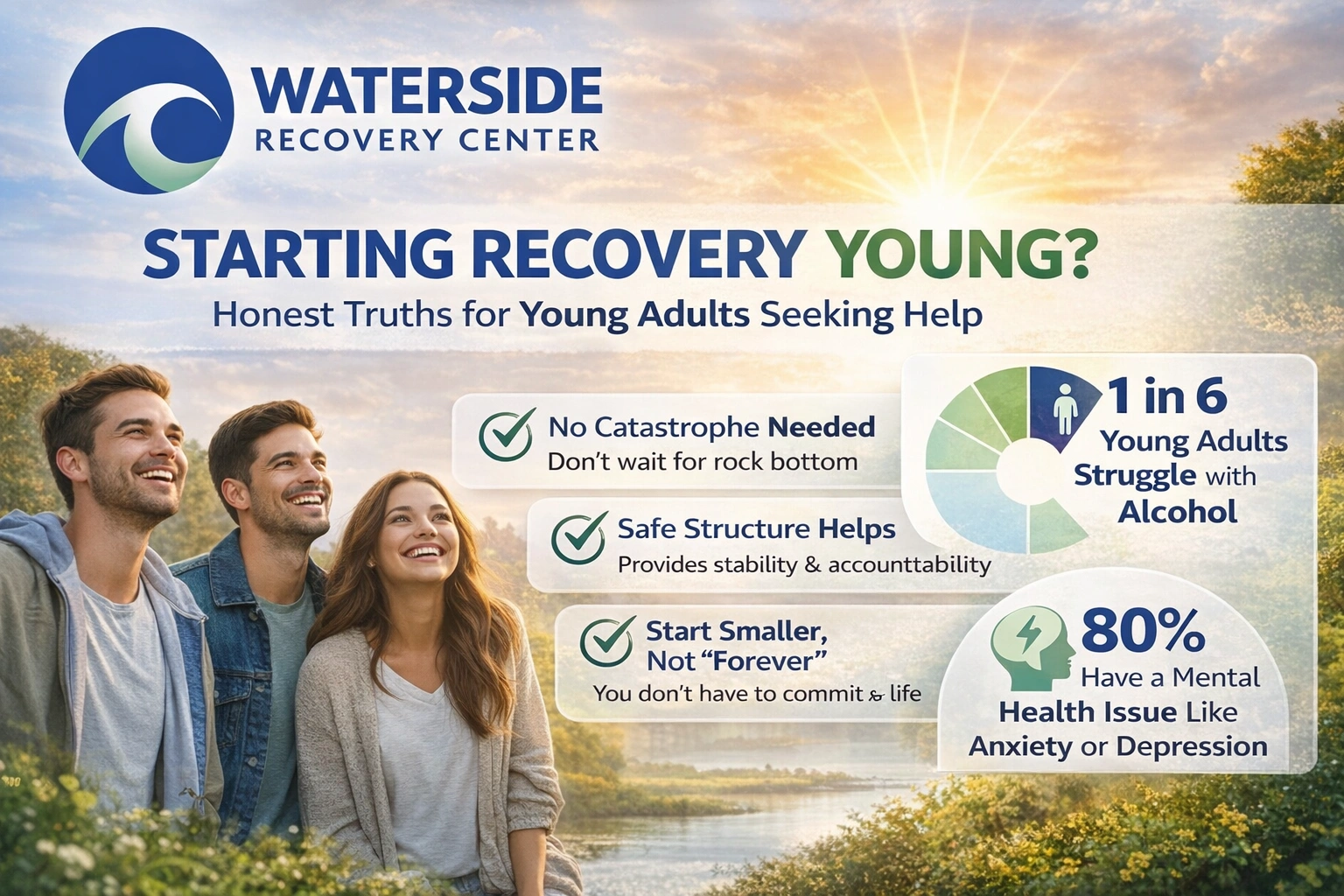
2. You Don’t Need a Catastrophe to Justify Change
A lot of us waited because we thought we needed a dramatic story.
A DUI. Getting fired. A hospital visit.
But sometimes the only sign is this: you don’t like who you are becoming.
You don’t like how much mental space alcohol takes up. You don’t like the anxiety the next morning. You don’t like needing it to feel normal.
That’s enough.
3. Being “High-Functioning” Doesn’t Mean You’re Okay
I had a job. I showed up to class. I paid rent.
On paper, I was fine.
But inside? I was exhausted from managing my drinking. Tracking it. Hiding it. Justifying it.
High-functioning can still mean barely holding it together.
If you’re in places like Westborough, Massachusetts, and wondering whether your situation is “serious enough” to seek help, remember this: prevention is quieter than crisis—but it’s just as important.
4. You Might Grieve the Version of You That Drank
This part caught me off guard.
I missed the bold version of me. The one who danced without overthinking. The one who said yes to everything.
There’s a real grief in letting go of the identity alcohol helped you perform.
But here’s what I learned: confidence built on intoxication is fragile. Confidence built on clarity lasts longer.
You don’t lose yourself. You meet yourself—without the filter.
5. Structure Can Feel Annoying—Until It Feels Safe
Structured daytime care. Multi-day weekly treatment. Check-ins. Accountability.
At first, it might feel like someone is babysitting you.
But when your internal boundaries have been loose for a while, external structure can feel like guardrails on a mountain road.
You don’t resent guardrails when you realize they’re keeping you from going over the edge.
6. You’ll Probably Be the Youngest Person in the Room Sometimes
And that’s okay.
Yes, you might sit next to someone who’s twice your age. Yes, their story may sound heavier than yours.
But here’s what shifts things: many of them wish they had started when you are.
Being young in recovery isn’t embarrassing. It’s proactive.
You’re not late to the party. You’re early to your own life.
7. Social Situations Will Feel Weird for a While
Let’s be honest—being sober at 23 can feel like being the only one not in on a joke.
People will ask questions. Some will tease. Some won’t get it.
Early on, you might leave events sooner. You might avoid certain spaces entirely.
That’s not failure. That’s self-protection.
And over time, something surprising happens: the awkwardness fades. The clarity doesn’t.
8. Your Mental Health Will Probably Get Louder Before It Gets Better
When alcohol goes away, the feelings it was muting show up.
Anxiety. Sadness. Restlessness.
This doesn’t mean sobriety is wrong. It means you’re finally hearing what was underneath.
That’s where real work begins—especially when mental health and substance use collide.
The point isn’t to tough it out alone. It’s to have support while you untangle it.
9. You Don’t Have to Commit to “Forever” to Start
One of the biggest fears I had was: What if I can’t do this forever?
Forever is overwhelming at 22.
You don’t have to decide your entire future today.
You just have to decide not to drink tonight. Or to try structured support for a season. Or to see what changes when alcohol isn’t steering.
Recovery starts with smaller commitments than your brain is telling you.
10. You’ll Redefine Fun—And It Won’t Be Boring
This one sounds cliché until you live it.
Fun changes. It doesn’t disappear.
You might trade blackout stories for road trips you actually remember. Trade chaotic weekends for mornings you don’t dread.
Fun becomes something you experience fully instead of something you recover from.
And if you’re exploring treatment options in areas we serve, you’ll meet other young adults navigating the same shift.
You’re not as alone as you think.
11. Independence and Asking for Help Are Not Opposites
Young adulthood is all about proving you can handle things.
Bills. Jobs. Relationships.
But asking for help with drinking doesn’t cancel your independence. It strengthens it.
Choosing support is an adult decision.
If you’re near Quincy, Massachusetts, and considering taking that step, you’re not giving up control—you’re taking it back.
12. Starting Young Might Save You Years
This is the quiet truth.
Every year you wait, patterns get more ingrained. Coping mechanisms get more automatic. Consequences get heavier.
Starting in your twenties might feel inconvenient socially.
Starting in your thirties or forties might feel devastating.
You’re not weird for wanting more stability now.
You’re wise for recognizing the trajectory.
FAQs About Getting Help for Drinking as a Young Adult
Am I too young for treatment?
No. Addiction doesn’t check your birth year before it escalates. If alcohol is affecting your mood, relationships, school, or work, you’re not too young to address it. In fact, early intervention often leads to stronger long-term outcomes.
What if my friends don’t think I have a problem?
Your friends don’t live inside your head. They don’t feel your anxiety at 2 a.m. They don’t count your drinks the way you do. They don’t feel the shame after. You’re allowed to take your own concerns seriously—even if others minimize them.
Do I have to stop forever?
You don’t have to solve “forever” today. You can start with structured support. With therapy. With a period of abstinence. With clarity. Let experience inform your decision—not fear.
Will this ruin my social life?
It might change it. Some friendships may fade. Others will deepen. You’ll likely meet people who connect with you without alcohol in the middle. Your social life may get smaller—but it will probably get healthier.
What if I relapse?
Relapse can happen at any age.
It doesn’t mean you’re incapable. It means something needs adjustment—more support, more structure, more honesty.
Recovery isn’t about perfection. It’s about returning.
Is structured support really necessary if I haven’t hit rock bottom?
Rock bottom is subjective.
If you’re constantly thinking about drinking, struggling to moderate, or feeling emotionally unstable because of alcohol, support can prevent deeper harm.
You don’t need a dramatic story to justify stability.
The Part No One Says Out Loud
You might feel like you’re giving something up.
But what you’re actually giving up is chaos.
You’re trading temporary highs for long-term steadiness.
You’re choosing clarity in a culture that normalizes numbing.
That takes courage—especially when you’re young.
If you’re even considering alcohol addiction treatment at this stage of life, it means something inside you wants more. More peace. More control. More self-respect.
Listen to that part.
It’s not weakness. It’s wisdom.
You don’t have to navigate this alone. Call (866)671-8620 or visit our Alcohol Addiction Treatment services in Plymouth County, MA to learn more about how Waterside Recovery can support you.