
Sometimes the story starts with hope.
You checked in somewhere. You did the groups. You listened to counselors, wrote things down, maybe even started believing life could look different.
Then months later you found yourself right back where you started.
And the conclusion hits hard:
“I tried rehab. It didn’t work.”
If that thought has crossed your mind, you’re not broken and you’re definitely not alone.
A lot of people quietly walk away from their first experience with recovery feeling disappointed, skeptical, or even angry. But what many eventually discover is this: what felt like failure was often just an incomplete chapter.
Some people revisit recovery later after exploring different kinds of support—sometimes programs that look more like real life, such as flexible approaches offered through structured drug treatment services.
Before getting there though, it helps to talk honestly about why so many people leave their first attempt feeling like it didn’t work.
The Quiet Drive Home After It’s Over
There’s a moment a lot of people remember clearly.
It’s the day you leave.
Your bags are packed. People shake your hand. Maybe someone tells you they’re proud of you.
And then suddenly you’re back in the real world.
The same phone.
The same stress.
The same relationships.
The same bills and triggers waiting where you left them.
For a lot of people, that first week back feels like stepping out of a calm room into a hurricane.
Inside the program there were schedules, support, and guardrails. Outside, there’s just life.
When things start slipping again, the mind naturally jumps to one explanation:
“None of that worked.”
But the truth is usually more complicated.
The Expectation That One Program Should Fix Everything
There’s an unspoken belief many people carry when they enter rehab.
The belief is simple:
“If I complete this, I should be better.”
That expectation creates a dangerous setup.
Because recovery isn’t something that finishes the day you leave a building.
It’s something that keeps unfolding after.
Imagine taking a driving course and expecting to become a perfect driver the second you pass the test.
You wouldn’t expect that.
Yet with recovery, many people unknowingly hold themselves to that exact standard.
So when life gets messy again, it feels like failure instead of progress.
When Programs Feel Like They Don’t See the Real You
Let’s be honest about something else.
Some recovery environments feel rigid.
They follow strict routines and standardized approaches that don’t always match every person’s reality.
If you left feeling like:
- No one really understood your life
- Your personal struggles were oversimplified
- You were treated like a problem instead of a person
Those feelings are valid.
Different people need different types of support.
Some thrive in highly structured environments.
Others need programs that allow them to practice recovery while still living their day-to-day life.
Finding the right fit can make a massive difference.
The Moment Skepticism Starts to Grow
After a relapse, skepticism tends to grow fast.
You might start thinking things like:
“Those programs just take your money.”
“Nobody actually stays sober.”
“Recovery only works for certain people.”
These thoughts don’t come from nowhere.
They usually come from disappointment.
And disappointment can be powerful enough to close doors that might still be worth opening.
What many people later realize is that their first experience taught them something important—even if it didn’t feel successful at the time.
It showed them what didn’t work for them.
And that information matters.
Relapse Is Often Part of the Learning Curve
Here’s something that doesn’t get talked about enough.
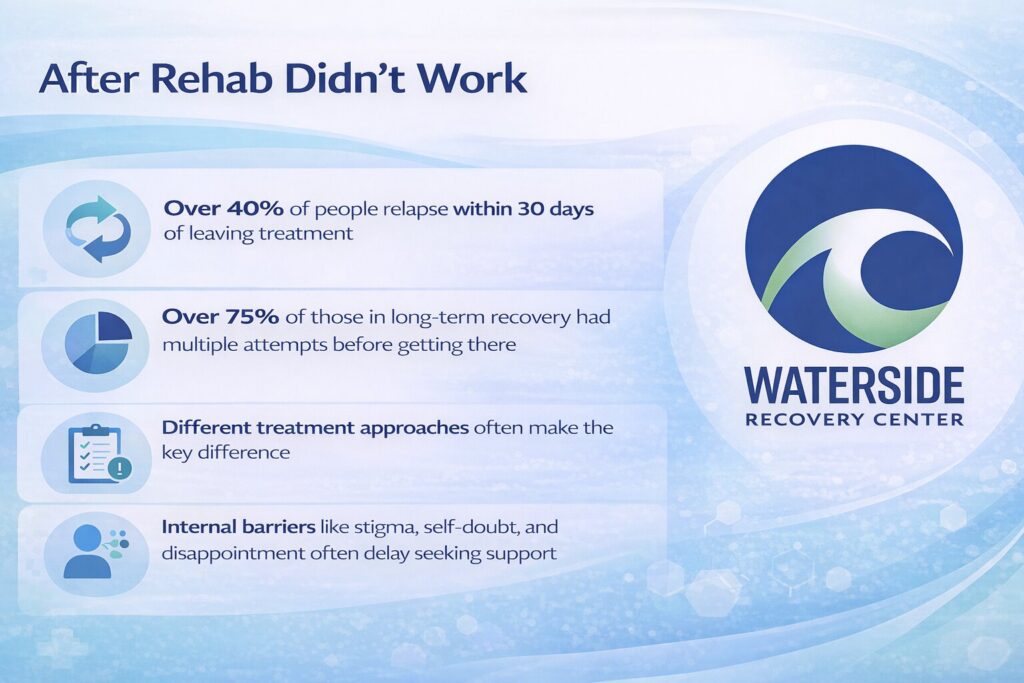
Many people relapse after their first attempt at recovery.
Not because they’re hopeless.
Because they’re still learning.
Addiction rewires habits, coping strategies, and emotional responses that developed over years.
Changing those patterns rarely happens instantly.
Think about how long it takes to build a new routine at the gym, or learn a new career skill.
Recovery is far more complex than either of those.
Sometimes the first attempt plants the seeds that make the second attempt more honest and effective.
Recovery That Happens Inside Real Life
One thing many people discover later is that recovery feels different when it happens alongside everyday life.
Instead of being completely removed from the world, some programs allow people to stay connected to their responsibilities while working on recovery.
That means learning how to handle:
- Stress from work
- Difficult relationships
- Social environments where substances are present
Instead of avoiding those situations entirely, people practice navigating them with support.
This kind of experience can help bridge the gap between the safety of a program and the unpredictability of the outside world.
Skepticism Doesn’t Disqualify You
If you’re skeptical right now, that doesn’t mean you’re resistant to recovery.
It might mean you’ve been through enough to know that slogans and promises aren’t enough.
You want something that actually works in real life.
Many people who eventually find stable recovery started exactly where you might be right now:
Tired.
Doubtful.
Unimpressed by easy answers.
Sometimes skepticism isn’t a barrier.
It’s a filter that helps people find approaches that feel more real.
You’re Not the Only One Who Tried and Struggled
It might feel like everyone else who went through rehab came out successful except you.
That’s rarely true.
Many people who appear stable today actually went through multiple attempts before things finally clicked.
Some tried different types of programs.
Some needed time between attempts to understand themselves better.
Some simply needed the right environment.
People don’t always talk openly about those early struggles.
But they’re incredibly common.
Finding Help That Fits Real Life
If your first experience left you skeptical, it doesn’t mean help isn’t available—it might just mean you haven’t found the right fit yet.
Some people explore treatment options in areas we serve, including programs offering support in Worcester or care available throughout the Metrowest area.
The goal isn’t repeating the same experience.
It’s finding support that actually works with your life, not against it.
The Part That Happens Outside the Program
Here’s the truth many people realize later.
Programs don’t create recovery on their own.
People do.
The real work happens in quiet moments:
Choosing honesty instead of hiding.
Calling someone when things feel heavy.
Walking away from situations that used to pull you back in.
Those decisions build over time.
And every attempt at recovery—even the messy ones—can teach something valuable about how to make the next step stronger.
Frequently Asked Questions
Why do some people feel like rehab didn’t work?
Many people expect recovery to feel permanent immediately after finishing a program. When relapse happens, it can feel like the entire experience failed. In reality, recovery often involves multiple stages of learning and adjustment.
Does relapse mean treatment was pointless?
No. Even if someone relapses, they often leave treatment with new awareness, coping tools, and insights that can help during future recovery efforts.
How many attempts at recovery do people usually make?
There isn’t a universal number. Some people stabilize after their first experience, while others go through several attempts before finding the approach and timing that works for them.
Is it normal to feel skeptical about treatment?
Yes. Many people feel skeptical after a difficult experience or relapse. That skepticism often comes from frustration and disappointment rather than a lack of willingness to change.
Can recovery still happen after previous attempts didn’t work?
Absolutely. Many people eventually build stable recovery after earlier attempts that felt unsuccessful. Sometimes the key difference is finding the right support system or approach.
If You’re Thinking “I Already Tried”
If you’re carrying the belief that you had one chance and missed it, that belief can keep you stuck longer than anything else.
Recovery rarely happens in a straight line.
It’s messy.
It’s frustrating.
And sometimes it takes more than one attempt to figure out what actually works.
If you’re open to exploring different options, support is available.
Call 866-671-8620 or visit our drug treatment services to learn more about our treatment, drug treatment services in Plymouth, MA.
Sometimes recovery doesn’t start with trying harder.
Sometimes it starts with trying a different path.