
I’ve had this conversation more times than I can count.
Someone sits across from me—often well-dressed, articulate, clearly intelligent—and says something like:
“I’m not out of control. I’ve just been managing it.”
They’re still working.
Still paying bills.
Still showing up for family and responsibilities.
From the outside, their life looks stable.
But inside, they’re exhausted.
Because what looks like “managing it” from the outside often feels like holding together a fragile system that could collapse at any moment. When that moment arrives, many people begin quietly exploring options like opiate treatment services, not because their life has fallen apart—but because they’re tired of keeping it from falling apart.
From a clinician’s perspective, this moment is incredibly common.
And it rarely begins the way people expect.
The People Who Don’t Fit the Stereotype
When people imagine opioid addiction, they usually picture the most extreme version of it.
But that’s not who I see most often.
I see:
- Physicians managing demanding schedules
- Parents juggling careers and family life
- Executives traveling constantly for work
- Professionals who appear completely stable
Many started using opioids legitimately—after surgery, injury, or chronic pain.
At first, the medication solved a problem. It helped them function.
But over time, the relationship with that medication quietly shifts.
What once felt like support slowly becomes something that feels necessary just to feel normal.
And that shift can happen so gradually that people barely notice it.
The System People Build to Keep Life Running
High-functioning people tend to be excellent problem solvers.
When opioid dependence starts creeping in, they don’t panic immediately.
Instead, they build systems.
They carefully time doses so they never appear impaired.
They manage prescriptions strategically.
They plan around access so they never run out unexpectedly.
From the outside, it can look like they’re completely in control.
But internally, the amount of mental energy required to maintain that system is enormous.
People describe constantly thinking about:
- When the next dose will happen
- Whether they have enough medication
- How to avoid anyone noticing
Eventually, managing the system becomes almost a full-time job.
The Slow Moment Control Starts Slipping
What many people expect is a dramatic crash.
That’s not usually how it happens.
More often, control slips quietly.
Maybe the medication that once lasted all day now fades by mid-afternoon.
Maybe someone notices they’re thinking about pills during important conversations.
Or they start organizing their entire schedule around medication access.
These moments can feel unsettling.
Because for the first time, the thought appears:
“I might not actually have control over this.”
But even then, many people continue pushing forward.
Because life still looks stable on the outside.
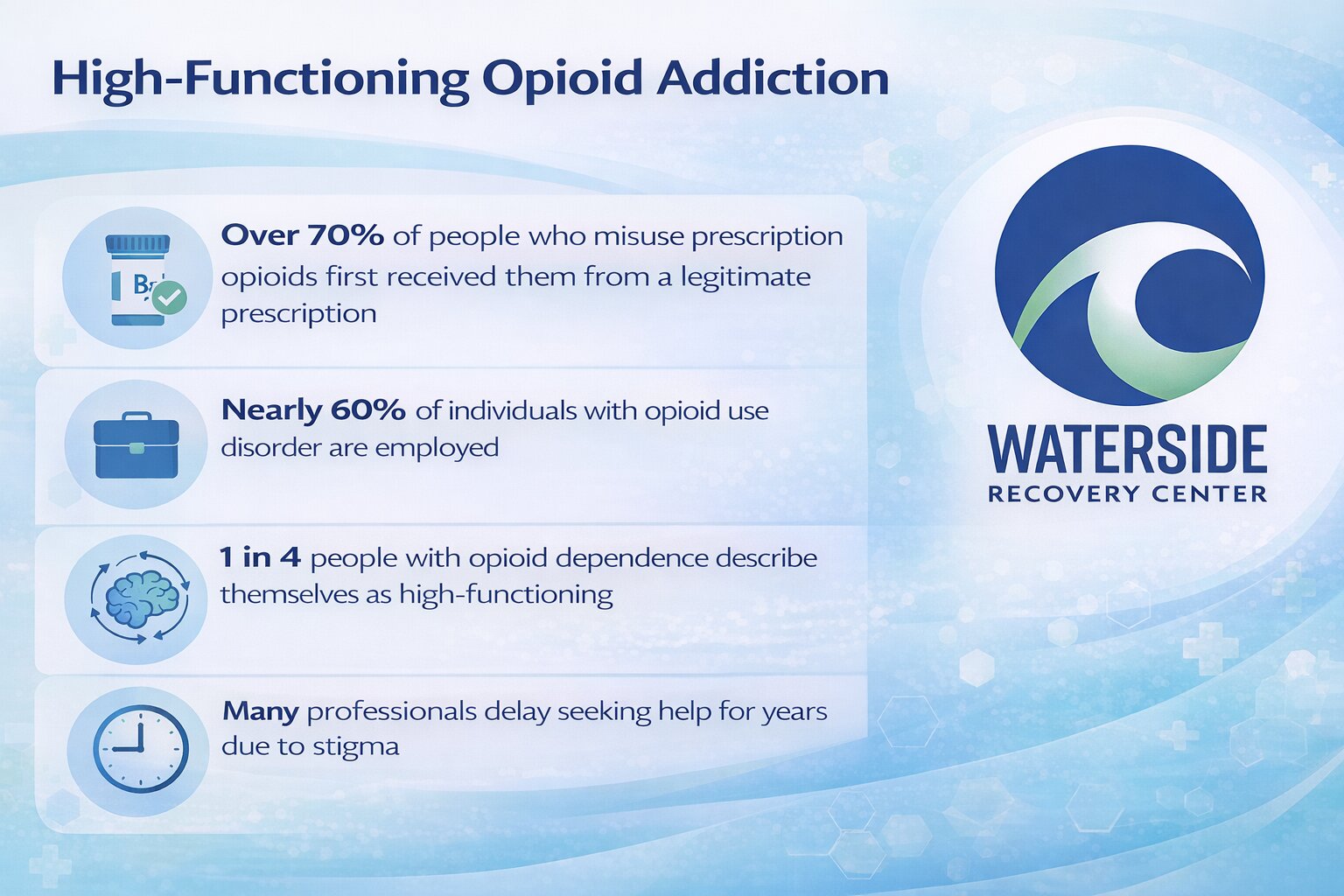
The Hidden Weight of Being High-Functioning
There’s a strange burden that comes with being high-functioning.
You’re successful enough that no one questions what’s happening.
Friends assume you’re doing well.
Coworkers trust you.
Family members rely on you.
And because nothing looks broken from the outside, people don’t reach out.
Which means you carry the entire struggle alone.
I’ve worked with professionals who hid opioid dependence for years.
Not because they wanted to deceive people.
But because admitting the truth felt like risking everything they had built.
The Breaking Point Is Often Quiet
Movies show addiction ending in dramatic collapse.
But the moment people decide to seek help is usually quiet.
I once worked with a business owner who told me his turning point happened in an airport.
He realized he couldn’t concentrate on an important work call because he was mentally calculating how many pills he had left in his carry-on bag.
Another patient described realizing she had started scheduling family activities around medication timing.
And a physician once said something that stayed with me:
“I wasn’t high. I was just never fully present anymore.”
That’s the moment many high-functioning people recognize something important.
Managing it isn’t working anymore.
What Happens When the Secret Finally Comes Out
One of the first things I notice when someone finally speaks honestly about opioid use is relief.
Not because the problem disappears.
But because the secret does.
Addiction grows stronger in silence.
When someone finally says the truth out loud—even in a quiet therapy office—it often creates a shift.
The problem becomes something that can be addressed instead of something that must be hidden.
And that shift alone can feel incredibly powerful.
Why High-Functioning People Often Recover Strongly
There’s something encouraging I’ve seen repeatedly.
High-functioning individuals often do very well in recovery once they decide they’re ready.
The same traits that helped them succeed in work and life often support recovery:
Discipline.
Problem-solving ability.
Commitment to long-term goals.
Once the energy previously spent hiding addiction is redirected toward healing, people often make rapid progress.
I’ve watched professionals rebuild clarity, confidence, and peace of mind in ways they didn’t believe were possible.
Recovery Isn’t About Losing Your Life
One of the biggest fears high-functioning individuals carry is the belief that seeking help will destroy everything they’ve built.
They imagine losing careers, reputations, or relationships.
But in many cases, recovery actually protects those things.
Addiction slowly erodes stability over time.
Recovery stabilizes it.
People often discover that stepping into support allows them to regain something they’ve been missing for years.
Mental freedom.
The constant calculation, secrecy, and anxiety begin to fade.
And with that comes something many people haven’t felt in a long time:
Peace.
Finding Support Without Stepping Away From Life
Many people assume recovery means stepping completely away from daily life.
But many modern programs allow individuals to continue working, caring for family, and maintaining responsibilities while receiving support.
Some begin by exploring treatment options in areas we serve, including support available in Worcester or broader help in areas we serve across the Metrowest region.
The goal isn’t removing people from their lives.
It’s helping them regain control of them.
The Truth Many Patients Tell Me Later
Months into recovery, many high-functioning patients say something very similar.
“I thought I was managing it. I was actually surviving it.”
Managing addiction can look impressive from the outside.
But inside, it’s exhausting.
Every day becomes a balancing act between maintaining success and hiding the struggle.
Recovery removes that constant tension.
And when it does, people often realize how much of their energy had been spent simply keeping the system from collapsing.
Frequently Asked Questions
Can someone be addicted to opioids and still function normally?
Yes. Many people with opioid dependence continue working, maintaining relationships, and fulfilling responsibilities for long periods. High-functioning addiction is often hidden behind outward success.
Why do high-functioning people delay seeking help?
Many fear that admitting the problem could damage their careers or relationships. Others believe they still have control because their external life appears stable.
What are early signs that opioid use is becoming a problem?
Common warning signs include planning daily life around medication access, needing higher doses to feel normal, or feeling anxious about running out of pills.
Is recovery possible for professionals or high-achieving individuals?
Absolutely. Many high-functioning individuals respond well to recovery because they bring discipline, determination, and structure to the process.
Will seeking help mean losing my career or responsibilities?
Not necessarily. Many programs allow people to receive support while continuing their professional and personal responsibilities.
The Moment People Stop Managing and Start Living
The moment someone admits that managing opioid use isn’t working anymore can feel terrifying.
But it’s often the moment real change becomes possible.
Recovery doesn’t erase the life you built.
It gives you the ability to actually live inside it again—without constant calculations, secrecy, or anxiety.
If you’re ready to explore support, help is available.
Call 866-671-8620 or visit our opiate treatment services to learn more about our treatment, opiate treatment services in Plymouth, MA.
Sometimes the strongest decision a high-functioning person makes is admitting they don’t have to manage everything alone.