
Sometimes the strangest part of long-term recovery isn’t relapse.
It’s distance.
Years after getting sober, life fills up. Careers grow. Families expand. Responsibilities multiply. The routines that once held recovery front and center slowly fade into the background.
And at first, that feels like success.
After all, you didn’t get sober just to sit in meetings forever. You got sober so you could build a life.
But sometimes the life you built becomes so busy that the thing that made it possible—your recovery—quietly slips to the edge of the picture.
For many long-term alumni, reconnecting with support later—sometimes through options like opiate treatment services—isn’t about starting over. It’s about remembering the foundation that made everything else possible.
And that moment of reconnection happens more often than people admit.
The Life You Built Was the Whole Point
If you’ve been sober for years, pause for a second and acknowledge something important.
You did the hard part.
You survived early recovery—the part where every day felt like a battle between two different versions of yourself.
You rebuilt relationships that once felt broken.
You found stability where chaos used to live.
You learned how to exist without the substances that once controlled everything.
And eventually, life expanded.
You built routines.
You focused on work.
You raised kids, repaired marriages, chased opportunities that once felt impossible.
Recovery did what it was supposed to do.
It gave you your life back.
But sometimes, in the process of living that life, something subtle happens.
The practices that once kept you grounded slowly fade into the background.
The Quiet Drift No One Warns You About
Early recovery is intense.
You think about sobriety every day.
You build your schedule around support.
You stay close to people who understand what you’re going through.
But long-term recovery looks different.
Months turn into years.
And gradually, recovery stops being something you actively work on. Instead, it becomes something you assume will always be there.
The meetings become occasional.
The check-ins become rare.
The reflection that once felt essential becomes something you’ll “get back to later.”
Nothing dramatic happens.
You’re still sober.
But something inside feels slightly disconnected.
Success Can Create Its Own Kind of Distance
Ironically, success is one of the biggest reasons long-term alumni drift away from recovery practices.
When life is stable, urgency fades.
You don’t feel the same level of risk you felt early on. You trust yourself more. You believe you’ve moved past the phase where recovery needed constant attention.
And often, that belief isn’t entirely wrong.
But recovery isn’t just about staying away from substances.
It’s also about staying connected—to your values, your emotional life, and the version of yourself you fought hard to become.
When that connection fades, people often describe a strange emotional shift.
Life works.
But it doesn’t always feel deeply fulfilling.
The Feeling That Something Is Slightly Off
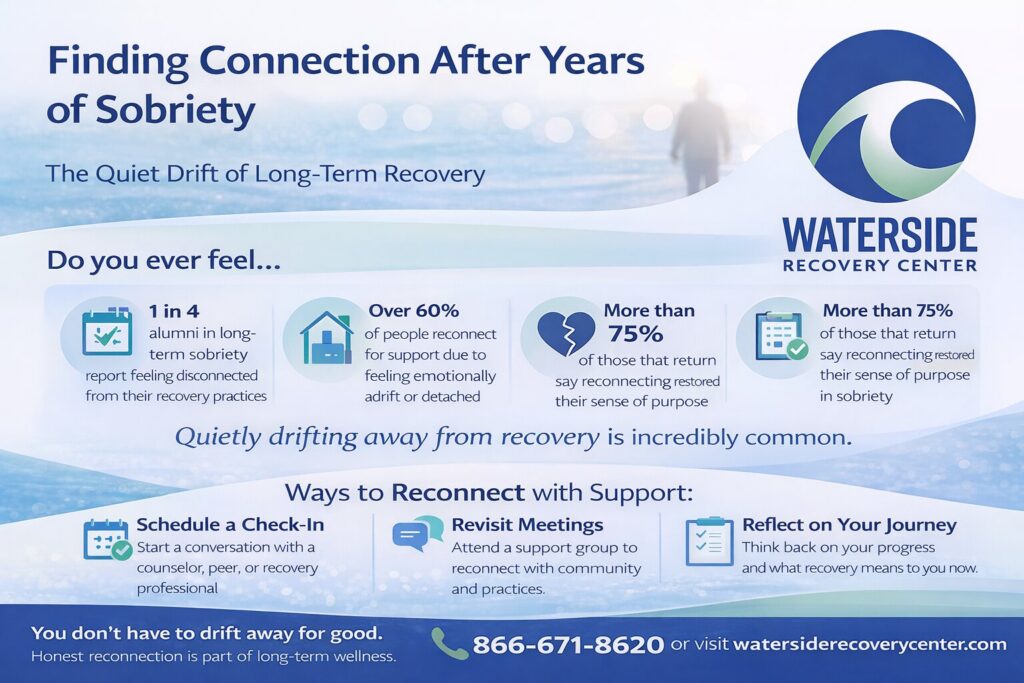
Long-term alumni sometimes describe a moment where they realize something subtle has changed.
Life is busy.
Work is demanding.
Family responsibilities fill the calendar.
The days move quickly.
But internally, something feels slightly hollow.
Not painful.
Not chaotic.
Just… distant.
Some people notice they’ve lost touch with the community that once supported them.
Others realize they haven’t reflected on their recovery in years.
Some simply notice that the sense of gratitude and clarity they once felt every day has quietly faded.
This moment can be confusing.
Because from the outside, everything looks successful.
But internally, something important feels less alive.
Reconnecting Doesn’t Mean You Failed
One of the biggest misconceptions long-term alumni carry is the belief that reconnecting with recovery means admitting something went wrong.
But reconnecting isn’t failure.
It’s maintenance.
Think about physical health.
You don’t exercise once and expect the benefits to last forever. You return to habits that keep your body strong.
Recovery works the same way.
Revisiting the practices that once helped you grow doesn’t erase your progress. It strengthens it.
Many long-term alumni eventually discover that reconnecting with recovery actually deepens their sense of purpose.
It reminds them why sobriety mattered so deeply in the first place.
The Moment People Come Back
One of the most encouraging patterns I’ve seen in recovery communities is this:
People return.
Not always because life collapsed.
Often because something inside them nudged them to reconnect.
They missed the honesty they once felt in recovery conversations.
They missed the clarity that came from reflecting on their lives.
They missed the version of themselves who felt grounded and connected.
Coming back doesn’t erase the years you’ve already lived sober.
It builds on them.
It turns recovery from something you survived into something you continue growing through.
Recovery Isn’t a Chapter That Ends
Many people initially see recovery as a chapter.
A difficult period they eventually move past.
But long-term alumni often discover something surprising.
Recovery isn’t a chapter.
It’s a foundation.
The values, honesty, and emotional awareness that helped you get sober are the same qualities that help you stay connected to life.
When those qualities fade, life can start feeling strangely mechanical—even if everything looks successful.
Reconnecting with recovery restores something deeper than sobriety.
It restores presence.
Staying Connected to What Matters
Long-term recovery doesn’t mean repeating early routines forever.
It means staying connected to the deeper principles that made sobriety meaningful.
For some people, that means returning to community.
For others, it means mentoring someone newer in recovery.
And sometimes it means reconnecting with professional support that helps people strengthen their foundation again.
Some individuals explore treatment options in areas we serve, including programs available in Worcester or broader support across the Metrowest region.
These moments of reconnection don’t erase the life you built.
They help sustain it.
The Truth Many Long-Term Alumni Eventually Realize
There’s a moment many people in long-term recovery eventually reach.
They realize sobriety wasn’t the finish line.
It was the doorway.
Recovery didn’t just remove substances from life. It opened the possibility of living with deeper awareness and connection.
When that awareness fades, life can start feeling strangely flat.
Reconnecting with recovery isn’t about fixing something broken.
It’s about remembering what once made life feel vibrant again.
Frequently Asked Questions
Is it normal for recovery to feel less important over time?
Yes. As life stabilizes, many people naturally focus more on work, family, and responsibilities. Recovery practices may fade into the background, which is a common experience among long-term alumni.
Does drifting away from recovery activities mean relapse is coming?
Not necessarily. Many people remain sober even when recovery becomes less active. However, reconnecting with recovery can help strengthen emotional balance and long-term stability.
Why do some people feel disconnected years into sobriety?
Life responsibilities can replace the routines that once supported recovery. Without reflection or community, some people begin to feel emotionally distant from the reasons they chose sobriety.
Is reconnecting with support a step backward?
No. Many long-term alumni reconnect with recovery communities or professional support to deepen their growth and maintain long-term wellness.
How can someone reconnect with recovery after years away?
Some people reconnect through peer support, reflection, mentorship, or professional guidance. The goal is not to start over but to strengthen the foundation that already exists.
The Quiet Way People Return
If life has gotten busy and recovery has faded into the background, you’re not alone.
It happens to many people who have built stable lives after addiction.
But recovery was never meant to disappear.
It was meant to support the life you built.
If you’re ready to reconnect with support, help is available. Call 866-671-8620 or visit our opiate treatment services to learn more about our treatment, opiate treatment services in Plymouth, MA.
Sometimes returning to recovery isn’t about starting over.
It’s about remembering who helped you build this life in the first place.