
For a long time, Brian believed he had everything under control.
He showed up early.
He answered emails faster than anyone else on his team.
His performance reviews were excellent.
His family assumed he was doing well.
Most people would have described him as successful.
What nobody saw was the second job he was working every day.
The job of managing his drinking.
The mental calculations started before lunch.
Would he stop at the liquor store on the way home?
How many drinks could he have without feeling terrible tomorrow?
Would anyone notice if he seemed tired during the morning meeting?
How could he make sure nobody realized how much alcohol had become part of his routine?
Eventually, he became exhausted.
Not because of work.
Because hiding the problem had become work.
If you can relate to that feeling, you are not alone.
Many of the people who reach out to Waterside Recovery are not unemployed, homeless, or experiencing obvious life collapse. They are professionals, parents, business owners, healthcare workers, teachers, managers, and executives who are still functioning on the outside while quietly struggling on the inside.
And one of the most common questions they ask is:
“Can I get help without losing my job?”
For many people exploring our afternoon treatment options, the answer may be yes.
Success Can Make Alcohol Problems Harder to Recognize
One of the biggest myths about alcohol addiction is that it always looks obvious.
People imagine missed work.
Lost jobs.
Financial disaster.
Legal problems.
While those situations certainly happen, many alcohol problems develop much more quietly.
High-functioning individuals often continue meeting expectations for years.
Bills get paid.
Projects get completed.
Responsibilities get handled.
From the outside, life appears stable.
Inside, however, the experience can feel very different.
Many people describe constant anxiety.
Poor sleep.
Irritability.
Difficulty concentrating.
A growing sense that alcohol is becoming less of a choice and more of a necessity.
Because major consequences have not happened yet, they convince themselves treatment can wait.
Months turn into years.
Years turn into even more years.
Meanwhile, alcohol slowly becomes the center of life.
The Fear That Keeps Many People Stuck
When someone finally admits they may need help, another fear often appears.
“What will happen to my career?”
This fear stops countless people from reaching out.
They worry they will need to disappear for months.
They worry coworkers will find out.
They worry treatment automatically means putting life on hold.
For professionals carrying significant responsibilities, these concerns feel very real.
One client told us:
“I wasn’t afraid of treatment. I was afraid of everything treatment would take away.”
That fear makes sense.
But it is often based on incomplete information.
Not every person requires the same level of care.
Treatment exists on a spectrum, and finding the right fit is an important part of recovery.
The Decision Is Rarely as Simple as People Expect
Once people begin exploring treatment, they often discover they are not choosing between getting help and keeping their job.
Instead, they are evaluating different levels of support.
Some people benefit from highly structured daytime care that involves several hours of treatment across multiple days each week.
Others may benefit from a schedule that provides significant clinical support while leaving more room for work obligations.
This is often where conversations about PHP vs intensive outpatient begin.
The question is not simply which option is better.
The real question is:
Which level of support gives you the best opportunity to recover while managing the realities of your life?
That answer looks different for everyone.
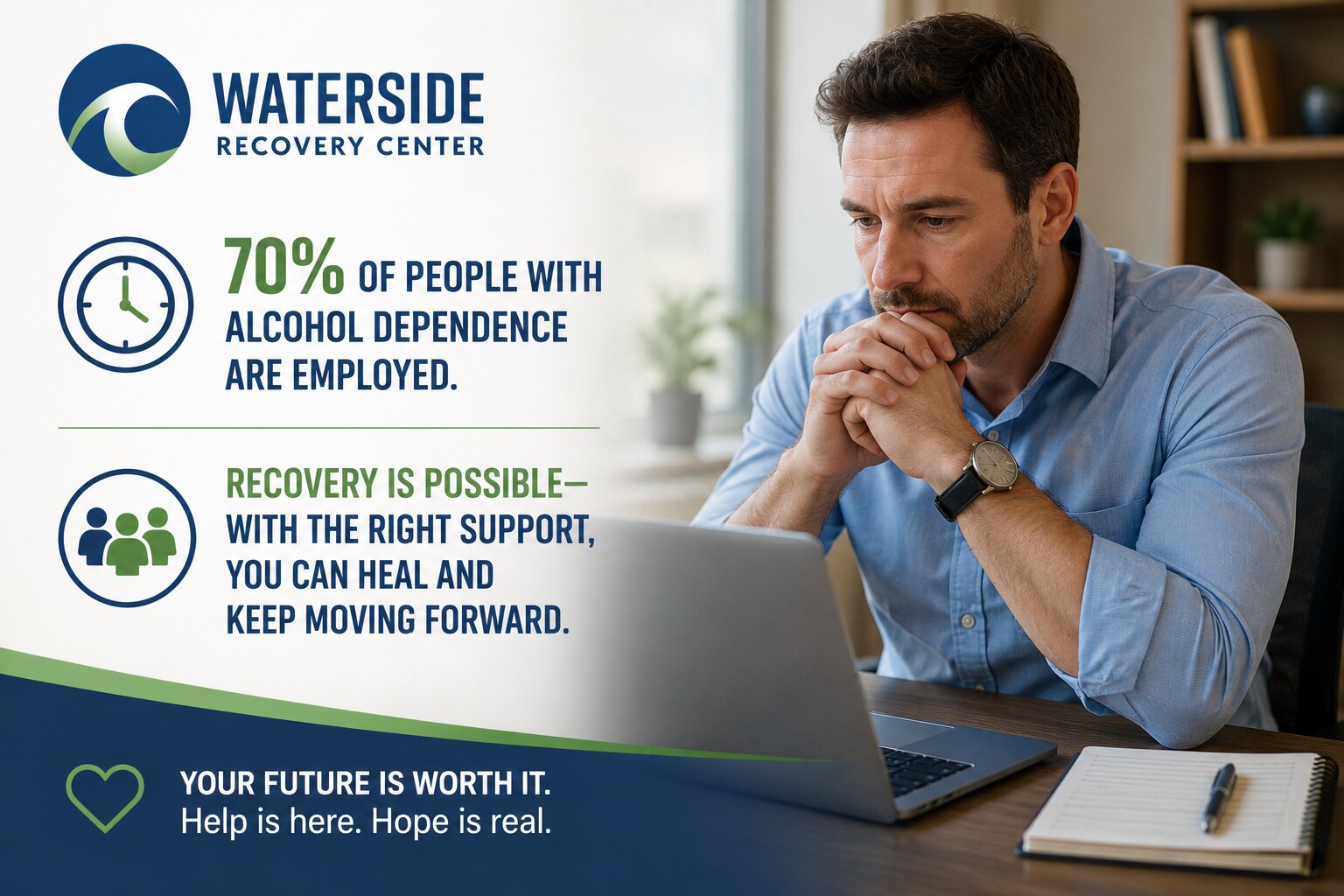
Why High-Functioning Professionals Often Need More Support Than They Think
One challenge we frequently see is underestimating the impact alcohol is having.
High achievers are used to pushing through discomfort.
They ignore exhaustion.
They work through stress.
They solve problems independently.
These traits often contribute to professional success.
Unfortunately, they can also make addiction easier to hide.
Many people arrive believing they only need a small amount of support.
Then, after beginning treatment, they realize how much energy they have been spending simply surviving.
One client compared it to carrying a backpack full of bricks.
“I got so used to the weight that I forgot it wasn’t supposed to be there.”
Alcohol often creates a similar experience.
The burden becomes normal.
Only when it begins lifting do people realize how heavy it actually was.
Keeping Your Career While Building Recovery
One of the reasons flexible treatment options exist is because life does not stop when recovery begins.
People still have responsibilities.
Children still need rides to school.
Mortgages still need to be paid.
Employers still expect work to be completed.
Treatment should acknowledge those realities whenever clinically appropriate.
For many professionals, maintaining employment during treatment can actually support long-term recovery.
Work can provide structure.
Routine.
Purpose.
Connection.
The goal is not necessarily to remove every responsibility.
The goal is to create enough support that recovery can grow alongside those responsibilities.
This is why individualized treatment planning matters so much.
Recovery is not one-size-fits-all.
What Progress Often Looks Like
Many people expect recovery to feel dramatic.
Sometimes it does.
More often, progress shows up in small moments.
You wake up without panic.
You attend a family event and remain fully present.
You stop counting hours until your next drink.
You drive home from work without automatically thinking about alcohol.
You sleep through the night.
You begin trusting yourself again.
These changes may sound small.
They are not.
For many people, they represent the beginning of getting their life back.
The People Who Succeed Are Not Necessarily the Strongest
This may surprise you.
The people who succeed in recovery are not always the most disciplined.
They are not always the toughest.
They are not always the most motivated.
Often, they are simply the people who stop trying to do everything alone.
They allow themselves to accept support.
They become honest.
They ask questions.
They stay engaged.
Recovery does not require perfection.
It requires participation.
And for many professionals, that participation begins with a conversation about what type of treatment fits their current life.
You Do Not Have to Wait for Things to Get Worse
Many people postpone treatment because they believe they have not hit “rock bottom.”
The truth is that rock bottom is not a requirement for recovery.
You do not need a DUI.
You do not need to lose your job.
You do not need to destroy relationships.
You do not need to wait until everything falls apart.
Sometimes the best time to seek help is when life still looks functional.
Because that is often when meaningful change can happen before greater consequences develop.
At Waterside Recovery, we help individuals explore treatment options that align with their clinical needs and personal responsibilities. We also provide care in areas we serve and offer treatment options for individuals seeking support in areas we serve.
The hardest part is often making the first call.
Everything after that becomes a step-by-step process.
Frequently Asked Questions
Can I keep working while receiving alcohol treatment?
Many people can continue working while participating in treatment, depending on their clinical needs and recommended level of care. Treatment plans are often designed to balance recovery with important responsibilities whenever appropriate.
How do I know if I need more support than counseling alone?
If alcohol use continues despite attempts to cut back, causes emotional distress, affects relationships, or occupies a significant amount of mental energy, additional structured support may be worth exploring.
Is it possible to be successful at work and still have an alcohol problem?
Yes. Many high-functioning individuals maintain careers, families, and responsibilities while privately struggling with alcohol dependence. External success does not always reflect internal wellbeing.
What if I’m worried coworkers will find out?
Confidentiality is a fundamental part of treatment. Many professionals seek care every year while maintaining their careers and protecting their privacy.
What is the difference between structured daytime care and multi-day weekly treatment?
Both provide clinical support, therapy, and recovery-focused services, but they differ in intensity and time commitment. Treatment providers can help determine which level of support is most appropriate for your situation.
Do I need to hit rock bottom before seeking treatment?
No. Many people seek help before experiencing severe consequences. Early intervention often makes recovery easier and can prevent problems from becoming more serious.
What if I’m not sure whether my drinking is serious enough?
If alcohol has become a recurring concern, affects your quality of life, or causes you to question your relationship with drinking, having a professional conversation can provide clarity and guidance.
Call 866-671-8620 or visit our afternoon treatment program to learn more about our IOP services Plymouth, MA.