
The first time someone walks through our doors, they rarely stride in with confidence.
Most come in quietly. Carefully. With more questions than answers. Some sit in the parking lot for twenty minutes before mustering the courage to step inside. Others walk up to the front desk and say the words like they’re not sure they believe them yet:
“I think I need help.”
And even then, there’s usually a second voice whispering behind that one:
“But what if I’m not ready?”
“What if I can’t do this?”
“What if this changes me—and I don’t like who I become?”
If you’re new to this—newly diagnosed, newly sober-curious, or newly terrified—this is what we want you to know.
You Don’t Have to Be Sure. You Just Have to Be Here.
The truth is, no one comes into alcohol addiction treatment feeling totally certain.
Even the most motivated people have doubts. Even those who say, “I’ve hit bottom,” often second-guess their decision the next morning. That’s not a sign you’re not ready. That’s a sign you’re human.
So if you’re waiting to feel 100% ready before reaching out—pause for a second. What if readiness isn’t a feeling, but a decision? One small moment of willingness.
You don’t need to walk in shouting your truth. You just need to whisper it, even if your voice shakes.
Addiction Isn’t a Failure. It’s an Adaptation.
So many people come in ashamed. Not just of what they’ve done while drinking—but of the fact that they ended up here at all. In treatment.
But here’s the thing: most people don’t drink to feel reckless. They drink to feel better. Or to feel something. Or to not feel anything at all.
Alcohol becomes a coping tool—sometimes the only one available, or the only one that worked for a while.
That doesn’t mean you’re weak. It means your body and brain were trying to survive. In treatment, we don’t punish that—we gently ask, “What were you using alcohol for?” And then we start exploring what else could meet that need, without causing harm.
You Can Be Scared and Still Show Up
One of the most common things we hear from people on Day One is:
“I don’t know if I can do this.”
And we always say:
“You don’t have to do all of it today. Just today’s piece.”
The fear is normal. Especially if this is your first time entering a program. Especially if you’ve just been diagnosed and the words still feel foreign in your mouth: “alcohol use disorder.” Especially if you’ve heard stories—or lived them—where help didn’t help the first time.
But fear doesn’t mean you’re not ready. It means you care. It means this matters to you. And when something matters, it’s okay to be afraid of getting it wrong. That fear can walk with you—we just don’t let it steer.
Medication Isn’t Forced. And It Doesn’t Erase Who You Are.
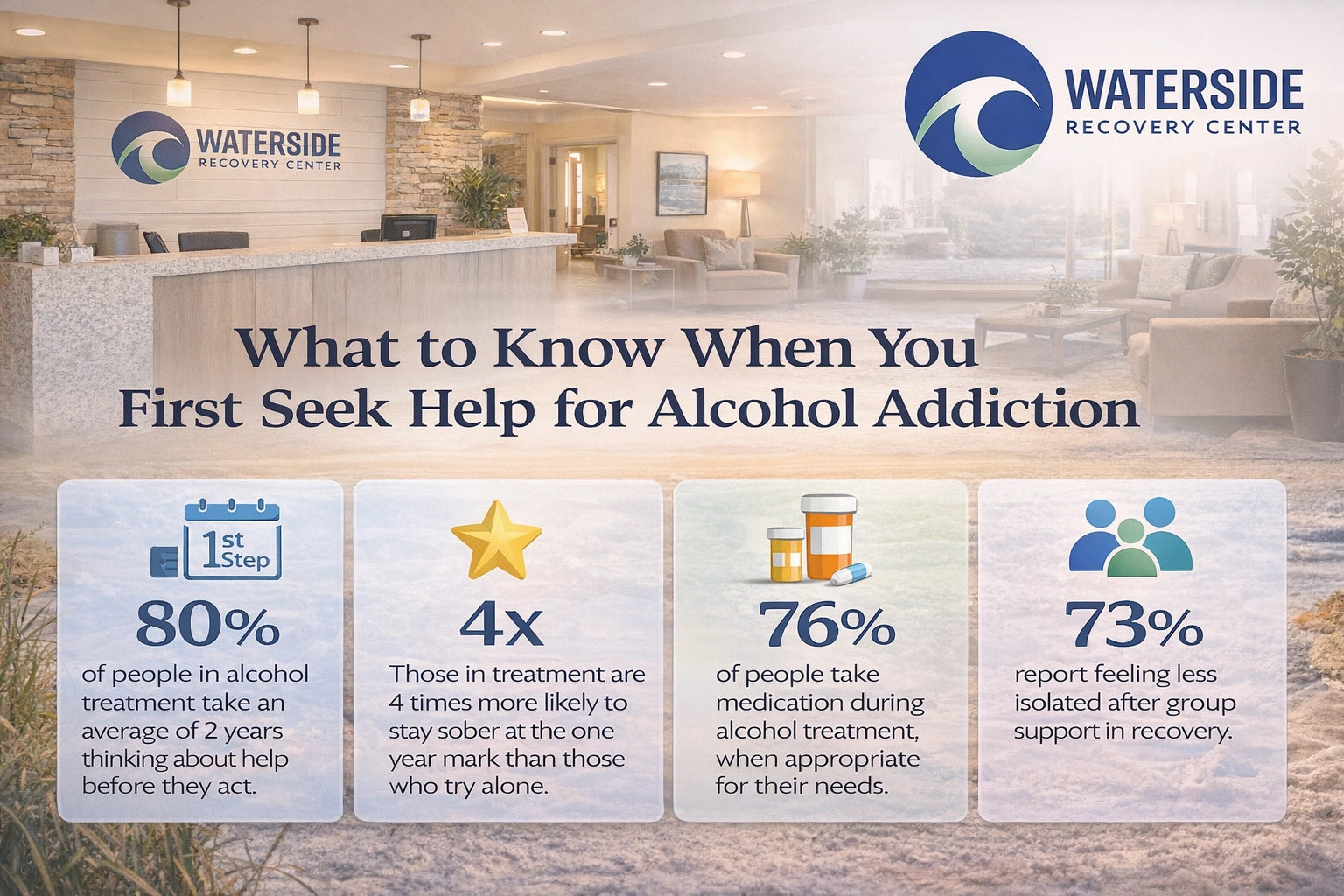
If you’re feeling anxious about medication, you’re not alone. Many people come in scared it will flatten them. Make them feel like a zombie. Numb them. Make them “someone else.”
Especially if you’ve just been diagnosed, the idea of relying on medication can bring up big feelings—shame, resistance, fear of dependency.
So here’s our promise:
We’ll never push you into taking something you don’t want.
We’ll explain every option, every potential side effect, every question you have.
We’ll listen if your answer is no.
We’ll celebrate if your answer is yes.
And if you start and then decide to stop? That’s okay too. Medication in alcohol addiction treatment is a tool—not a requirement. For some people, it’s a game-changer. For others, it’s not the right fit. You get to decide.
You Are Allowed to Miss Drinking
This one might feel weird. But it’s real.
It’s okay if there are parts of drinking you’ll miss. Maybe you liked the way it made you loosen up at parties. Maybe it made certain conversations easier. Maybe it was a reward at the end of a long day.
Missing those things doesn’t mean you’re not committed to getting better. It just means alcohol played a role in your life. And now, you’re asking if that role is still working for you.
We never expect people to hate alcohol when they enter treatment. We expect them to be curious about their relationship with it. That’s where healing begins.
You Might Cry the First Time Someone Gets You
In your first group session, or first one-on-one with a therapist, or even just hearing another client say out loud what you’ve only thought—you might feel something crack open.
You might cry. Or sigh in relief. Or sit quietly with a lump in your throat thinking, I’m not alone.
That’s not weakness. That’s release. That’s your nervous system recognizing safety. That’s the power of being seen.
You Don’t Have to Figure Out Forever
Sometimes people freeze up when they hear words like “sobriety” or “recovery.” They think:
“Do I have to commit forever?”
“What if I relapse—does that mean I failed?”
“Am I even that bad?”
Here’s the truth: treatment isn’t about labeling you. It’s about helping you find what makes life livable—and maybe even good—without alcohol being in the driver’s seat.
If you relapse, we don’t kick you out.
If you feel unsure, we don’t shame you.
If you stay, we stay with you.
This is a conversation, not a sentence.
You Are Not Alone in This
It’s easy to believe that your story is somehow worse—or weaker—than everyone else’s.
But every day, people walk into treatment thinking they’re the only one who:
- Drinks alone at night to fall asleep
- Has hidden bottles in the garage or glove compartment
- Lied to people they love to protect their use
- Still wonders if maybe it’s not that bad
You’re not the only one. You’re not too far gone. And you’re not the exception to healing.
There Is Help in Places That Won’t Judge You
Whether you’re ready to start right now or still gathering courage, know that support exists nearby. If you’re looking for help in Plymouth County, Waterside Recovery welcomes clients from Kingston, Marshfield, Duxbury and beyond with warmth, clarity, and zero judgment.
Your past doesn’t scare us. Your fear doesn’t annoy us. Your uncertainty doesn’t disqualify you.
FAQ: Starting Alcohol Addiction Treatment
Is alcohol addiction treatment only for “serious” cases?
No. If alcohol is interfering with your life—your relationships, your sleep, your peace of mind—it’s serious enough. You don’t need to “hit bottom” to ask for help.
What happens during the first week of treatment?
You’ll meet your care team, go through an assessment (so we can tailor your care), and begin group and/or individual therapy. You’ll also start building safety and routine.
Can I still work while in treatment?
Yes, depending on the level of care you choose. Outpatient programs are designed with flexibility for work, school, or family responsibilities.
What if I’m scared of group therapy?
That’s totally normal. You won’t be forced to share before you’re ready. Most people find that hearing others speak first helps them feel less alone—and more willing to open up over time.
Will anyone know I’m in treatment?
No one is notified without your consent. Your privacy is protected by law, and we take confidentiality seriously.
Ready to Take the First Step?
Call (866)671-8620 to learn more about our alcohol addiction treatment in Plymouth, Massachusetts. Whether you’re ready, unsure, or somewhere in between—we’re here, and we’re ready when you are.