
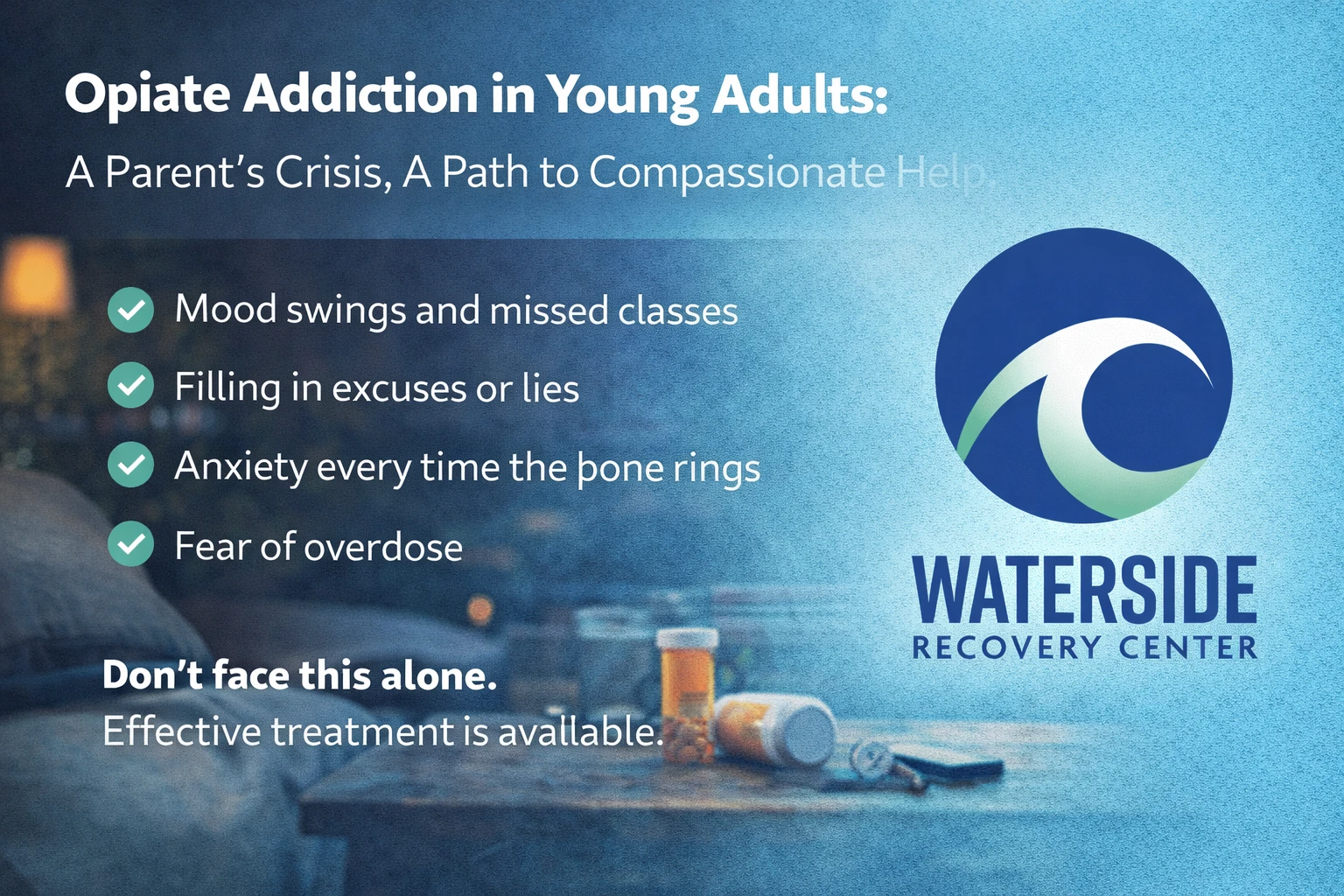
When your child is caught in the spiral of opiate addiction, it doesn’t feel like a “health issue.” It feels like terror. Sleepless nights. A quiet panic every time your phone rings. Maybe you’ve noticed small changes building over time—missed classes, mood swings, a growing distance between you. Or maybe it hit all at once: a phone call, an emergency, a crisis you never imagined facing.
If you’re reading this, we want to start here: You are not alone. And your child’s life is not lost. Opiate addiction is treatable. There are steps forward. And even though it might feel like you’re standing in a storm, there are places—like ours—designed to help you find calm again.
At Waterside Recovery, our Opiate Addiction Treatment services in Plymouth County, MA are built for moments exactly like this: when a young adult needs immediate, compassionate, and professional help—and when a parent needs steady answers, not scare tactics.
What Does Opiate Addiction Treatment Involve?
Opiate addiction treatment typically unfolds in stages, each one designed to stabilize, support, and slowly empower your child. These stages may include:
- Medical Detox: For many young adults, treatment begins with a detox period under medical supervision. This helps manage withdrawal safely and comfortably. While detox doesn’t “fix” addiction, it clears the path for real recovery to begin.
- Clinical Assessment: A thorough intake evaluation helps our team understand your child’s specific needs—physically, emotionally, and behaviorally. This informs the level of care we recommend.
- Treatment Planning: No two recovery paths are identical. Some young adults need full-day treatment (Partial Hospitalization or Intensive Outpatient). Others benefit from flexible care that allows them to rebuild structure without full residential support.
- Therapy & Skill-Building: Daily or weekly therapy (individual and group) helps clients explore the root causes of their use, develop healthier coping tools, and rebuild trust in themselves and others.
- Family Support: As a parent, you are not just a bystander. You’re part of the healing process. Our programs often include family therapy, parent coaching, and regular updates to help rebuild connections and set healthy boundaries.
Recovery is rarely linear. But with the right support, it becomes possible—and sustainable.
How Quickly Can Treatment Begin?
If your child is in crisis, time matters. We understand that. That’s why Waterside Recovery offers fast-response assessments and same-week admissions for most clients. Once you reach out, we’ll walk you through an intake process that includes:
- A short phone assessment to understand immediate risks
- Insurance verification (or discussion of private-pay options)
- Clinical intake scheduling (often same day or next)
- Transportation coordination if needed
In most cases, we can help your child begin treatment within 24–72 hours.
If your child is in danger of overdose or actively using in an unsafe way, call emergency services. But if they are willing to get help—even hesitantly—that’s enough to start. Don’t wait for things to get worse. Every hour matters in crisis.
What If My Child Doesn’t Want Treatment?
This is one of the hardest realities families face. You may be more ready than they are. You may feel like you’ve already tried everything: tough love, therapy, consequences, support. And still, they may resist.
It helps to know that resistance is common—and not permanent.
Many young adults struggle with denial, fear, or shame when it comes to getting help. They might feel like they’ve already let everyone down. Or that they don’t deserve to get better. That’s where our approach differs. We don’t demand full buy-in from day one. We meet clients where they are, and build motivation from within.
If your child is hesitant, our admissions team can offer gentle guidance or help you explore options like family coaching or intervention support. You don’t have to force them—but you also don’t have to do this alone.
What Should a Parent Look for in a Treatment Program?
All treatment is not the same. Especially when it comes to young adults, you want more than just a basic program—you want a center that understands the complexity of this stage of life.
Look for:
- Experience with young adults (18–26): Recovery looks different at this age. Clients need a blend of structure and autonomy, of accountability and encouragement.
- Dual-diagnosis treatment: Many young adults struggling with opiates also battle anxiety, depression, trauma, or ADHD. A good program will assess and treat both.
- Evidence-based therapy: Modalities like CBT, DBT, EMDR, and trauma-informed care help clients learn new ways to process emotions and handle stress.
- Whole-person focus: Treatment should go beyond “stop using.” It should help clients find new purpose—academically, vocationally, or socially.
- Strong family engagement: Your role doesn’t end at drop-off. You deserve a seat at the table, a voice in the process, and support for your own grief and healing.
Waterside Recovery is proud to offer all of the above through our opiate addiction treatment in Plymouth County and surrounding areas. We know families are part of the solution.
Will My Child Ever Be the Same Again?
This question haunts most parents—even if they never speak it out loud.
The truth? Your child may not be the same. But that isn’t always a bad thing.
Substance use changes people. But so can recovery. Many young adults emerge stronger, more self-aware, more compassionate. Not untouched by what they’ve been through—but more equipped to face the world with honesty and resilience.
We’ve seen it again and again: the same young adults who showed up angry or hopeless begin to reconnect with their families, their goals, their joy. It takes time. But it’s possible. And it starts with a single step.
Are Local Treatment Options Available in Plymouth County?
Yes. Waterside Recovery is based right here in Plymouth County, MA, with additional support available to families in neighboring areas like Bristol County. We’re embedded in the community, and we understand the local resources, stressors, and needs of families in this region.
Whether you’re looking for outpatient care that allows your child to stay nearby or a more structured day program to stabilize a crisis, we can help.
FAQs: Common Questions from Parents in Crisis
What if we’ve tried treatment before and it didn’t work?
That doesn’t mean this won’t. Recovery isn’t a straight line. Many young adults need multiple attempts. What matters is finding the right level of support for where they are now. We build each treatment plan from scratch—no cookie-cutter care.
Does my insurance cover opiate addiction treatment?
In most cases, yes. Waterside Recovery accepts many major insurance plans. We can verify your benefits quickly and confidentially over the phone. If you’re worried about costs, our team will help you understand your options without pressure.
What if my child has mental health issues too?
That’s common—and treatable. We specialize in dual-diagnosis care, which means we treat addiction and mental health together, not separately. Anxiety, depression, trauma, and ADHD often go hand in hand with substance use. Addressing them simultaneously improves outcomes.
Will I get updates or be part of my child’s care?
Absolutely. With your child’s consent, we offer regular family sessions, updates, and clinical involvement. We also offer parent-specific support so you can navigate this process with education, boundaries, and healing of your own.
Can I visit the facility or talk to someone before committing?
Yes. You’re welcome to call, ask questions, and even visit if that helps you feel more grounded. We know this is an enormous decision. We’ll give you honest answers, not pressure.
You Don’t Have to Navigate This Alone
We know this isn’t the road you hoped to be on. No parent dreams of searching for opiate addiction treatment for their child. But you are doing the most loving thing possible right now: seeking help.
Whether your child is ready today—or you’re just trying to understand what’s next—our team at Waterside Recovery is here.
Call (866)671-8620 or visit our Opiate Addiction Treatment services in Plymouth County, MA to speak with someone who understands. Let us help you steady the ground beneath you again.