
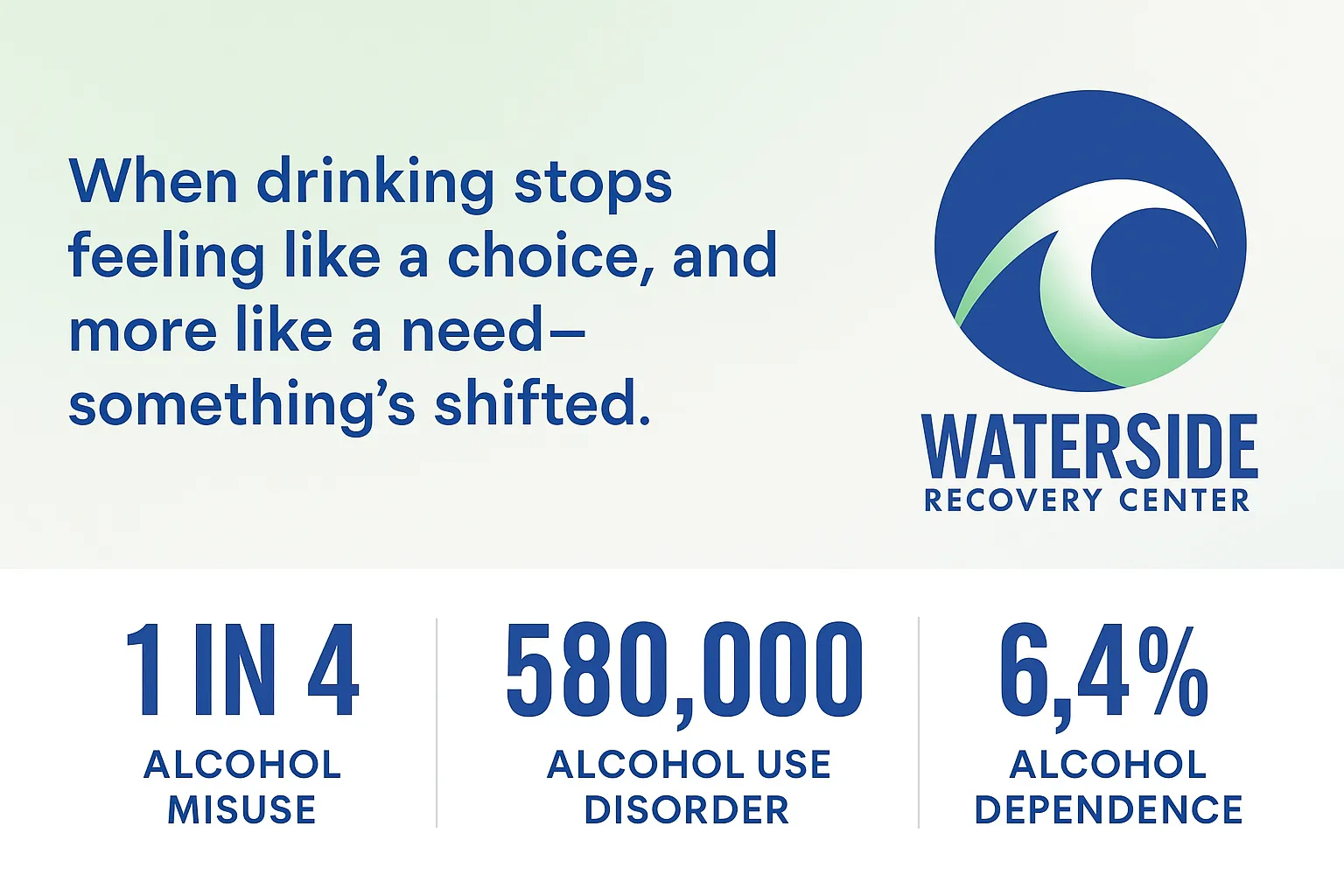
When drinking stops feeling like a choice, and more like a need—something’s shifted.
Maybe you’ve noticed yourself planning your nights around alcohol. Maybe you’ve told yourself you’d cut back, but nothing sticks. Maybe the morning shame feels heavier than it used to.
If you’re here, reading this, chances are you already know something’s not right. Not dramatic. Not falling-apart. But not okay either.
That quiet knowing? That something has to change feeling? That’s the start of recovery. And you don’t have to do it alone.
This guide walks you through what alcohol addiction treatment actually looks like—from the first phone call to life after formal care. At Waterside Recovery, we know how overwhelming this decision can feel. So we’ve broken it down. Gently. Clearly. With your dignity intact.
Before You Begin: What Realizing You Need Help Actually Looks Like
The movies like to show big moments—collapses, interventions, dramatic ultimatums. But in real life, deciding to get help is usually smaller and quieter. Sometimes it sounds like:
- “I don’t like who I am when I drink.”
- “I can’t remember the last time I went a week without it.”
- “I’m scared, but I don’t want to keep living like this.”
You don’t have to wait for a rock bottom. You don’t have to crash your car, lose your job, or hit some invisible threshold of “bad enough.”
If alcohol is making your life harder, if it’s dulling your joy or damaging your relationships, you’re allowed to seek support now.
Step One: Reaching Out—And What Actually Happens When You Do
Making the first call or filling out a form might feel like the biggest leap. Not because it’s difficult technically—but because it’s vulnerable.
Here’s what happens when you reach out to Waterside Recovery:
- You talk to a real human. No judgment. Just someone who’s there to listen.
- We ask a few simple questions. What’s been going on? What’s your current relationship to alcohol? What kind of support feels possible right now?
- We walk you through your options. Whether you’re looking for outpatient care, medical support, or just a conversation—you don’t have to know what you need to ask for it.
We also handle the logistics: verifying insurance, scheduling an assessment, and helping you understand your choices. We’ll go at your pace.
If you’re looking for alcohol addiction treatment in Marshfield, Massachusetts, this is often the first step: one honest conversation that opens the door to change.
The Assessment: Clarifying, Not Labeling
Once you decide to explore care, you’ll be scheduled for a clinical assessment. This isn’t a test. There are no wrong answers. It’s a conversation where we learn about your:
- History with alcohol (past and present)
- Mental health and medical concerns
- Daily routine and commitments (like work or family)
- What you’re hoping for—or struggling with
This helps us determine what level of care makes the most sense. Some people benefit from more intensive support. Others do well with a flexible outpatient plan. Your voice matters in that decision.
What Treatment Looks Like: The Core Parts of Care
No two recovery journeys are the same. But most alcohol addiction treatment programs include several key elements:
1. Individual Therapy
Here’s where you talk about the deeper stuff. What drinking has been covering up. What you’re afraid to face. What parts of your life you want to reclaim.
Your therapist helps you explore patterns, process emotions, and build new coping tools—without pushing or pathologizing.
2. Group Therapy
You’re not alone. Group therapy reminds you of that, often in profound ways. You’ll hear stories that sound like yours and offer your own when you’re ready. It’s not about confessing—it’s about connecting.
Clients often say group is where the shame starts to lift.
3. Medical or Psychiatric Support (if needed)
If you experience withdrawal symptoms, co-occurring anxiety, depression, or sleep issues, we can help. Waterside offers access to licensed medical professionals who work alongside your therapeutic team.
4. Family or Relationship Support
Not required—but available. Sometimes healing involves rebuilding trust, setting boundaries, or simply helping loved ones understand what recovery really means.
5. Practical Support and Relapse Prevention
We’ll help you build real-world skills: how to get through weekends, social events, or stress without drinking. How to handle urges without panic. How to recognize signs that you’re slipping—and what to do next.
Outpatient treatment is especially helpful for people who want to stay connected to their lives while getting support. If you’re looking for alcohol addiction treatment in Bristol County, MA, this structure can provide the balance you need.
What If You’re Not Sure You Can Do It?
That’s okay.
Most people don’t feel ready. Most people walk in with doubts. You’re not weak because you’re unsure—you’re honest.
Treatment doesn’t require perfection. Just a willingness to keep showing up, even imperfectly.
And if you miss a day, or feel like giving up? That’s not failure. That’s part of the work. We’ll help you through it, not punish you for it.
After Treatment: Life Goes On—And So Does Support
Treatment isn’t the finish line. It’s a beginning. That’s why Waterside Recovery builds aftercare into every treatment plan.
This might include:
- Weekly therapy sessions
- Alumni groups or sober events
- Ongoing check-ins with a care coordinator
- Referrals to community resources or support groups
Our goal is for you to leave with tools, confidence, and a plan—not fear.
And if you ever need to come back? You’re always welcome. Recovery is allowed to evolve.
Frequently Asked Questions About Alcohol Addiction Treatment
Do I have to stop drinking completely?
Most treatment programs, including ours, encourage abstinence because it creates the clearest path to healing. But if you’re unsure, that’s okay. You won’t be forced—you’ll be supported in finding what’s right for you.
What if I’ve tried before and it didn’t work?
That doesn’t mean treatment failed. It might mean the timing wasn’t right, the approach didn’t fit, or you needed more support. Trying again isn’t weakness—it’s wisdom.
Can I still work while in treatment?
Yes. Our outpatient program is designed for people who have jobs, family responsibilities, or other commitments. We’ll work with your schedule as best we can.
Will my information be kept private?
Absolutely. Your participation in treatment is confidential, protected by law. We take your privacy seriously.
What if I’m nervous to start?
That’s normal. In fact, it’s probably a good sign—it means you’re taking it seriously. Our team is trained to walk with people who feel scared, skeptical, or unsure. You’re allowed to come in nervous.
You Don’t Need to Be “Worse” to Be Worthy of Help
If alcohol has become more than just something you enjoy—and more like something you need—it’s okay to get support.
You don’t have to be falling apart to start over. You just have to want something different.
Call (866)671-8620 to learn more about our Alcohol Addiction Treatment services in Plymouth County, MA.
We’re here. And we’re ready when you are—even if you’re not sure you are yet.