
I didn’t think it would happen like that.
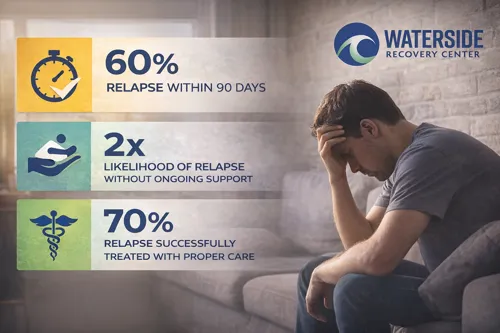
Not after 90 days.
Not after everything I had already done to get there.
It wasn’t dramatic. No one else even knew at first.
It was just me, alone, making a decision I had already played out in my head a dozen times.
And right after, there was this strange silence.
Not chaos. Not immediate regret.
Just a quiet thought:
“I think I need more help than I thought.”
That was the moment everything shifted—even if I didn’t fully understand it yet.
I Didn’t Relapse Because I Didn’t Care
This is important, because I told myself the opposite for a while.
I thought relapse meant I didn’t want it badly enough.
That I didn’t try hard enough.
That maybe I wasn’t “serious” about recovery.
None of that was true.
I cared. A lot.
But caring and being supported aren’t the same thing.
What I didn’t realize was that I had slowly started doing this alone again.
And that’s a heavy place to be—even when you don’t notice it happening.
The Confidence That Turned Into Distance
Around the 60–90 day mark, something shifted in me.
I started feeling better.
Clearer. More stable. More like myself.
And that should have been a good thing.
But instead of staying connected, I started pulling away.
Not in an obvious way. In quiet ways:
- Skipping check-ins because I felt “fine”
- Sharing less, especially the harder stuff
- Letting structure slip because I thought I didn’t need it anymore
- Telling myself I had learned enough
It didn’t feel risky.
It felt like progress.
That’s what made it dangerous.
The Drift Happens Before the Fall
Relapse didn’t begin the day I used.
It started weeks earlier.
In moments where I chose silence over honesty.
Where I told myself, “This isn’t a big deal.”
Where I handled things internally instead of externally.
There’s no alarm for that.
No warning sign that flashes.
It’s more like slowly stepping away from solid ground without realizing how far you’ve gone.
And then one day… you’re far enough that it feels easier to keep going than to turn back.
The Moment It Hit Me Wasn’t During It
I wish I could say I had some big realization in the middle of it.
I didn’t.
The clarity came after.
When everything slowed down again and I had to sit with what happened—not just the relapse, but everything leading up to it.
That’s when it clicked:
I didn’t suddenly fail.
I gradually disconnected.
And that realization hurt.
But it also gave me something I didn’t have before:
Direction.
I Thought I Was Back at Zero—But I Wasn’t
This is the lie relapse tells you.
That everything is gone.
That you erased all your progress.
That you’re starting over from the very beginning.
But that’s not what it actually is.
I still had 90 days of lived experience.
I still knew what it felt like to be sober.
I still understood my triggers more than I ever had before.
I wasn’t back at zero.
I was at a different point on the same path.
One that required more honesty—and more support.
Asking for Help Again Felt Different This Time
The first time I got help, it felt like survival.
This time, it felt like awareness.
I wasn’t coming in blind.
I knew where I struggled.
I knew where I disconnected.
I knew what I avoided.
And instead of pretending I could handle it differently on my own, I leaned into more support.
That meant stepping back into structure.
Being more open in conversations I used to skim over.
Letting people actually see where I was—not where I thought I should be.
Some of that looked like returning to multi-day weekly treatment.
Some of it meant being more consistent than I was the first time.
It wasn’t about doing it “better.”
It was about doing it honestly.
The Shame Was Real—But It Wasn’t the Truth
I won’t sugarcoat this.
The shame hit hard.
It told me:
- “You knew better.”
- “You messed this up.”
- “People are going to see you differently now.”
And for a little while, I believed it.
But here’s what I eventually saw:
Shame is loud—but it’s not accurate.
It simplifies something complex into something personal.
It turns a process into a verdict.
But relapse isn’t a verdict.
It’s information.
It shows you where the gaps are.
And if you listen to it the right way, it can actually guide you forward.
What I Actually Needed (But Didn’t Admit at First)
Looking back, I didn’t need more willpower.
I needed:
- More consistency
- More accountability
- More honest conversations
- More support during the moments I thought I was “fine”
Because those were the moments I started drifting.
Not the hard ones.
The quiet ones.
That’s where I lost connection.
If You’re in That Place Right Now
If you’re reading this and feeling that familiar heaviness—the one that says, “I messed this up”—I want you to pause for a second.
You didn’t lose everything.
You didn’t undo all your work.
You hit a point where what you had in place wasn’t enough anymore.
That’s not failure.
That’s information.
And there are places where you can reconnect without feeling like you’re starting from scratch.
Some people find that by reaching out for support in areas we serve or exploring treatment options in areas we serve where the focus isn’t on where you messed up—but on what you need now.
For people in Framingham, Massachusetts, that kind of support can feel close enough to actually take that step again.
The Second Time Isn’t the Same as the First
This is something I didn’t expect.
Coming back didn’t feel like repeating the process.
It felt deeper.
More honest.
More specific.
Less about “doing it right” and more about actually understanding myself.
I wasn’t trying to prove anything this time.
I was trying to stay connected.
And that made all the difference.
The Turning Point Wasn’t the Relapse—It Was the Decision After
Relapse felt like the breaking point.
But it wasn’t.
The real turning point was what I did next.
I could have stayed stuck in shame.
I could have pulled away even more.
But instead, I chose to come back.
Not perfectly. Not confidently.
Just honestly.
And that was enough to start again—without actually starting over.
FAQ: What I Wish Someone Told Me After I Relapsed
Does relapse mean I failed?
No. It means something in your support system or process needs to adjust.
Am I back at the beginning?
Not at all. You’re coming back with more awareness than you had before.
Why did this happen after things were going well?
Because progress can sometimes lead to overconfidence or disconnection from support.
Do I need more intense support now?
Not always more intense—but often more consistent and better aligned with what you’re actually experiencing.
What if I feel ashamed to come back?
That’s normal. But most people who understand recovery won’t judge you—they’ll meet you where you are.
Can this actually help me move forward?
Yes. If you use it as information instead of proof that you can’t do this.
This Wasn’t the End—It Was the Moment Things Got Real
I thought relapse meant I lost everything.
But it didn’t.
It showed me exactly where I needed more support.
And once I stopped fighting that—once I got honest about it—that’s when things actually started to feel different.
Not easier.
But steadier.
And sometimes, steady is what gets you through.
For others, especially those closer to Worcester, Massachusetts, that same moment can become the point where things finally start to make sense—not fall apart.
Ready to Take the Next Step?
Call (866)671-8620 to learn more about our Alcohol Treatment in Plymouth, Massachusetts.