
The first time I went to treatment, I thought I was being brave.
The second time, I felt ashamed.
By the third, I figured I was just bad at recovery.
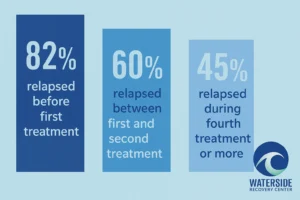
And by the fourth? I almost didn’t go at all.
If you’ve been through opiate addiction treatment more than once—and you’re still struggling—you’re not alone. I used to think I was the only one. That treatment “just didn’t work for me.” That maybe I wasn’t trying hard enough, or worse, maybe I didn’t deserve to get better.
But the truth is, recovery isn’t a straight line. And for a lot of us, it takes more than one round to find footing that holds.
The First Time: I Treated Treatment Like a Fix
The first time I stepped into a program, I had no idea what I was actually signing up for. I thought treatment was a cure—a one-stop detox that would hand me back a version of myself who didn’t need anything anymore.
I followed every rule. Didn’t miss a group. Did the worksheets. Journaled when I was supposed to.
And I left thinking I was done.
But within days, the cravings were back. The same stressors were waiting. The same patterns I hadn’t yet named showed up like they’d been paused—not erased. I relapsed quietly. Told myself it didn’t “count.” Told no one.
What I know now is this: that first round planted seeds. It didn’t “fail.” It just wasn’t the whole story yet.
The Second Time: I Went to Keep Someone Else
Round two happened because someone I loved drew a boundary. Either I got help, or I lost them.
So I went. Not for me—but for the version of myself I thought they needed me to be.
I didn’t want to be there. I was guarded, angry, and convinced the staff would judge me for not “getting it” the first time. When a counselor pushed me on my denial, I shut down. When a peer shared something that sounded too close to my truth, I deflected. I spent more time managing my image than facing what was underneath.
I didn’t stay sober after that program, but something shifted. I couldn’t un-hear the truths that started surfacing. I couldn’t fully pretend anymore that I had it under control.
That program didn’t end in success, but it cracked something open. That mattered.
The Third Time: I Stopped Pretending I Was Different
By the time I landed in a program in Marshfield, MA, I had more damage behind me. Legal trouble. Lost jobs. My health was worse. I didn’t have the energy to perform recovery anymore—I was just trying to stay out of jail.
And weirdly, that made me more honest.
I remember one group in particular. A woman across from me said, “This is my sixth time in treatment, and it’s the first time I’ve felt safe.”
She said it without shame. No dramatic backstory, no self-deprecation. Just truth.
That moment stuck. It gave me permission to stop grading myself. I started showing up more honestly in group. I admitted cravings when they hit. I shared how much I still lied—to others, to myself.
That stay didn’t lead to long-term sobriety, but it gave me something priceless: the ability to tell the truth without collapsing from it.
The Fourth Time: I Chose to Show Up Without the Script
This round, I didn’t have a grand plan. I didn’t pack a fresh notebook or promise anyone anything. I just… couldn’t live like that anymore.
When I came to Waterside Recovery, I was met with something I hadn’t encountered before: space.
Not pressure.
Not pity.
Not lectures.
Just space to be where I was—messy, skeptical, still halfway convinced it wouldn’t work.
And they didn’t need me to believe. They just needed me to keep showing up.
That approach changed everything. I wasn’t being fixed. I was being heard.
For the first time, I let treatment be something imperfect. Something I didn’t control. Something I engaged with even when it didn’t feel magical.
And in that steady, un-flashy way… it worked.
What I Know Now: Recovery Isn’t a Test You Pass
We are not broken clocks waiting to be repaired. We are people with real histories, patterns, trauma, grief, wiring, and—yes—resilience.
Opiate addiction rewires your brain, distorts your ability to connect, and convinces you that nothing will ever help. That’s not weakness. That’s biology. That’s pain.
And multiple rounds of treatment? They don’t prove failure. They prove you’re still trying.
Every time I went back, I learned something I couldn’t have gotten the first time.
Because I wasn’t the same person anymore.
The Truth About Opiate Addiction Treatment
Treatment isn’t a miracle. It’s a container.
What makes it work isn’t the building or the staff alone. It’s whether you can show up—messy, scared, unsure—and be met without judgment.
That’s what Waterside Recovery in Kingston, MA gave me. And if you’re somewhere between defeat and trying again, I hope it gives you that too.
You don’t have to believe it will work. You just have to give it one more shot than you want to.
Because sometimes the fifth try isn’t a repeat—it’s a return. A return to yourself.
FAQ: Opiate Addiction Treatment After Multiple Relapses
What if I’ve been through treatment several times and it still didn’t work?
That’s more common than you think. Addiction is chronic and relapsing, and recovery is often non-linear. Multiple rounds of treatment don’t mean you’re failing—they mean you’re still willing to try. Each time builds on the last, even if it doesn’t feel that way yet.
Is it worth going to treatment if I don’t think I’ll stay sober?
Yes. Ambivalence is normal. Many people begin treatment unsure if they’re ready to stop completely. Good programs, like the one at Waterside Recovery, meet you where you are and help you explore your relationship with substances at your own pace.
How do I know this time will be different?
You don’t. But you’re different. And the circumstances that led you here may offer new insight or motivation. Plus, each treatment center is unique. If your past experience felt judgmental or generic, a new environment—like Waterside Recovery’s opiate addiction treatment program—can feel safer, more grounded, and more effective.
Will people judge me for relapsing?
In a quality treatment program, no. The staff and peers understand relapse is often part of recovery. Judgment has no place in healing. You’ll be met with support, not shame.
I live in a nearby area—do I have to go far for help?
Not at all. Waterside Recovery serves clients across Plymouth County and Bristol County, MA. You don’t have to uproot your life or travel across the state. Support is closer than you think.
You’re Not a Lost Cause. You’re Still in It.
If you’ve been burned by treatment—or by your own hopes—you have every reason to be skeptical.
But skepticism isn’t the end. Sometimes, it’s the beginning of a more honest kind of recovery.
You don’t have to believe in the whole mountain.
Just take the next step.
Call (866)671-8620 to learn more about our Opiate Addiction Treatment services in Plymouth County, MA.
We’re not counting how many times you’ve tried.
We’re just here to help you keep going.