
There’s a moment parents don’t forget.
It’s not always dramatic. Sometimes it’s quiet—your child not answering texts, acting unlike themselves, or something in your gut saying this isn’t okay anymore.
And suddenly, you’re here. Trying to make sense of treatment, options, and what comes next—while your heart is racing ahead of you.
If you’re trying to understand how drug treatment services actually work, I want to walk you through it in a way that feels human—not clinical. Because right now, you don’t need perfect terminology. You need clarity, steadiness, and a path forward.
The First Feeling Is Usually Panic—Then Pressure to Decide
Most parents don’t come into this calmly.
You might feel:
- Urgent pressure to “fix it” immediately
- Fear of making the wrong decision
- Guilt for not catching it sooner
- Confusion about how serious things really are
All of that can hit at once.
And then comes the next layer: What kind of treatment do they need?
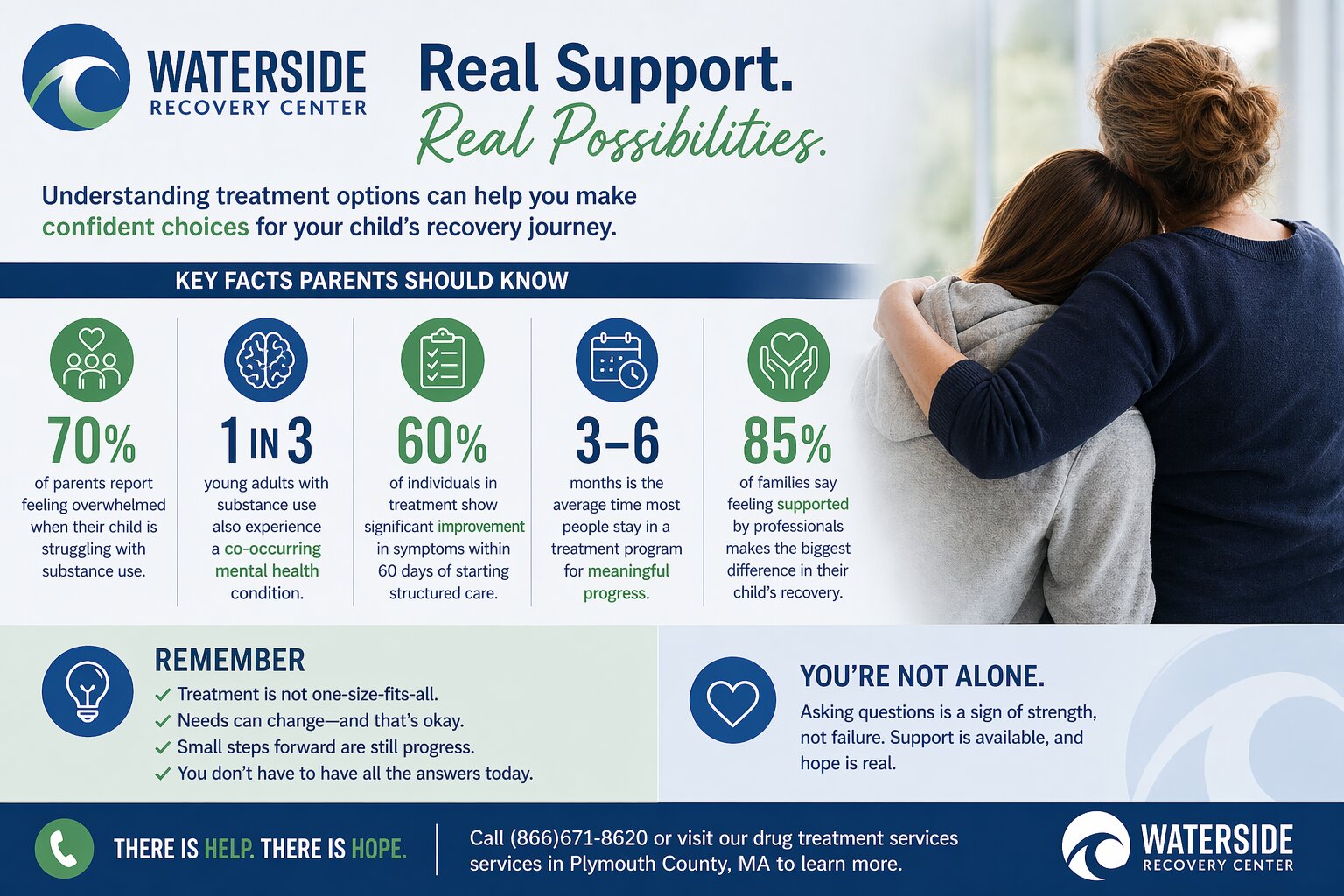
This is where many families start searching, comparing, and trying to understand options—especially questions around outpatient vs inpatient addiction MA. But underneath that search is something deeper:
“What will actually help my child… without making things worse?”
That’s the real question. And it deserves a thoughtful answer.
Treatment Is Not One Thing—It’s a Continuum
One of the biggest misconceptions is that treatment is a single, fixed experience.
It’s not.
Think of it more like a spectrum of support that can adjust based on what your child needs right now.
On one end, there’s highly structured, round-the-clock care.
On the other, there’s flexible, ongoing support that fits into daily life.
Most people don’t stay in one place forever. They move through levels of care as things stabilize.
That flexibility is not a flaw in the system.
It’s actually what allows treatment to work in real life.
What Round-the-Clock Care Really Provides
If your child’s situation feels unstable—emotionally, physically, or behaviorally—more structured care can create a pause.
A reset.
In these settings, your child has:
- A consistent daily schedule
- Immediate access to clinical support
- Separation from environments or influences that may be harmful
- Time to stabilize without outside pressure
For parents, this often brings a mix of relief and grief.
Relief because your child is safe.
Grief because it may feel like you’re handing them off.
That emotional conflict is normal. It doesn’t mean you’re doing something wrong—it means you’re deeply connected to your child.
What Flexible, Ongoing Care Can Look Like
Not every situation requires full removal from home.
Some individuals do better with structured care that allows them to stay connected to parts of their life—school, work, or family.
In these cases, treatment might involve:
- Regular therapy sessions during the week
- Skill-building around managing stress and triggers
- Gradual changes that can be practiced in real time
This option often appeals to families trying to maintain stability while still addressing the problem.
It’s not about choosing the “stronger” option.
It’s about choosing the right level of support for where your child is right now.
The Emotional Reality: Progress Doesn’t Look the Way You Expect
Parents often come into treatment hoping for visible, steady improvement.
And sometimes, it starts that way.
But then:
- Your child resists
- They shut down
- They say they don’t need help
- Or they take a step forward… and then back
This is where many parents feel discouraged.
But here’s the part I want to say clearly:
Resistance doesn’t mean treatment isn’t working.
It often means your child is confronting something difficult.
Change is uncomfortable. Especially for young adults who may not fully understand what they’re feeling yet.
Progress, in this space, can look messy before it looks meaningful.
You Are Not Expected to Navigate This Alone
Another quiet pressure parents carry is the belief that they have to figure this out themselves.
You don’t.
Part of the process is having professionals help assess:
- Your child’s level of risk
- Their mental health needs
- The right starting point for care
- How to adjust if things change
If you’re unsure where to begin, exploring treatment options in areas we serve can give you a clearer picture of what’s available—without forcing you into a decision.
You’re allowed to gather information before committing.
The Question Behind Every Question: “Will They Be Okay?”
Every logistical question—what program, what schedule, what level of care—comes back to one emotional question:
“Will my child be okay?”
And I want to answer that honestly.
Treatment doesn’t guarantee a perfect outcome. No one can promise that.
But what it does offer is:
- Structure during instability
- Support during vulnerability
- A chance to interrupt patterns that are getting worse
It creates space for change.
And sometimes, that space is exactly what’s needed for things to begin shifting.
A Different Way to Think About “The Right Choice”
Parents often feel like they’re standing at a fork in the road, where one wrong step could make things worse.
But treatment doesn’t work like that.
It’s not a single, irreversible decision.
It’s a series of steps:
- Starting somewhere safe
- Adjusting based on response
- Increasing or decreasing support as needed
You are not choosing your child’s entire future right now.
You are choosing the next step.
And that’s a much more manageable place to stand.
FAQ: What Parents Often Ask in This Moment
How do I know if my child needs more structured care?
Look at safety and stability. If your child’s behavior feels unpredictable, risky, or out of control, more structured support may help create immediate stability.
Can my child still work or go to school during treatment?
In some cases, yes. Flexible treatment options are designed to allow individuals to maintain parts of their daily routine while getting help.
What if my child refuses treatment?
This is very common. Resistance doesn’t mean there’s no path forward. It may take conversation, support, and sometimes professional guidance to help them engage.
How long does treatment usually last?
It varies. Some people need shorter-term support, while others benefit from longer engagement. Treatment is often adjusted over time rather than fixed from the start.
Will treatment fix everything right away?
No—and that’s an important expectation to hold. Treatment begins the process of change, but it doesn’t resolve everything instantly.
What if we choose the wrong option?
You can adjust. Treatment is flexible, and professionals can help guide changes if something isn’t working.
You’re Allowed to Feel Uncertain—and Still Move Forward
Right now, you may feel like you’re carrying too much responsibility.
Too many decisions. Too many unknowns.
But you don’t have to solve everything today.
You just need to take the next step toward clarity.
Reaching out for help in areas we serve doesn’t mean you’ve figured it all out.
It means you’re choosing not to stay stuck in uncertainty.
And that matters more than getting everything perfect.
Ready to Talk Through What Your Child Needs?
If your child is in crisis, you don’t have to navigate this alone. There are ways to get clear, steady guidance without pressure.
Call (866)671-8620 or visit our drug treatment services services in Plymouth County, MA to learn more about what treatment can look like for your family.