
The diagnosis is in.
Maybe it was a word you expected—anxiety, depression, PTSD. Or maybe it caught you off guard: bipolar, panic disorder, OCD.
Now the provider says something about a Day Treatment Program. And your first instinct? Open a new tab, type it into Google, and start scanning the results for the worst.
“Is this like inpatient?”
“Am I going to lose control of my life?”
“Is this the part where I have to take meds I’m terrified of?”
“Am I broken?”
Let’s take a breath together.
This is what a Day Treatment Program really offers—especially if you’re newly diagnosed, nervous about medication, and afraid that treatment will change who you are.
First, You’re Not Overreacting
If you feel overwhelmed, skeptical, or scared—you’re not being dramatic.
Mental health diagnoses can shake your foundation, especially when no one explains what they mean in plain language.
The idea of entering a “program” can make you feel like you’ve crossed some invisible line. But the truth is, all a diagnosis really means is this: your brain has been trying to protect you, but now it’s getting in your way. And support exists for that.
A Day Treatment Program is one of those supports—structured, steady, and human.
What a Day Treatment Program Actually Is
Let’s clear up the confusion.
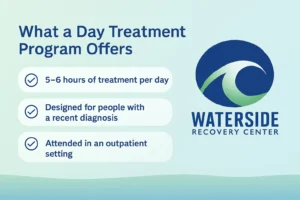
A Day Treatment Program, also called a Partial Hospitalization Program (PHP), is a type of intensive mental health care where you attend treatment during the day—usually 5–6 hours per day, five days a week—but go home in the evenings.
At Waterside Recovery in Plymouth County, MA, our Day Treatment Program is built specifically for people who:
- Have a recent diagnosis or worsening symptoms
- Don’t need overnight supervision, but need more than one hour of therapy a week
- Want real tools—not just symptom checklists
This is not an institutional setting. There are no hospital beds. No locked doors. You’re not “committed.” You’re not handing over your rights. You’re participating in your healing—on your terms.
Still Scared to Start? Let’s Talk About That
It’s incredibly common to hesitate. New diagnosis. New people. New schedule. Maybe medication is on the table, and you’re not sure if you’re ready.
We get it.
We don’t rush that part.
You don’t need to agree to everything at once. You don’t need to walk in knowing exactly how you feel about treatment, or whether you’re even ready. You just need enough curiosity or exhaustion to take the first step.
And when you do, we’ll meet you where you are—not where someone else thinks you “should” be.
“But What If Treatment Changes Me?”
One of the most common fears—especially around medication—is the idea of becoming a zombie. Losing your spark. Losing your edge. Losing yourself.
That fear is valid.
But the goal of treatment isn’t to flatten you—it’s to free up the parts of you that have been buried under survival mode.
When your brain stops sending distress signals 24/7, you don’t lose your personality. You regain access to it.
Medication can be part of that, yes—but only when you’re ready, and only with your consent. In our Day Treatment Program, you’ll have time to ask questions, talk with a prescribing provider, and process your fears before making any decisions.
This is a collaborative process. Not a forced one.
You Don’t Have to Fake Fine Anymore
In your job, at home, with friends—you’ve probably learned how to wear the mask. High-functioning, high-achieving, high-anxiety. You keep it together, even when you’re falling apart inside.
The Day Treatment Program is where the mask can come off.
Because no one here is judging your pain. No one is keeping score. You’ll meet others who’ve also reached a tipping point—and together, you’ll start learning new ways to cope that don’t require you to pretend.
You’ll practice:
- Emotional regulation skills
- Communication tools
- Grounding and mindfulness
- Healthy routines (yes, sleep counts)
And you’ll do it in a space where it’s okay not to know what you’re doing yet.
You’ll Still Have a Life Outside the Program
Some people fear that entering a treatment program means pressing pause on everything—work, school, family, identity.
In reality, our program is designed to integrate into your life, not replace it. You attend treatment during the day, then return home at night. That means you can still:
- See your partner or family
- Sleep in your own bed
- Walk your dog
- Have dinner at your own kitchen table
And if your life needs adjustments while you’re in care, we’ll help you make them.
This isn’t about creating dependency. It’s about building capacity.
If You’re in Plymouth or Nearby—You’re Not Alone
Our Day Treatment Program in Plymouth County, MA is one of the few trauma-informed programs in the region that’s built for people navigating new diagnoses and medication fear.
We also support people from nearby Bristol County, where mental health care can be harder to access or siloed into outdated models.
If you’ve been told to “just talk to your doctor,” and that hasn’t been enough—you’re not imagining things. You deserve care that goes deeper.
So… What Does the First Week Actually Look Like?
No guessing. No surprises. Here’s a peek at what your first few days might include:
- A calm welcome and tour (no intake marathons here)
- Meeting with a clinician to review your needs, not just your symptoms
- Optional introductions to the group—when you’re ready
- Access to medication consultation (with no pressure to start)
- Skills groups focused on managing emotions, thoughts, and behaviors
- Time built in for breaks, processing, and personal space
You are not expected to be brave, open, or ready on Day One. You are expected to be human. That’s it.
Frequently Asked Questions: Day Treatment for the Newly Diagnosed
Do I have to start medication right away?
No. In fact, you don’t have to start at all unless you choose to. We provide psychiatric consultations, but all treatment decisions are collaborative and based on your comfort level.
Is this the same as inpatient?
Not at all. Day Treatment is outpatient care. You come during the day and return home at night. There are no locked doors, hospital beds, or restrictions on personal freedom.
What kind of diagnoses do you treat?
Our Day Treatment Program supports individuals with anxiety, depression, PTSD, bipolar disorder, panic disorder, OCD, and related concerns. If you’ve recently been diagnosed and are unsure if you “qualify,” we can help assess that with you.
What if I’m not ready to talk in group?
That’s completely okay. Many clients listen for the first few sessions before speaking up. You will never be forced to share before you feel ready.
Can I work while in the program?
Some clients take time off from work; others adjust their schedules. Our team can help you navigate leave options or explore transition plans once you’re stabilized.
How long does the program last?
Typically, 2–4 weeks, depending on your needs and progress. Some people stay longer, some step down to less intensive care sooner.
Is this covered by insurance?
Yes, most insurance plans cover Day Treatment. We’ll verify your benefits and help you understand what’s included—before you commit to anything.
You Deserve a Soft Start—Not a Scary One
So before you spiral down the search results… come talk to us.
You’re not too far gone. You’re not too dramatic. You’re not wrong for wanting clarity, calm, and a little control over your next steps.
You’re just at the beginning—and we’re here to walk it with you.
Call (866)671-8620 or visit Waterside’s Day Treatment Program page to learn more about trauma-informed support for newly diagnosed individuals in Plymouth County, MA.
No pressure. No rush. Just a place to start.