
If you’ve ever woken up after using cannabis feeling groggy, unfocused, or unusually tired, you may have wondered whether a weed hangover is actually real.
The short answer is yes. While it hasn’t been studied as extensively as alcohol hangovers, growing research suggests that some people experience lingering physical and mental effects the day after using marijuana—especially after consuming high-potency products or large amounts. If marijuana use has begun affecting your daily life, learning more about marijuana dependence treatment may be an important first step.
Not everyone experiences a marijuana hangover, and symptoms are usually milder than those caused by alcohol. However, for regular users, next-day impairment can become a recurring part of life and, in some cases, a sign that cannabis use deserves closer attention.
Is a Weed Hangover Real?
For many years, experts debated whether cannabis could truly cause a hangover.
Unlike alcohol, marijuana does not typically produce dehydration or the widespread inflammation associated with traditional hangovers. Because of this, some people assumed that feeling sluggish the next morning was simply poor sleep or coincidence.
Today, research paints a different picture.
Studies have found that some people experience measurable next-day effects after cannabis use, particularly following:
- Heavy marijuana use
- High-THC products
- Concentrates
- Edibles
- Cannabis used late at night
One reason is that THC and its metabolites remain in the body long after the feeling of being high has faded.
Although the primary psychoactive effects wear off, subtle changes in attention, reaction time, and alertness may continue into the following day.
Not everyone experiences these lingering effects, but evidence increasingly supports that a cannabis hangover is a real phenomenon, particularly among frequent or heavy users.
Weed Hangover Symptoms
The symptoms of a weed hangover are usually mild to moderate.
Many people describe feeling as though they didn’t fully “wake up” despite getting a full night’s sleep.
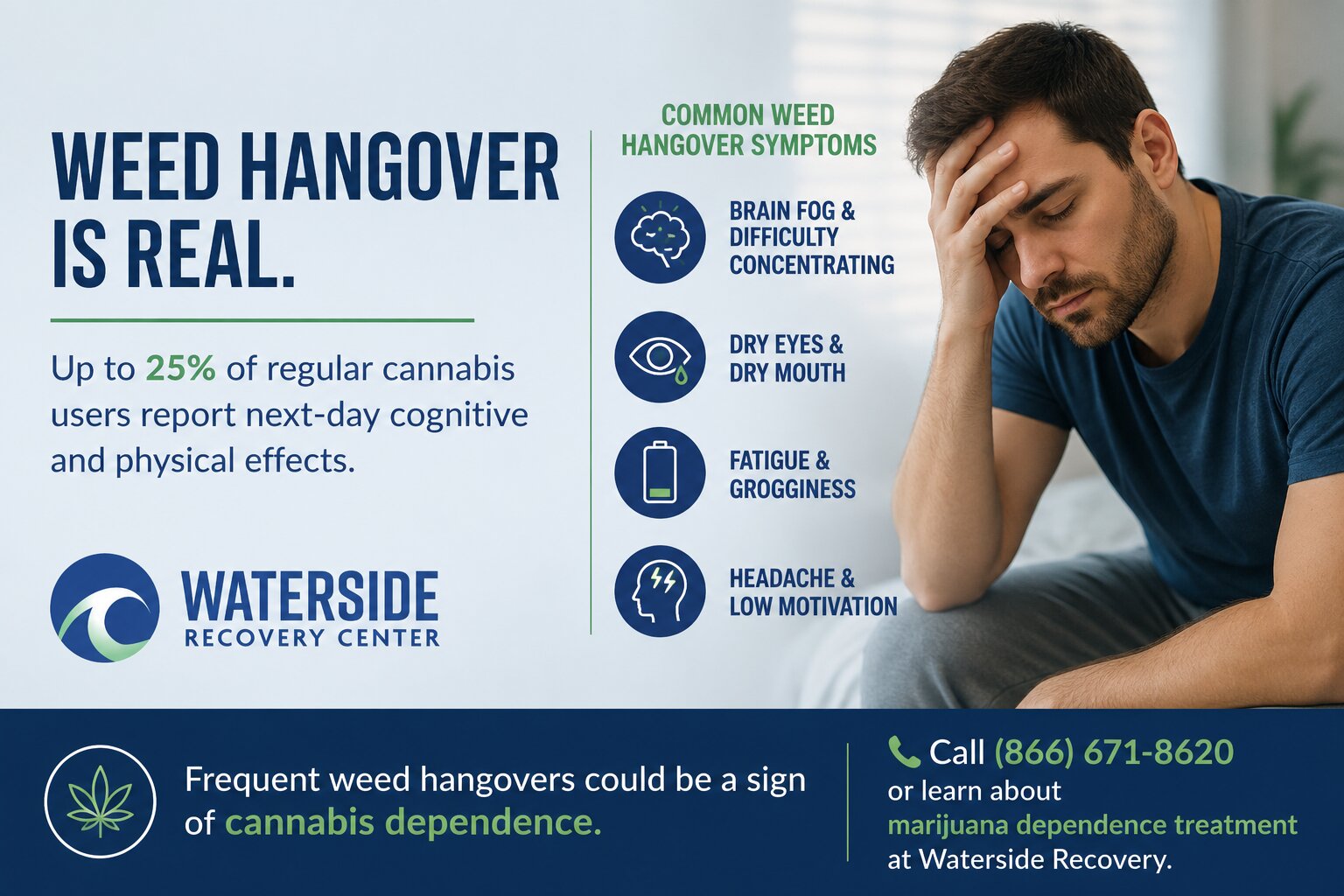
Common weed hangover symptoms include:
Brain Fog
Many users report:
- Difficulty concentrating
- Slower thinking
- Feeling mentally “foggy”
- Trouble remembering small details
Tasks that normally feel simple may require more effort.
Fatigue and Grogginess
One of the most common complaints is waking up feeling unusually tired.
Even after adequate sleep, some people experience:
- Low energy
- Sleepiness
- Difficulty getting started in the morning
Dry Eyes and Dry Mouth
Because cannabis reduces saliva production and can affect tear production, some people continue experiencing:
- Dry mouth
- Scratchy eyes
- Eye redness
into the next day.
Headache
Some users report mild headaches after heavy cannabis use, although these are generally less severe than alcohol-related headaches.
Mild Nausea
While uncommon, mild stomach discomfort or nausea can occur in some individuals.
Low Motivation or Flat Mood
Some people describe feeling emotionally “flat” or less motivated than usual.
They may struggle to begin work, exercise, or other routine activities until symptoms gradually improve.
Most marijuana hangover symptoms improve within several hours and continue resolving throughout the day.
How Long Does a Weed Hangover Last?
There is no single answer because everyone processes cannabis differently.
For most people, a weed hangover lasts anywhere from a few hours to an entire day.
Several factors influence recovery.
How Much Cannabis Was Used
Larger amounts generally produce stronger next-day symptoms.
THC Potency
Today’s cannabis products often contain significantly higher THC concentrations than products available years ago.
Higher-potency cannabis increases the likelihood of lingering effects.
When Cannabis Was Used
Using marijuana immediately before bedtime may leave less time for the body to process THC before waking.
Late-night use is commonly associated with more noticeable next-day symptoms.
Method of Use
Edibles and concentrates often produce longer-lasting effects than smoked cannabis.
Because edibles are absorbed more slowly, their effects can continue well into the night and sometimes into the following morning.
Individual Metabolism
Age, body composition, frequency of use, and metabolism all influence how long cannabis remains active in the body.
How to Ease a Weed Hangover
There is no instant cure for a cannabis hangover.
Fortunately, symptoms usually improve naturally with time.
Supportive strategies include:
Stay Hydrated
Drinking water can help relieve dry mouth and support overall recovery.
Eat a Balanced Meal
Light, nutritious foods may help restore energy levels.
Many people find that eating breakfast improves fatigue and mental clarity.
Get Moving
A short walk or gentle exercise may improve alertness and help reduce sluggishness.
Consider Moderate Caffeine
Coffee or tea may improve concentration for some individuals.
However, excessive caffeine can increase anxiety or jitteriness, particularly after cannabis use.
Allow Time to Recover
The most effective treatment for a weed hangover is often simply allowing the body time to metabolize remaining THC.
Most symptoms gradually improve over several hours.
When Frequent Weed Hangovers May Signal Dependence
A single marijuana hangover after unusually heavy use is not necessarily cause for concern.
Experiencing one every few days is different.
If mornings regularly begin with:
- Brain fog
- Low motivation
- Fatigue
- Difficulty concentrating
- Feeling mentally “off”
it may indicate that cannabis use has become frequent enough to interfere with normal daily functioning.
One important question to ask yourself is:
Have these symptoms become “just how mornings feel”?
When next-day impairment becomes routine, it often reflects regular, sustained cannabis exposure rather than an occasional night of heavy use.
Other signs that cannabis use may have progressed toward dependence include:
- Using cannabis nearly every day
- Needing larger amounts to achieve the same effects
- Difficulty cutting back
- Continuing to use despite work or relationship problems
- Feeling irritable or anxious when not using
- Prioritizing cannabis over other activities
Regular weed hangovers do not automatically mean someone has cannabis use disorder.
However, when heavy marijuana use consistently affects work, school, relationships, or daily responsibilities, it may be time to evaluate whether cannabis is still serving the role it once did.
Waterside Recovery proudly serves individuals and families throughout Bristol County, MetroWest, and Plymouth County with compassionate, evidence-based addiction treatment.
When Professional Support Can Help
Many people assume marijuana cannot become problematic because it is widely available or legal in many places.
Yet cannabis use disorder affects millions of people every year.
Professional treatment can help individuals better understand:
- Why cannabis use has become difficult to control
- Triggers for continued use
- Healthier coping strategies
- Relapse prevention skills
- Long-term recovery planning
Treatment is not only for people experiencing severe addiction.
It can also benefit individuals who recognize that cannabis has gradually begun affecting motivation, productivity, relationships, or overall quality of life.
Frequently Asked Questions
Is a weed hangover real?
Yes. Research suggests that some people experience lingering physical and cognitive effects the day after heavy cannabis use, particularly after using high-THC products, edibles, or concentrates. Symptoms are usually milder than alcohol hangovers but are considered a real phenomenon.
How long does a weed hangover last?
For most people, a weed hangover lasts from several hours to one full day. The duration depends on factors such as the amount of cannabis used, THC potency, the method of use, and individual metabolism.
How do I get rid of a weed hangover?
There is no instant cure. Drinking water, eating nutritious food, getting light exercise, using caffeine in moderation, and allowing time for the body to recover can help reduce symptoms while THC continues to clear from the body.
Final Thoughts
A weed hangover is real, even if it doesn’t affect everyone the same way. Brain fog, fatigue, dry mouth, and reduced motivation can all linger into the next day, especially after heavy or high-potency cannabis use.
Occasional next-day symptoms may not be a sign of a larger problem. But if waking up with a weed hangover has become a regular part of your routine, it may be worth taking a closer look at your cannabis use and how it’s affecting your daily life.
If marijuana use has become difficult to manage, help is available. Call (866) 671-8620 or learn more about marijuana dependence treatment at Waterside Recovery.