
A man called us not long ago with a question he almost sounded embarrassed to ask.
He wasn’t looking for treatment.
At least, not yet.
He wasn’t calling because he had lost everything.
He still had a job.
He still had a family.
He still felt like he had things under control.
What worried him was something else.
“I ran out of my Percocet prescription for a couple days,” he said. “I felt awful. I couldn’t sleep. I was sweating. My stomach was a mess. I was anxious. I thought I was getting sick, but then I took another pill and felt normal again.”
Then he asked the question that many people quietly type into Google late at night:
“Why do I feel so sick when I stop taking it?”
If you’ve found yourself asking that same question, you’re not alone.
In fact, many people who eventually seek help first arrive at a moment of confusion rather than crisis. They don’t necessarily think they have a substance use problem. They simply notice that their body seems to react very differently than they expected when they stop taking a medication.
For many individuals exploring opiate treatment services, that realization becomes an important turning point.
When Feeling Sick Doesn’t Feel Like the Flu
One reason people become confused is because what they’re experiencing often feels like a regular illness.
Body aches.
Sweating.
Chills.
Restlessness.
Difficulty sleeping.
Upset stomach.
Low energy.
Anxiety.
Irritability.
At first glance, it can feel like you’ve caught a virus.
But many people notice something unusual.
The symptoms improve dramatically after taking the medication again.
That’s often what raises concern.
Because illnesses don’t usually disappear that quickly.
When symptoms consistently improve after taking Percocet again, it may suggest your body has become accustomed to having the medication present.
Your Body Learns What It Experiences Repeatedly
Human bodies are remarkably adaptable.
If you exercise regularly, your body adapts.
If you move to a colder climate, your body adapts.
If you drink caffeine every day, your body adapts.
Prescription opioid medications can work similarly.
Over time, the brain and body may begin adjusting to their presence.
Eventually, the medication stops feeling like something extra.
It starts feeling normal.
When the medication is suddenly removed, the body has to readjust.
That adjustment period can feel extremely uncomfortable.
Many of the experiences people describe as Percocet withdrawal symptoms happen because the body is trying to find balance again.
Why Two Days Can Feel So Much Longer
People are often surprised by how quickly symptoms can appear.
They assume withdrawal only happens after weeks or months without a substance.
That’s not always the case.
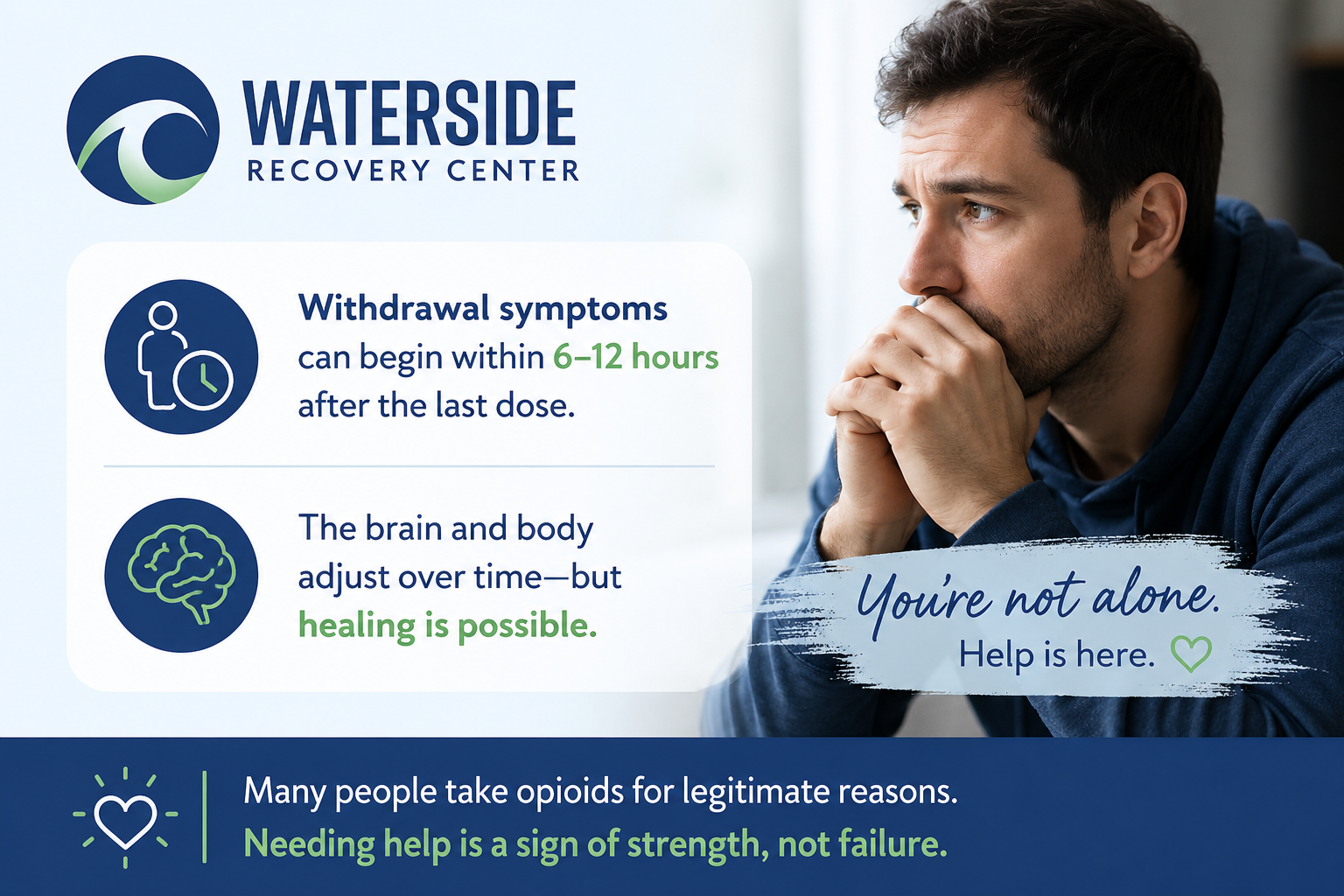
For some individuals, symptoms may begin within hours of missing doses.
For others, symptoms become more noticeable after a day or two.
What makes this especially difficult is that time starts feeling different.
A single evening can feel endless.
A sleepless night can feel like an entire week.
Many people describe watching the clock repeatedly and wondering why they feel so uncomfortable.
Physical symptoms are challenging enough.
The emotional symptoms often make the experience feel even harder.
The Anxiety That Catches People Off Guard
One symptom people rarely expect is anxiety.
Many assume withdrawal is only physical.
But emotional symptoms can be intense.
People often describe:
Feeling panicked.
Feeling restless.
Feeling emotionally overwhelmed.
Feeling unable to relax.
Feeling like something terrible is about to happen.
This can be frightening, especially for someone who has never experienced it before.
The anxiety can become so uncomfortable that taking another pill feels like the only way to make it stop.
When that happens, many people mistakenly conclude they need the medication because of pain.
Sometimes what’s actually happening is that they’re trying to stop the withdrawal symptoms.
Why This Doesn’t Mean You’re Weak
One of the first things people tell us is:
“I should be able to handle this.”
That thought creates a tremendous amount of shame.
But let’s be clear.
Experiencing withdrawal is not a sign of weakness.
It’s not a sign that you’re broken.
It’s not proof that you’ve failed.
It’s a physiological response.
Your body has adapted to something and is reacting to its absence.
That’s very different from lacking willpower.
Many intelligent, responsible, successful people find themselves in this situation.
The experience is far more common than most realize.
The Question That Often Changes Everything
For many people, there comes a moment when they stop asking:
“Why do I feel sick?”
And start asking:
“Why am I taking this now?”
At first, the answer may have been pain.
A surgery.
An injury.
A medical procedure.
A legitimate prescription.
Over time, the reason sometimes changes.
People begin taking medication not only to manage pain, but to avoid discomfort.
To feel normal.
To function.
To prevent withdrawal.
That shift can happen gradually enough that many people don’t notice it.
Recognizing it is often one of the most important steps toward understanding what’s happening.
You Don’t Have to Wait Until Things Get Worse
Many people delay seeking help because they don’t think their situation is serious enough.
They compare themselves to stories they’ve seen online.
To television portrayals.
To people whose lives appear more disrupted.
But treatment conversations often begin much earlier than that.
Sometimes they begin with simple questions.
Questions like:
“Why do I feel sick without it?”
“Why can’t I seem to stop?”
“Why does my body react this way?”
Those questions matter.
They are often signs that someone is paying attention to a pattern before it becomes a larger problem.
And that’s a positive thing.
There Is a Difference Between Dependence and Failure
One word that creates a lot of fear is dependence.
People hear it and immediately assume something terrible.
The reality is more nuanced.
Physical dependence can occur when the body adapts to a medication over time.
That does not automatically define who you are.
It doesn’t determine your future.
It doesn’t mean recovery isn’t possible.
What matters most is how you respond once you recognize what’s happening.
Many people feel relief simply learning there’s an explanation for what they’re experiencing.
Because uncertainty is often scarier than understanding.
What Hope Can Look Like Right Now
If you’ve been feeling sick after stopping Percocet, you may be feeling frightened.
Confused.
Frustrated.
Maybe even ashamed.
Please know this:
The fact that you’re asking questions is a positive sign.
People who seek understanding are often already moving toward change.
You don’t need to have all the answers today.
You don’t need to decide your entire future.
You don’t need to label yourself.
You simply need to be willing to learn what’s happening and explore your options.
For individuals looking at treatment options in areas we serve or seeking care in areas we serve, support may be available before uncertainty becomes a crisis.
Frequently Asked Questions
Why do I feel sick when I stop taking Percocet?
Your body may have adapted to the medication over time. When it is suddenly reduced or stopped, uncomfortable symptoms can occur while the body readjusts.
How quickly can symptoms appear?
For some people, symptoms may begin within hours after a missed dose. Others may notice symptoms becoming more intense over the first few days.
Does feeling sick mean I’m addicted?
Not necessarily. Physical dependence and addiction are related but different concepts. A professional assessment can help determine what may be happening.
Why does taking another pill make me feel better?
If symptoms are related to withdrawal, taking the medication again may temporarily relieve those symptoms.
Are emotional symptoms common?
Yes. Anxiety, irritability, restlessness, mood changes, and difficulty concentrating are commonly reported alongside physical symptoms.
Is it normal to feel anxious during withdrawal?
Many people experience significant anxiety when their body is adjusting to the absence of opioids.
Can withdrawal happen even if I followed my prescription?
Yes. Physical dependence can develop even when medication is taken exactly as prescribed.
When should I seek professional help?
If symptoms are difficult to manage, interfering with daily life, or causing concern, speaking with a healthcare professional can help you understand your options.
Call (866) 671-8620 or visit our opiate treatment services to learn more about our treatment, opiate treatment services Plymouth, MA.