
Most people managing both mental health struggles and substance use don’t look like they’re falling apart.
They look capable.
They still answer emails. Still attend meetings. Still show up for their kids. Still joke with coworkers. From the outside, they look responsible enough that nobody asks questions.
Meanwhile, internally, they’re exhausted.
Their mind never fully quiets down. Sleep becomes shallow. Anxiety follows them into every room. Drinking or using substances slowly shifts from “taking the edge off” to emotional survival. Depression gets harder to hide. Panic becomes more familiar than peace.
And because they’re still functioning, they convince themselves they’re okay.
Or at least okay enough.
That’s usually the point where people begin quietly searching things like “how much treatment do I actually need?” or comparing different levels of support while hoping nobody notices they’re struggling.
For many people, a day treatment program becomes the first place they stop trying to carry everything alone.
High-Functioning People Often Wait Too Long
One of the hardest things about dual diagnosis is how easy it is to minimize when you’re still productive.
People assume severe mental health struggles and addiction always look dramatic. But many high-functioning individuals become experts at managing appearances while privately unraveling.
They continue performing while their nervous system slowly burns out underneath them.
As a clinician, I’ve sat with people who were succeeding professionally while drinking every night to calm panic attacks. People who looked composed in public while secretly fighting suicidal thoughts, severe anxiety, trauma symptoms, or emotional numbness behind closed doors.
A paycheck does not equal emotional stability.
Neither does productivity.
High-functioning people often use success itself as evidence they don’t need help yet. They compare themselves to stereotypes instead of paying attention to how much pain they’re carrying internally.
That comparison delays treatment constantly.
And eventually, maintaining the appearance of stability becomes more exhausting than admitting things are no longer manageable.
The Real Question Usually Isn’t About Labels
People searching IOP vs PHP dual diagnosis information are rarely looking for textbook definitions.
They’re trying to answer something much more personal:
“How bad does it have to get before I deserve more support?”
That’s the real question underneath most of these searches.
And honestly, it’s heartbreaking how many people think they need to completely collapse before asking for help.
Many individuals managing both mental health symptoms and substance use become trapped between two fears:
- Fear that they’re overreacting
- Fear that if they slow down long enough to be honest, they’ll realize how overwhelmed they actually are
So they keep pushing.
They tell themselves they can hold it together one more week. One more project. One more stressful season. One more month of drinking to cope with anxiety or depression.
But eventually the emotional math stops working.
Multi-Day Weekly Treatment Can Interrupt the Spiral Early
Some people still have enough stability in their daily life that they don’t require full-day structured care.
They may still be functioning at work. Their home environment may feel reasonably safe. Their symptoms, while painful, may not yet completely dominate their ability to function day-to-day.
But they’re struggling enough that weekly therapy alone no longer feels sufficient.
This is where multi-day weekly treatment can become incredibly effective.
Not because life has completely fallen apart—but because someone finally recognizes they’re heading toward burnout, emotional collapse, or escalating substance dependence if nothing changes.
That distinction matters.
Treatment is not only for crisis management. It can also prevent deeper crisis from happening.
For high-functioning people especially, this level of care can create accountability and structure without forcing them to completely disconnect from work, family, or responsibilities overnight.
And honestly, many people feel relief simply hearing that support doesn’t have to be all-or-nothing.
Some People Need More Structure Than They Want to Admit
This is where things become emotionally complicated.
A lot of high-functioning people underestimate how severe things have become because they’ve normalized suffering for so long.
They’ve adapted to anxiety attacks. Emotional numbness. Heavy drinking. Chronic exhaustion. Mood swings. Isolation. Depression. Racing thoughts. Dissociation. Sleeplessness.
They tell themselves:
“I’m still getting things done.”
But surviving is not the same thing as functioning well.
There are people who spend years operating in emotional survival mode without realizing how unsafe or unstable things have quietly become.
Sometimes higher levels of structured daytime care are necessary not because someone “failed,” but because their nervous system is overloaded and no longer recovering between stressors.
This becomes especially true when mental health symptoms and substance use begin reinforcing each other constantly.
Anxiety fuels drinking.
Drinking worsens depression.
Depression increases isolation.
Isolation deepens substance use.
The cycle tightens.
Eventually, people stop using substances recreationally and start using them to feel emotionally tolerable inside their own body.
That’s often the moment more immersive support becomes important.
There’s a Difference Between Independence and Isolation
High-functioning people often pride themselves on self-sufficiency.
They’re the ones other people rely on. The responsible ones. The calm ones. The helpers.
But many have quietly crossed the line from independence into emotional isolation without realizing it.
They stop talking honestly about how they’re doing. They minimize symptoms. They keep performing competence while privately feeling overwhelmed or emotionally fragmented.
And because nobody sees the full picture, they become lonelier over time.
One patient once described it this way:
“I looked successful from the outside, but internally it felt like I was duct-taping pieces of myself together every morning.”
That’s the reality for many people managing mental health struggles and substance use simultaneously.
From the outside, things appear controlled.
Internally, it feels like barely surviving.
The Right Level of Care Should Create Relief — Not Shame
A lot of people avoid higher levels of treatment because they associate them with failure.
They think needing more support means they weren’t strong enough, disciplined enough, or mentally tough enough to handle things on their own.
That mindset keeps people suffering longer than necessary.
Good treatment is not punishment for falling apart.
It is support for carrying too much for too long.
The right level of care should help someone feel safer, clearer, more emotionally regulated, and less alone. It should reduce chaos—not create more shame.
This is especially important for individuals experiencing dual diagnosis conditions because mental health symptoms often distort self-perception. Depression tells people they’re weak. Anxiety tells them they’re overreacting. Substance use adds guilt and secrecy on top of everything else.
Eventually people stop trusting their own internal signals.
That’s why outside support matters.
Not because someone else controls the answers, but because suffering alone tends to distort perspective over time.
Choosing the Right Support Requires Radical Honesty
The decision between different levels of care is not really about toughness.
It’s about sustainability.
Can you emotionally stabilize between sessions?
Are substances becoming emotionally necessary to function?
Are your symptoms escalating?
Are you safe?
Are you recovering—or just surviving?
These are difficult questions.
And honestly, many high-functioning people already know the answers long before they admit them out loud.
The hard part is accepting that needing more support does not erase competence, intelligence, ambition, or worth.
It simply means your current coping system is no longer enough for what you’re carrying.
For individuals exploring treatment options in areas we serve or looking for help in areas we serve, the goal is not finding the “least serious” level of care possible.
The goal is finding enough support to actually heal instead of endlessly maintaining emotional survival mode.
Because eventually, pretending you’re fine becomes harder than getting honest.
Healing Usually Starts Smaller Than People Expect
People often imagine treatment as one dramatic breakthrough moment.
In reality, healing usually begins quietly.
Someone sleeps through the night for the first time in months. Someone realizes they went a few hours without panic. Someone finally says something honest in group therapy after years of emotional masking. Someone notices they’re less emotionally reactive after a few weeks of consistent support.
Small moments matter.
Especially for people who’ve spent years disconnected from themselves while trying to hold everything together externally.
One of the most important things high-functioning people learn in treatment is this:
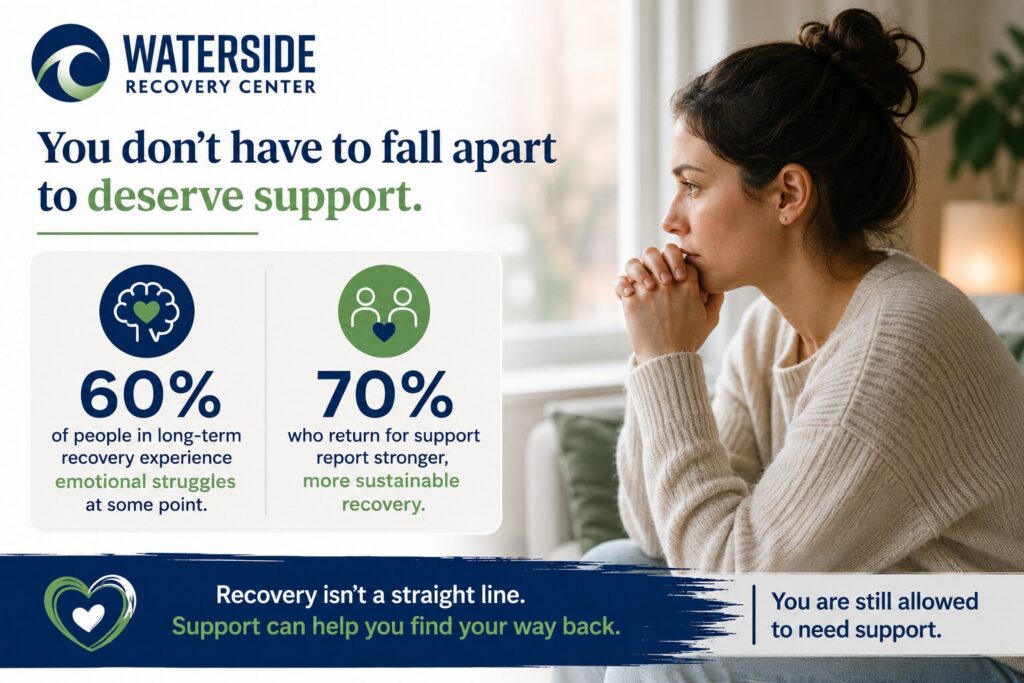
You do not need to earn rest through collapse.
You are allowed to ask for help before your life becomes unrecognizable.
Frequently Asked Questions
What does it mean to have a dual diagnosis?
Dual diagnosis refers to experiencing both mental health challenges and substance use issues at the same time. This can include anxiety, depression, trauma, bipolar disorder, or other mental health conditions alongside alcohol or drug use.
How do I know if I need more than weekly therapy?
If symptoms are worsening, substance use is increasing, emotional regulation feels difficult, or daily life is becoming harder to manage, additional structured support may help provide stabilization and accountability.
What’s the difference between structured daytime care and multi-day weekly treatment?
Structured daytime care typically involves more frequent and intensive therapeutic support during the week. Multi-day weekly treatment offers flexibility while still providing regular therapy and recovery support. The appropriate level depends on symptom severity, safety, and overall stability.
Can high-functioning people still need intensive treatment?
Absolutely. Many people maintain jobs, relationships, and responsibilities while privately struggling with severe anxiety, depression, trauma, burnout, or substance use. External success does not always reflect internal wellbeing.
Is higher-level care only for people in crisis?
No. Treatment can also help prevent deeper crises from developing. Many people enter care before things completely collapse because they recognize their current coping strategies are no longer sustainable.
What if I’m scared treatment will disrupt my life?
This fear is extremely common. Many people worry about losing control, independence, or professional stability. In reality, the right level of support is often designed to help people regain stability—not take their life away.
Can treatment help with burnout and emotional exhaustion too?
Yes. Many high-functioning individuals seek support because chronic stress, emotional exhaustion, anxiety, and substance use have become intertwined. Treatment can help address both emotional health and coping behaviors together.
What if I don’t think I’m “bad enough” for treatment?
This is one of the most common beliefs clinicians hear. You do not need to wait for total collapse before seeking support. If life feels increasingly difficult to manage emotionally, that experience matters.
Call (866)671-8620 or visit our day treatment program to learn more about our program and day treatment program services in Plymouth, MA.