
You probably didn’t search this because your life completely collapsed.
More likely, you searched it between meetings. Or after another night of promising yourself you’d slow down tomorrow. Maybe you typed “outpatient rehab near me” into your phone and immediately deleted the search history afterward.
That’s part of what makes high-functioning addiction so isolating.
You can still show up. Still answer emails. Still make dinner for your kids. Still laugh at the right moments in conversations. Meanwhile, your internal world starts shrinking smaller and smaller around one thing: getting through the day.
From the outside, it can look like success. Inside, it can feel like survival.
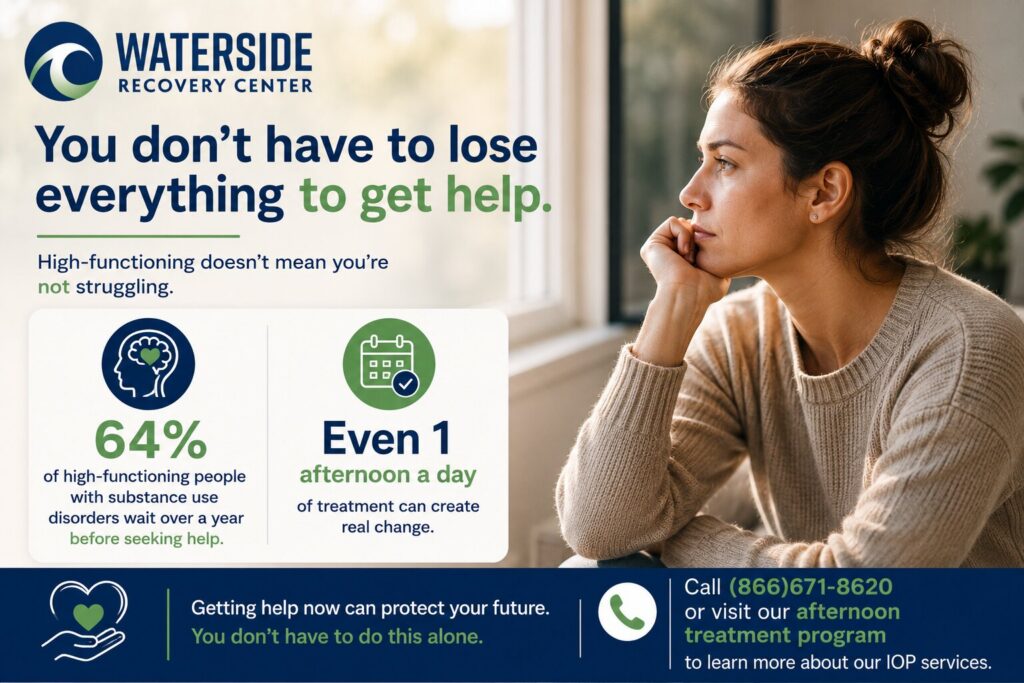
For a lot of people, finding an afternoon treatment program becomes the first step that actually feels realistic instead of terrifying.
You Don’t Have to Hit Rock Bottom to Be Struggling
A lot of people avoid treatment because they think they haven’t “earned” it yet.
They compare themselves to stereotypes. They think addiction only counts if there’s been an arrest, job loss, hospitalization, or some dramatic collapse. But high-functioning substance use often hides behind routines and responsibilities for years.
That’s why people around you may not notice.
Or maybe they do notice, but they don’t know what to say.
The truth is, many people searching for structured daytime care are still holding their lives together on paper. They’re productive. Responsible. Reliable. They just happen to be completely exhausted underneath all of it.
There’s a specific kind of loneliness that comes with secretly struggling while everyone else keeps telling you how capable you are.
You start feeling like a fraud in your own life.
The Schedule Matters More Than People Realize
One of the biggest barriers to getting help is logistics.
People think treatment means disappearing from work for months or explaining deeply personal things to employers, clients, or family members before they feel ready. That fear alone keeps many people stuck longer than necessary.
Afternoon programs can reduce some of that pressure.
For people balancing jobs, school, parenting, or caregiving responsibilities, having treatment later in the day can make support feel accessible instead of impossible. You can continue managing parts of your daily life while still receiving consistent therapeutic care.
That flexibility matters emotionally too.
Because for many high-functioning people, the fear isn’t just treatment itself. The fear is losing control of the identity they’ve worked hard to maintain.
The dependable one.
The successful one.
The person everyone leans on.
Admitting you need help can feel like betraying that identity at first.
But eventually, many people realize something important: constantly holding yourself together is not the same thing as actually being okay.
Addiction Doesn’t Always Look Loud
Sometimes addiction looks quiet.
It looks like pouring a drink before you’ve even taken your shoes off because your nervous system can’t settle down without it.
It looks like needing substances just to feel normal enough to get through dinner, social situations, stress, loneliness, boredom, or sleep.
It looks like mentally calculating how much is left, whether anyone noticed, and how early is “too early.”
A lot of high-functioning people become experts at managing appearances while internally falling apart.
And honestly, that level of emotional management is exhausting.
One of the hardest things about functioning at a high level while struggling privately is that your pain becomes invisible—even to yourself sometimes. You start minimizing things because you’re still technically managing life.
But “managing” and “living well” are not the same thing.
What Afternoon Treatment Actually Feels Like
People often imagine treatment as harsh, clinical, or emotionally exposing right away.
In reality, many people are surprised by how human it feels.
You walk into a room and realize you’re sitting beside people who also looked “fine” from the outside. Professionals. Parents. College students. Business owners. People who kept pushing through long after they stopped feeling okay.
Nobody expects perfection there.
You don’t have to arrive with certainty. You don’t even have to fully know what label applies to you yet. A lot of people enter treatment still unsure whether they “count” as someone with a real problem.
What matters is that something in your life has become unsustainable.
Treatment often starts less dramatically than people imagine. Sometimes it begins with simple conversations about stress, burnout, anxiety, emotional numbness, sleep, shame, or the pressure of constantly performing wellness.
And for many people, that honesty feels like exhaling after holding their breath for years.
Recovery Isn’t About Becoming Someone Else
This fear comes up more than people admit.
A lot of high-functioning people worry that getting sober means becoming dull, emotionally flat, disconnected, or no longer themselves.
Especially people who are social, creative, driven, funny, or professionally successful.
Substances may have once felt connected to confidence, productivity, connection, relief, or identity itself.
That fear deserves honesty—not dismissal.
Because recovery is not about erasing your personality. It’s about separating who you are from the thing that slowly started controlling your peace.
People are often shocked to realize how much mental energy addiction quietly consumes.
The planning.
The recovering.
The hiding.
The anxiety.
The constant internal negotiations.
Getting support can create space for parts of you that haven’t had oxygen in a long time.
Not a different person. Just a less exhausted version of yourself.
Small Changes Usually Matter First
Movies tend to show recovery as one giant breakthrough moment.
Real life is usually quieter than that.
Sometimes the first signs of healing look like:
- Sleeping through the night without panic
- Feeling present during conversations again
- Eating regular meals
- Not checking the clock waiting for permission to drink
- Having one clear morning that doesn’t feel emotionally heavy
- Laughing without forcing it
- Feeling less alone in your own head
These moments may sound small from the outside, but they can feel enormous to someone who’s been silently struggling.
That’s why consistent support matters.
Multi-day weekly treatment creates structure without requiring people to completely disappear from their lives overnight. It gives people room to stabilize emotionally while still staying connected to responsibilities and routines that matter to them.
For individuals looking for care in areas we serve, finding treatment that works with real life—not against it—can make asking for help feel far more possible.
You’re Allowed to Get Help Before Everything Falls Apart
This might be the most important thing here.
You do not need to wait for catastrophe.
You don’t need to lose everything first. You don’t need someone else to validate that your suffering is serious enough. And you don’t need to completely identify with the word “addict” before talking to someone.
A lot of people who search for outpatient rehab near me are still succeeding professionally while privately unraveling emotionally.
They’re functioning. But barely.
And eventually, maintaining appearances starts costing more energy than getting honest.
There’s an old saying that addiction is exhausting because it turns every day into emotional overtime. That’s exactly what many high-functioning people are carrying without realizing it.
You deserve rest before your life becomes an emergency.
The Right Support Should Feel Safe, Not Punishing
Good treatment doesn’t shame people into changing.
It creates enough safety for honesty to finally happen.
That matters because many high-functioning individuals already carry enormous shame privately. They criticize themselves constantly. They compare themselves to people who seem “worse.” They convince themselves they should be able to fix it alone because they’ve solved everything else alone.
But recovery often begins the moment someone stops trying to white-knuckle their way through life in isolation.
You are allowed to need support even if your life still looks functional from the outside.
You are allowed to be tired.
And you are allowed to want something better before things become catastrophic.
If you’re looking for support in areas we serve, there are treatment options designed for people who need real support while continuing to navigate everyday responsibilities.
Frequently Asked Questions
Can I still work while attending an afternoon treatment program?
In many cases, yes. Afternoon programs are often designed for people balancing work, school, parenting, or other responsibilities. The schedule allows many individuals to receive support without completely stepping away from daily life.
Is outpatient treatment only for people with “mild” addiction?
No. Outpatient care can support people with different levels of substance use challenges depending on their needs, stability, home environment, and clinical recommendations. Some people benefit from flexible structured care without needing live-in treatment.
What happens during afternoon treatment?
Programs often include individual therapy, group counseling, relapse prevention support, mental health care, coping skills development, and structured accountability. The experience is usually far more conversational and supportive than many people expect.
What if I’m not sure I’m “bad enough” for rehab?
This is extremely common, especially among high-functioning people. Many individuals seek help long before a public crisis happens. You do not need to completely fall apart before talking to someone about support.
Will people at work find out I’m in treatment?
Privacy laws protect your medical information. Many people attend outpatient care while continuing to manage professional responsibilities privately.
How do I know if I need more than outpatient support?
The right level of care depends on factors like withdrawal risk, mental health symptoms, relapse history, home environment, and daily functioning. A professional assessment can help determine what kind of support fits your situation best.
Can treatment help if I’m also struggling with anxiety or burnout?
Yes. Many high-functioning individuals experience overlapping stress, anxiety, depression, emotional exhaustion, or trauma alongside substance use. Treatment can address both emotional health and substance-related behaviors together.
Call (866)671-8620 or visit our afternoon treatment program to learn more about our IOP services in Plymouth, MA.