
I’ve sat across from people who’ve said it quietly and without much emotion: “I tried treatment. It didn’t work.”
Not angry. Not defensive. Just… done.
If that’s where you are, I’m not here to argue with you. I’m here to widen the lens a little—because what feels like failure is often something more complex. And if you’re even considering looking again, it’s worth understanding what might have been missing the first time around, including whether a different approach to drug treatment services could actually meet you in a way that feels real.
“It Didn’t Work” Is Usually a Story With Missing Pieces
In clinical work, that phrase—it didn’t work—is rarely the full story.
Sometimes it means:
- You showed up physically, but mentally checked out
- You didn’t feel seen, heard, or understood
- You followed the rules but didn’t connect with the why
- You stayed sober briefly, then slipped—and decided that erased everything
From the outside, it gets labeled as “unsuccessful treatment.”
From the inside, it often feels more like unfinished treatment.
That distinction matters more than people realize.
Why Expectations Around Cravings Can Break Trust in Treatment
One of the biggest disconnects I see happens after people leave treatment and run into something they weren’t prepared for: cravings that don’t behave the way they expected.
Especially with stimulants, people often search for answers about cocaine cravings duration, hoping for a predictable timeline. Something they can hold onto. Something that says, “If I just get through X days, I’ll be okay.”
But the brain doesn’t work like that.
Cravings can:
- Show up suddenly after feeling fine for days
- Intensify during stress, even if things were stable before
- Be triggered by memory, not just environment
- Feel emotional one day and physical the next
That unpredictability can feel like proof that treatment didn’t stick.
But what’s actually happening is neurological. Your brain is still adjusting—relearning how to function without something it relied on. Without ongoing support around that process, it can feel like you’re losing ground.
You’re not losing ground.
You’re just navigating a phase most people aren’t fully prepared for.
Treatment Isn’t a Fix—It’s a Starting Point
There’s a quiet expectation many people carry into treatment: this will fix it.
And for a while, it might feel like it does.
In structured environments—whether that’s live-in care or structured daytime treatment—people often stabilize. There’s routine. There’s support. There’s distance from triggers.
Then they leave.
And suddenly:
- The structure is gone
- The stress comes back
- The same environments reappear
- The same habits feel close again
This is where many people say, “See? It didn’t work.”
But from a clinical perspective, this is where the real work begins.
Treatment isn’t meant to insulate you forever. It’s meant to prepare you. And sometimes, that preparation needs reinforcement—more time, different structure, or a different kind of support altogether.
The Emotional Weight of Trying—and Feeling Let Down
There’s something deeply discouraging about trying to change and not getting the result you hoped for.
It’s not just frustration.
It’s grief.
I’ve heard patients say things like:
- “I really thought that was it for me.”
- “I don’t think I have another try in me.”
- “I don’t trust myself to go through it again.”
That emotional weight is real. And if it’s not acknowledged, it turns into avoidance.
But here’s what I often share—gently, and without pressure:
The first attempt at treatment often teaches you what doesn’t work for you.
That information is valuable. It’s not failure—it’s direction.
What Might Have Been Missing the First Time
When someone tells me treatment didn’t work, I don’t jump to solutions. I get curious.
Because usually, something didn’t align.
Here are some of the most common gaps:
1. The Level of Care Didn’t Match Your Reality
Some people need more structure. Others need flexibility. Being in the wrong level can make treatment feel either overwhelming or ineffective.
2. The Timing Was Off
If you entered treatment because of pressure—from family, work, or consequences—you might not have been internally ready. That doesn’t mean you won’t be later.
3. Mental Health Wasn’t Fully Addressed
If anxiety, depression, trauma, or burnout are part of the picture, treating substance use alone can feel incomplete.
4. Support Didn’t Continue After Treatment
Recovery doesn’t happen in isolation. Without continued support, even strong progress can feel fragile.
5. The Approach Didn’t Resonate
Not every program connects with every person. Sometimes it’s the philosophy. Sometimes it’s the people. Sometimes it’s just not the right fit.
This is why exploring different treatment options in areas we serve can make a meaningful difference. The goal isn’t to repeat the same experience—it’s to find one that actually aligns with your life.
Skepticism Isn’t Resistance—It’s Awareness
If you’re skeptical, I don’t see that as a barrier.
I see it as awareness.
You’ve already been through something that didn’t meet your expectations. Of course you’re cautious. Of course you’re questioning.
The goal isn’t blind trust.
It’s informed choice.
And sometimes that starts with something small—learning what’s different now, or even just exploring help in areas we serve without committing to anything yet.
No pressure. Just information.
You’re Not Starting Over—You’re Starting Informed
This might be the most important shift:
You are not the same person who walked into treatment the first time.
You know more now:
- What feels forced
- What feels helpful
- What you resist—and why
- What actually matters to you
That changes how you approach the next step.
Even your doubt is useful. It sharpens your ability to choose differently.
And sometimes, that’s the turning point—not motivation, not pressure, but clarity.
FAQ: Real Questions From People Who Feel Like Treatment Didn’t Work
Is it normal to feel like treatment didn’t help at all?
Yes. Especially if the experience didn’t match your needs or expectations. It doesn’t mean treatment as a whole doesn’t work—it may mean that version of it didn’t fit you.
How long do cravings usually last after stopping cocaine?
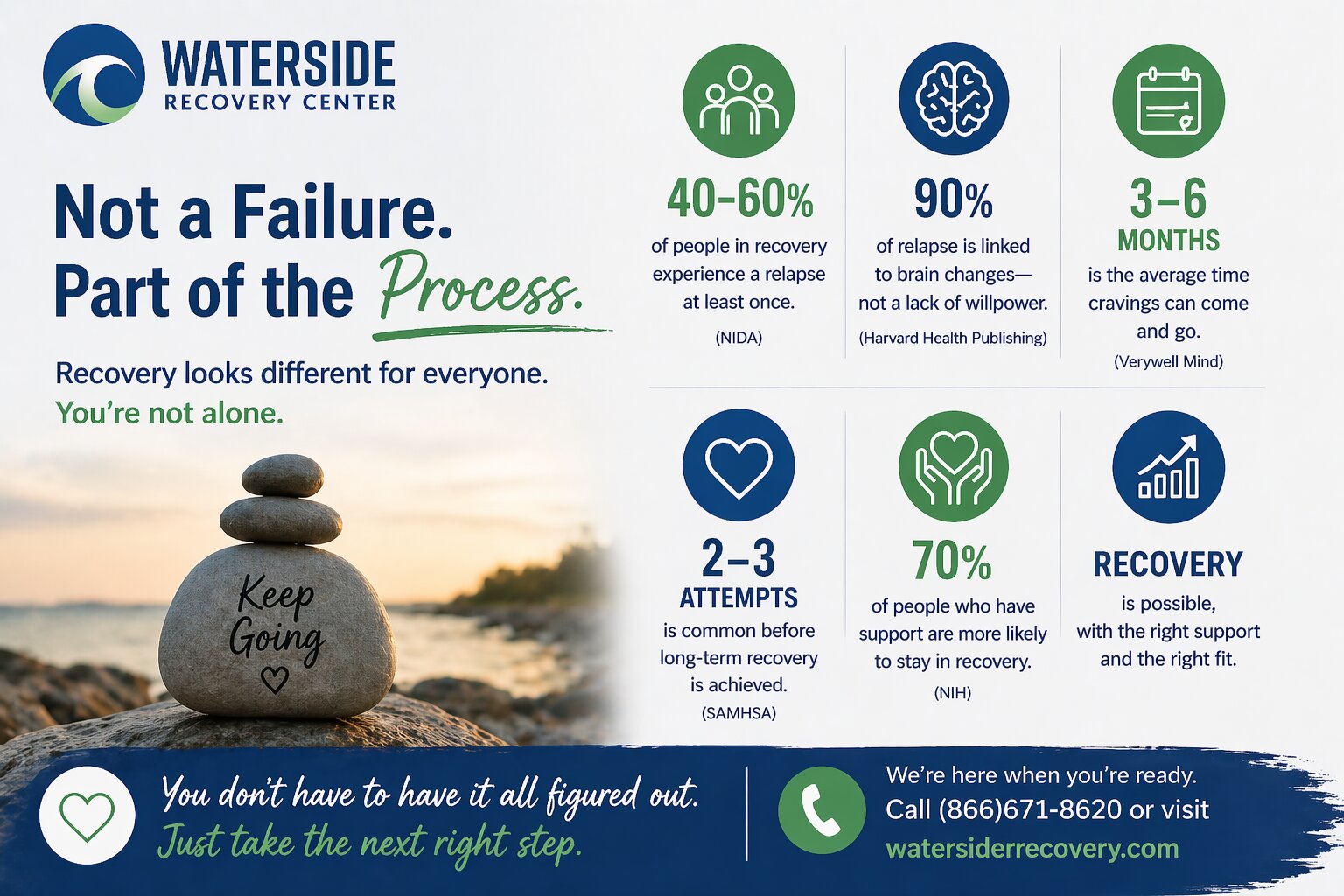
There’s no fixed timeline. Some cravings fade quickly, while others come and go for weeks or months. The intensity and frequency usually decrease over time, especially with the right support.
Does relapse mean I failed treatment?
No. Relapse is often part of the recovery process. It can highlight where more support or a different approach is needed.
What if I don’t want to go back to the same type of program?
You don’t have to. There are different formats—more flexible, more structured, more individualized. Finding the right fit matters more than repeating the same path.
How do I know if I’m ready to try again?
Readiness doesn’t always feel like confidence. Sometimes it just feels like curiosity—or being tired of things staying the same.
What if I’m still unsure treatment will help me?
That’s okay. You don’t need full belief to start a conversation. Exploring options doesn’t lock you into anything.
Ready to Take a Second Look—On Your Terms?
If your first experience left you unsure, that hesitation makes sense. You don’t need to override it—you just need a space where your questions are taken seriously.
Call (866)671-8620 or visit our drug treatment services services in Plymouth County, MA to learn more about what treatment can look like when it’s built around real life—not just a program.