
I hit 93 days sober and thought I’d figured it out.
I felt healthy. Clear. Like I could breathe again. I was showing up at work. Fixing things with my family. Even sleeping more than four hours a night without waking up drenched in regret. I’d tell anyone who asked: “Alcohol addiction treatment saved my life.”
And then, without a big crisis or blow-up, I started drinking again.
It wasn’t dramatic. It wasn’t even intentional. It was slow. Quiet. It looked like skipping a meeting because I had a headache. Telling myself I didn’t need to journal anymore. Ignoring the part of me that missed connection—and replacing it with something familiar.
I wasn’t in denial. I just stopped doing the things that helped me stay sober. And without those tools, the old voice crept back in. Just one won’t hurt. You’ve got this under control now. Look at all the progress you made.
And the hardest part? Once I relapsed, I told myself I didn’t deserve to go back.
If that’s where you are right now—somewhere between “I messed up” and “maybe I can try again”—I wrote this for you.
The Lie: You Failed
The Truth: You Paused
Relapse doesn’t erase the work you did in treatment. It doesn’t mean you didn’t take it seriously. It means you’re human.
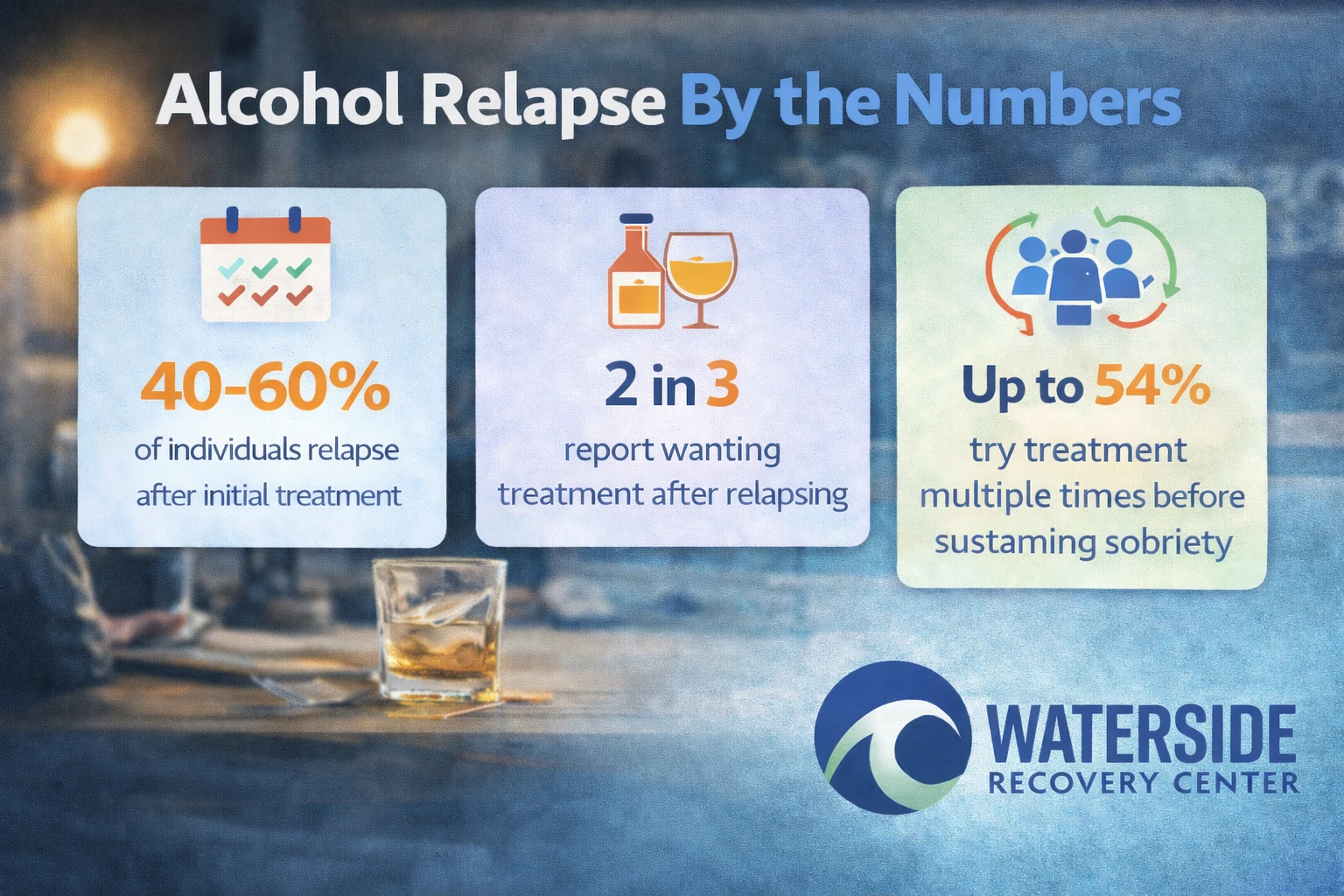
Nobody walks out of alcohol addiction treatment perfectly equipped to handle every craving, every stressor, every Friday night alone. And most people who relapse do it after they’ve made real progress—because they start to believe the worst is behind them.
If you’re feeling like you threw everything away, hear this:
You didn’t start over. You just stopped practicing what helped.
That’s a fixable problem.
You Weren’t Wrong for Feeling Good
Let’s be real—those first 90 days? They can feel like a miracle.
You start eating real meals again. You remember what it’s like to laugh and mean it. You go home early from social events and feel proud, not pathetic. People in your life notice something different, and you start to believe them.
So when relapse comes after a period of calm, it can feel like betrayal. Like you were lying to yourself and others.
But you weren’t. That version of you—the one who felt free—is real. That clarity is still possible.
You just need to reconnect to what helped you get there in the first place.
The Recovery Muscles Got Weak—Not Broken
Addiction is loud. And recovery? Recovery needs to be chosen every day.
That’s exhausting. Especially after the first wave of excitement fades and things get routine again. Especially when the people around you think you’re “better now.”
I stopped using the tools I learned. Not because I didn’t value them—but because I forgot how much they mattered. And when things started to feel overwhelming, I didn’t reach for them. I reached for what was easy. What was familiar. What had numbed me before.
The truth is, my recovery muscles didn’t disappear—they just got weak. The moment I started using them again—calling people, being honest, going to a group—I remembered how strong they could be.
You Don’t Have to Earn Your Way Back
I thought I had to clean myself up before I reached out.
I believed I had to prove I was serious this time. Show up polished. Get a few sober days under my belt before I called my old counselor. I thought if I walked in a mess, I’d be met with disappointment—or worse, indifference.
But when I finally did call, I got nothing but warmth.
No lecture. No guilt trip. Just someone who said, “I’m really glad you reached out. How can we help?”
If that’s the conversation you need—Waterside Recovery will meet you there. Whether you live nearby in Plymouth County or are looking for options in Bristol County, MA, they’re used to hearing from people who aren’t new to this path—but are ready to return to it.
What Coming Back to Treatment Actually Looks Like
Coming back doesn’t mean starting from zero. In fact, most returning clients begin with a conversation—not a contract.
Your needs might be different now. You might need:
- An Intensive Outpatient Program (IOP) that fits around your work or parenting schedule
- Relapse-focused therapy that gets to the heart of what triggered this round
- Medication support if cravings have become unmanageable
- Family reconnection support if things got tense again at home
Nobody expects you to show up polished. They expect you to show up real.
You’re Not the Only One Who’s Come Back
I used to think relapse made me the “bad student.” Like everyone else from my treatment group was living their best life and I was the cautionary tale.
But here’s what I’ve learned:
So many of us come back.
Some of us relapse after 30 days. Some after 300. It doesn’t mean you weren’t trying. It just means you’re still in process.
The key is not staying stuck.
If alcohol addiction treatment worked once, it can work again—especially when you approach it with the honesty that relapse has a way of teaching.
What If You Don’t Feel Ready?
That’s okay.
You don’t need to be “all in” to ask for help. You don’t need to want it perfectly. You don’t need to feel strong.
You just need to be tired of what’s happening now. Tired enough to say, maybe it’s time to try again.
Because this? This isn’t the end of your story.
It’s just a pause. A comma—not a period.
FAQ: Coming Back After Relapse
Will people judge me for relapsing?
Not at Waterside. The team here knows relapse is part of many people’s recovery. You’ll be met with compassion, not lectures.
Do I have to restart a full program?
Not always. Your care plan will reflect where you are now. That might mean rejoining IOP, stepping into outpatient, or even starting with just a few check-ins.
Can I afford to return?
Insurance often covers relapse-related treatment. Waterside Recovery can verify your benefits quickly and privately to help you understand your options.
What if I don’t want to explain everything again?
You don’t have to. The team will meet you where you are. If you’ve been to Waterside before, they already know parts of your story—and you can pick up from there.
I feel ashamed. How do I face people?
Shame loses power when it’s spoken. The people who care about you won’t be mad you relapsed—they’ll be grateful you came back.
You Didn’t Blow It. You’re Still in the Fight.
You know what it felt like to live without alcohol.
You know what helped—and what happens when those things fall away.
So if you’re sitting in that painful in-between space—knowing what works, but not sure how to reach for it again—let this be your sign.
Call (866)671-8620 to learn more about our Alcohol Addiction Treatment services in Plymouth County, MA. You haven’t failed. You’re still healing. And we’re still here.