
Opioid-induced constipation is one of the most common—and least talked about—effects of taking opioid medications. Whether opioids are prescribed for pain or used outside of medical supervision, changes in bowel habits often begin shortly after regular use starts and may continue for as long as opioids are taken.
For some people, constipation becomes a frustrating inconvenience. For others, it becomes severe enough to interfere with daily life, appetite, and overall health. If opioid use has become difficult to control, learning more about opioid addiction treatment can be an important step toward improving both physical health and long-term recovery.
Unlike nausea or drowsiness—which often improve as the body adjusts—opioid-induced constipation (OIC) usually does not go away with continued opioid use. In fact, it often becomes more persistent over time.
What Is Opioid-Induced Constipation?
Opioid-induced constipation (OIC) is constipation that occurs specifically because of opioid medications or illicit opioids. It is different from constipation caused by dehydration, dietary changes, certain medical conditions, or other medications.
Common symptoms include:
- Passing fewer bowel movements than usual
- Hard, dry stools
- Straining during bowel movements
- Feeling unable to completely empty the bowels
- Abdominal bloating or discomfort
- A reduced urge to have a bowel movement
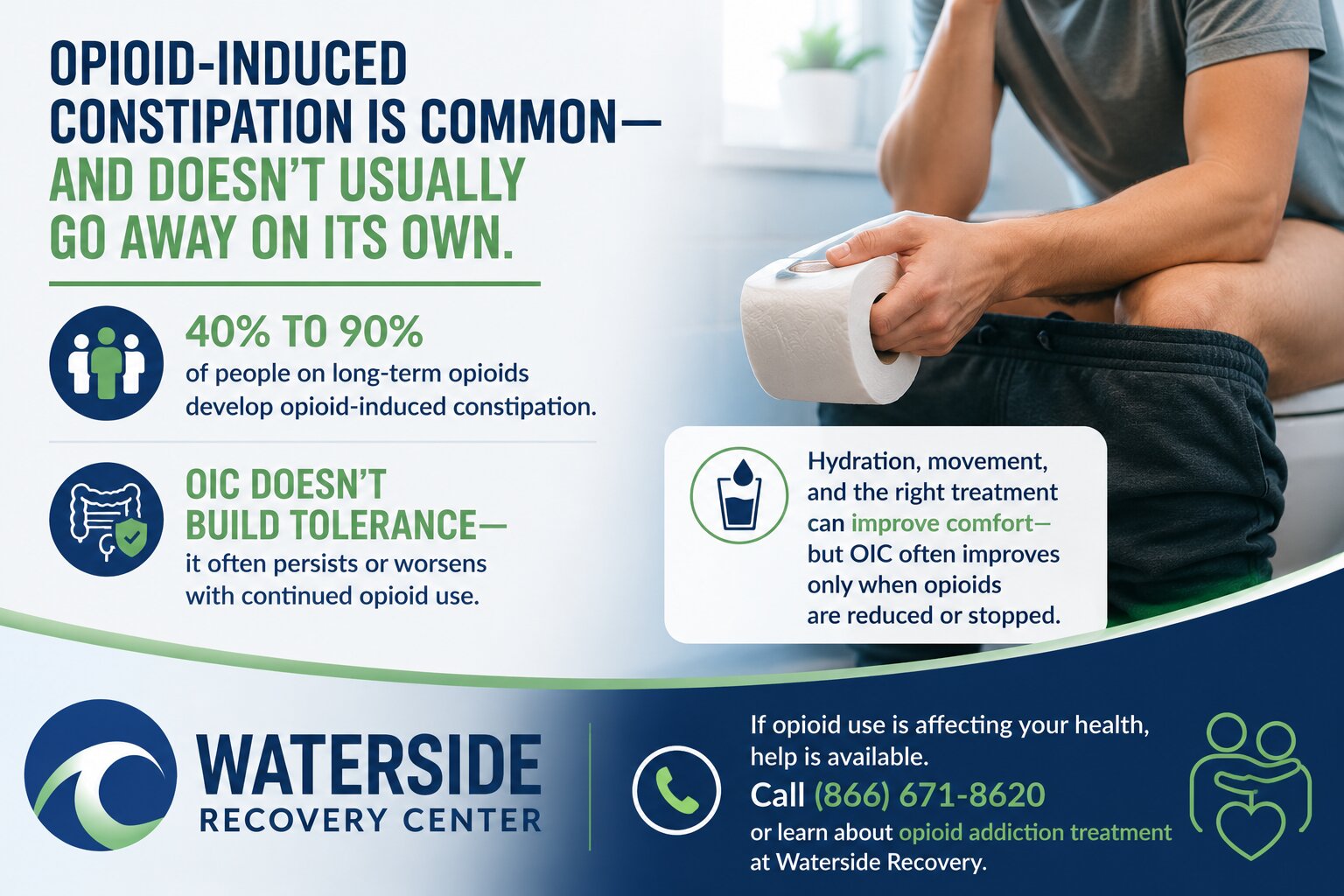
Research suggests that 40% to 90% of people receiving long-term opioid therapy develop OIC, making it one of the most frequent complications of ongoing opioid use.
One reason OIC is so challenging is that the body does not develop meaningful tolerance to it. While some opioid side effects become less noticeable after days or weeks, constipation often remains throughout treatment and may become worse as opioid doses increase.
Why Do Opioids Cause Constipation?
Many people assume constipation happens because opioid medications simply make the body “slower.”
The actual explanation is much more specific.
Although opioids are known for affecting the brain, they also bind to mu-opioid receptors throughout the gastrointestinal tract. These receptors help regulate digestion and bowel movement.
When opioids activate these receptors, several important changes occur simultaneously.
Intestinal Movement Slows
Normally, rhythmic muscle contractions move food and waste through the digestive system.
Opioids reduce these contractions, significantly slowing intestinal motility.
Instead of moving efficiently through the intestines, stool remains in the colon much longer than normal.
More Water Is Removed
As stool sits in the intestines longer, the colon continues absorbing water.
The longer stool remains there, the harder and drier it becomes.
This is one reason constipation from pain medication often produces difficult-to-pass stools.
The Urge to Have a Bowel Movement Decreases
Opioids also interfere with the normal signals that tell the brain it’s time to use the bathroom.
People may not feel the urge to have a bowel movement until stool has already become very firm.
Sphincter Muscles Tighten
Opioids increase the tone of muscles involved in bowel movements.
Even when stool reaches the rectum, passing it may require significantly more effort.
These combined effects explain why opioids and constipation are so closely connected.
Importantly, this is not simply an unwanted side effect of one specific medication. It is a direct result of how opioids interact with receptors throughout the digestive system. Because this mechanism is shared across opioid medications, switching from one opioid to another often does not eliminate OIC.
Symptoms of Opioid-Induced Constipation
OIC can range from mild to severe.
Common symptoms include:
- Fewer than three bowel movements per week
- Hard or pellet-like stools
- Excessive straining
- Pain during bowel movements
- Feeling that stool remains after using the bathroom
- Abdominal cramping
- Bloating
- Loss of appetite
- Nausea caused by severe constipation
When constipation becomes prolonged, complications may develop, including hemorrhoids, anal fissures, fecal impaction, or bowel obstruction.
Anyone experiencing severe abdominal pain, vomiting, inability to pass gas, or significant abdominal swelling should seek immediate medical evaluation.
How Opioid-Induced Constipation Is Managed
Managing OIC often requires more than simply drinking additional water.
Because opioid receptors actively slow the digestive tract, standard constipation advice may provide only partial relief.
Treatment usually combines lifestyle measures with medications when necessary.
Lifestyle Measures
While lifestyle changes alone may not fully resolve OIC, they can still improve bowel function.
Helpful habits include:
- Drinking adequate fluids throughout the day
- Eating fiber-rich foods when tolerated
- Remaining physically active whenever possible
- Establishing a regular bathroom routine
- Responding promptly to the urge to have a bowel movement
Fiber supplements may help some individuals, although increasing fiber without enough fluid can sometimes worsen symptoms.
Over-the-Counter Laxatives
Many clinicians recommend stimulant laxatives for opioid-induced constipation because they help encourage bowel contractions that opioids suppress.
Examples include:
- Senna
- Bisacodyl
Osmotic laxatives, such as polyethylene glycol (PEG), may also be used to draw water into the stool, making it easier to pass.
Treatment recommendations should always come from a healthcare provider familiar with the individual’s medical history.
Prescription Medications
For persistent OIC, healthcare providers may prescribe medications specifically developed for opioid-induced constipation.
These include:
- Methylnaltrexone (Relistor)
- Naloxegol (Movantik)
- Naldemedine (Symproic)
These medications are known as peripherally acting mu-opioid receptor antagonists (PAMORAs).
Rather than affecting the brain, they work primarily in the gastrointestinal tract by blocking opioid receptors in the gut.
Because they act outside the central nervous system, they are designed to improve bowel function without reversing the pain-relieving effects of prescribed opioids.
Does Opioid-Induced Constipation Ever Go Away?
One of the most common questions people ask is whether opioid constipation eventually disappears.
Unfortunately, for many people, the answer is no.
Unlike drowsiness or nausea, OIC typically does not improve simply because someone has been taking opioids for a longer period.
Instead:
- Symptoms often persist.
- Higher opioid doses may worsen constipation.
- More aggressive treatment may become necessary over time.
For many individuals, bowel function improves only after opioid medications are reduced or discontinued under medical supervision.
What Chronic OIC Can Signal About Opioid Use
Constipation itself does not automatically mean someone has opioid use disorder.
Many people taking prescribed opioids exactly as directed develop OIC.
However, persistent or worsening constipation can tell an important story.
Because OIC results directly from continuous activation of opioid receptors, chronic constipation reflects ongoing opioid exposure.
When someone is:
- Using opioids for extended periods
- Increasing their dosage over time
- Taking opioids more frequently than prescribed
- Using illicit opioids such as heroin or fentanyl
…the digestive system often shows the effects long before other health problems become obvious.
In these situations, chronic OIC may be one of several physical signs that the body has adapted to regular opioid exposure.
Other possible indicators of opioid dependence include:
- Needing larger doses to achieve the same effect
- Withdrawal symptoms between doses
- Difficulty stopping opioid use
- Spending significant time obtaining or using opioids
- Continuing opioid use despite physical or emotional consequences
The gut is responding to the same opioid receptors that influence the brain. Persistent constipation can therefore serve as a reminder that long-term opioid use affects far more than pain control.
When opioid use has become increasingly difficult to manage, addressing the underlying substance use—not just the constipation—may provide the greatest long-term benefit.
When to Seek Professional Help
If constipation becomes severe, recurring, or difficult to manage despite treatment, it’s important to discuss symptoms with a healthcare provider.
If opioid use has also become difficult to control, professional addiction treatment can address both the physical and psychological aspects of opioid dependence.
Comprehensive treatment may include:
- Medical detoxification when appropriate
- Medication-assisted treatment (MAT)
- Individual counseling
- Behavioral therapies
- Relapse prevention planning
- Ongoing recovery support
Treating opioid dependence often leads to gradual improvement in many opioid-related health problems, including bowel function.
Frequently Asked Questions
Why do opioids cause constipation?
Opioids bind to mu-opioid receptors throughout the gastrointestinal tract. This slows intestinal movement, increases water absorption from stool, reduces the urge to have bowel movements, and tightens muscles involved in passing stool, leading to opioid-induced constipation.
How do you relieve opioid-induced constipation?
Treatment often includes hydration, physical activity when possible, dietary adjustments, stimulant laxatives such as senna or bisacodyl, osmotic laxatives, and prescription medications like methylnaltrexone or naloxegol. A healthcare provider can recommend the most appropriate approach based on individual needs.
Does opioid constipation go away?
Usually not while opioids continue to be used. Unlike some other opioid side effects, tolerance to constipation rarely develops. Symptoms often persist or worsen until opioid therapy is reduced or discontinued under medical supervision.
Final Thoughts
Opioid-induced constipation is far more than a minor inconvenience. It is one of the most common and persistent effects of ongoing opioid use, caused by opioid receptors slowing the normal function of the digestive system.
While lifestyle changes and medications can often improve symptoms, chronic OIC may also serve as a reminder that the body is experiencing sustained opioid exposure. When opioid use begins affecting multiple areas of health—including digestion—it may be time to look beyond symptom management and address the underlying pattern of use. Waterside Recovery proudly serves individuals and families throughout Bristol County, MetroWest, and Plymouth County with compassionate, evidence-based addiction treatment.
If you or someone you love is struggling with opioid use, help is available. Call (866) 671-8620 or learn more about opioid addiction treatment at Waterside Recovery.