
There is nothing quite like the heartbreak of watching your child relapse. You’ve done the hard things—stood by them during detox, helped with therapy, maybe even breathed a cautious sigh of relief when things seemed to stabilize. You saw light return to their eyes.
And now—your 20-something is using again. You’re not imagining the signs. And this pain you’re feeling? It’s real.
But relapse does not mean the end of recovery.
Waterside Recovery’s opiate addiction treatment services are designed not just for first attempts—but for the complicated, exhausting, and deeply human reality of trying again.
When Relapse Happens, Everything Feels Fragile Again
It often begins with a few subtle changes. Missed calls. Unexplained mood swings. Money issues creeping back in. Maybe they stop showing up to work or miss therapy appointments. You don’t want to assume—but your gut knows.
And when it’s confirmed—when they admit it or you find the evidence—it hits hard. You might feel rage, grief, fear, guilt, confusion. You may question your past decisions: “Did we send them to the right program?” “Should we have done more?”
All of these feelings are valid. And none of them mean you’ve failed.
Relapse is common in opiate recovery—not because people don’t care, but because addiction is a disease that affects decision-making, reward systems, and emotional regulation. It’s not about willpower. It’s about support systems, neurobiology, trauma history, and readiness. And those things can be addressed, again and again if needed.
What Opiate Addiction Treatment Looks Like After Relapse
Recovery after a return to use isn’t about starting from scratch—it’s about starting from experience. Good programs know how to build on what your child has already tried.
Here’s what post-relapse care often includes:
Reassessment and Reconnection
Relapse can highlight what was missing in the first round of treatment—maybe they needed more trauma support, medication management, or peer connection. A quality treatment program will conduct a full clinical reassessment, not just intake them as if it’s day one.
More Focused Programming
Your child may benefit from more intensive treatment (like PHP or IOP), or a longer duration of care. It’s not about punishment—it’s about time to stabilize and rebuild.
Trauma-Informed Support
Many young adults in recovery have underlying trauma that wasn’t fully addressed. A return to use can signal the need for deeper therapy: EMDR, trauma groups, or one-on-one work with clinicians trained in PTSD and substance use.
MAT (Medication-Assisted Treatment)
Medications like Suboxone or Vivitrol can reduce cravings, lower the risk of overdose, and help stabilize mood. If your child wasn’t on MAT before, it may be worth considering now as part of a relapse prevention plan.
Family Integration
You don’t need to stay on the sidelines. In fact, your support can be a key factor in sustained recovery—when your needs are also being met. At Waterside, we involve families through education, therapy, and boundary coaching so you’re not carrying everything alone.
Grief, Rage, Guilt: All Normal. None Are the Whole Story.
Let’s name something honestly:
When a child returns to opiate use, many parents feel rage as strongly as they feel grief.
You might be angry they’re risking their life again. Angry that you’ve rearranged your family calendar, drained savings, canceled trips, and now… it’s happening again.
That anger is real—and it often lives right alongside heartbreak.
You might also feel ashamed: “What did we miss?” “What will people think?”
You might feel numb, or even find yourself avoiding them entirely because the pain is too big.
None of these reactions make you a bad parent. They make you a real one.
And you’re allowed to ask for help just as much as your child is.
Recovery Can Still Work—Even Now
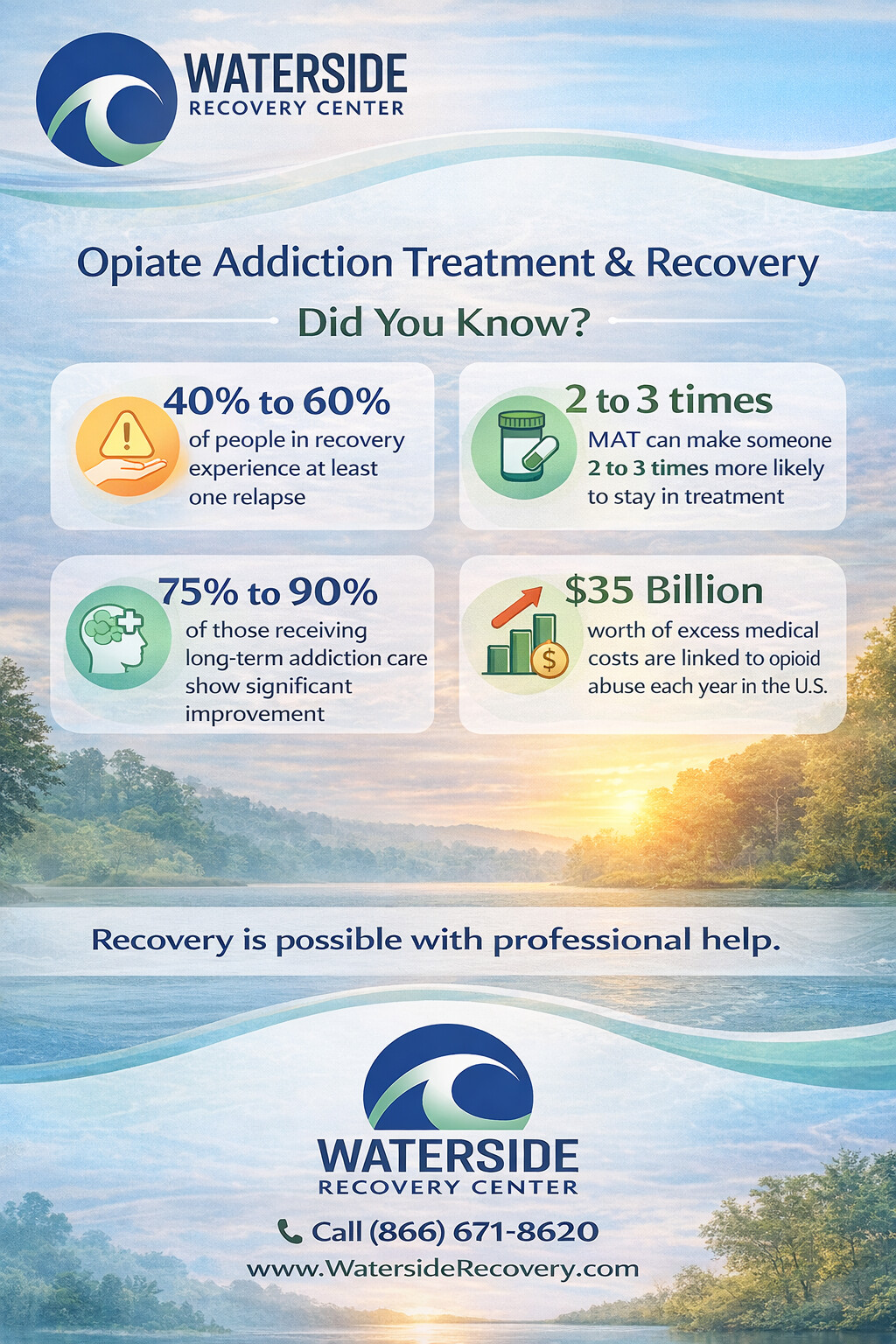
Relapse doesn’t make your child hopeless. In many cases, it’s the very event that shifts them into a deeper kind of healing.
Some people need more than one attempt. Some need medication. Others need the right therapist, or to finally face a root trauma, or to stay longer in care than the insurance company allowed the first time.
Treatment can work again—especially if it adapts.
What You Can Do As a Parent—Even If They’re Not Ready
You don’t have to wait until they’re “ready” to re-engage in treatment. Here’s what you can do right now:
- Call a program like Waterside Recovery. Even if your child isn’t onboard yet, our admissions team can help you understand your options.
- Learn about harm reduction. This doesn’t mean enabling. It means understanding how to minimize the risk of fatal overdose while keeping the door open.
- Talk to a therapist. Your pain matters too. Family therapists can help you set boundaries and navigate next steps with clarity.
- Join a support group. Other parents have been exactly where you are—and talking to them can bring a level of peace you didn’t think possible.
You Are Not Alone: Local Opiate Addiction Treatment That Respects Families
If you’re in Massachusetts—whether in Framingham, Worcester, or elsewhere in the Metrowest area—Waterside Recovery offers personalized, evidence-based care in areas we serve that meet both the individual and the family system.
We don’t believe in shame-based treatment. We believe in meeting people where they are—including parents.
FAQ: Opiate Addiction Treatment After Relapse
Does my child need to go back to detox if they relapsed?
Possibly, but not always. It depends on what substance they used, how recently, and how often. A clinical team can assess this safely. Don’t assume either way—ask.
What if they don’t want to go back to treatment?
That’s common—and it doesn’t mean all is lost. A respectful admissions call, an invitation to talk to a therapist, or even an honest family conversation can reopen the door.
Can I do an intervention?
You can—but it should be done with professional guidance. Poorly handled interventions can backfire. A good treatment center can coach you on what makes sense for your situation.
Is it dangerous to go back on Suboxone after a relapse?
When properly managed, no. Suboxone and other MAT options can be extremely effective post-relapse. Medical professionals will tailor the plan to your child’s current state.
Can therapy alone help with opiate addiction?
For some people, therapy is enough. But for others—especially those with repeat relapses—medication, group support, and structured programming may be more effective.
You’re Still in This—And So Are We
You’re not alone in your fear. And you’re not powerless in this pain.
Opiate relapse doesn’t mean hope is lost. It means help is still needed—and available.
Ready to Take the Next Step?
Call (866)671-8620 or visit Waterside Recovery’s opiate addiction treatment services to learn more about our opiate addiction treatment services in Plymouth, MA.