
Loving someone who is struggling with substance use can feel like standing in the middle of a storm with no map. One day you see the person you fell in love with. The next day, you feel like you’re talking to someone you barely recognize.
Many partners carry this quiet confusion for months—or even years.
You want to help. You want them to get better. But every attempt seems to lead to another argument, another broken promise, or another moment where you feel helpless.
For many partners, the turning point begins with understanding what kind of support actually helps both people. Learning about options like addiction therapy support can offer clarity during a time that often feels overwhelming and unpredictable.
You don’t have to figure this out alone.
The Emotional Whiplash of Loving Someone Who’s Using
Partners often describe living in two emotional worlds at the same time.
In one world, you remember who your partner truly is. You remember their kindness, their humor, the life you imagined building together.
In the other world, you’re dealing with missed calls, broken promises, unpredictable moods, or financial stress.
It can feel like you’re constantly trying to hold both realities in your hands.
Some days you feel hopeful.
Other days you feel angry.
Sometimes you just feel tired.
This emotional whiplash is incredibly common for partners of people struggling with substance use. And it can make even simple decisions feel impossible.
Should you confront them?
Should you stay quiet?
Should you give one more chance?
There’s rarely a clear answer without support.
Why Partners Often Feel Responsible for Fixing Everything
One of the most painful dynamics in relationships affected by addiction is the silent pressure partners put on themselves.
You may feel like it’s your job to:
- Keep the household functioning
- Prevent crises before they happen
- Encourage them to stop using
- Protect them from consequences
Over time, this responsibility can quietly consume your energy and emotional well-being.
Many partners start monitoring behavior constantly—watching for signs of use, changes in mood, or shifts in routine.
It becomes exhausting.
And the hardest part? Even with all that effort, you still can’t control the outcome.
This realization is painful, but it’s also where real support often begins.
The Difference Between Helping and Carrying Everything
Partners often struggle with one important question:
How do I support someone without losing myself in the process?
There is a difference between helping and carrying everything.
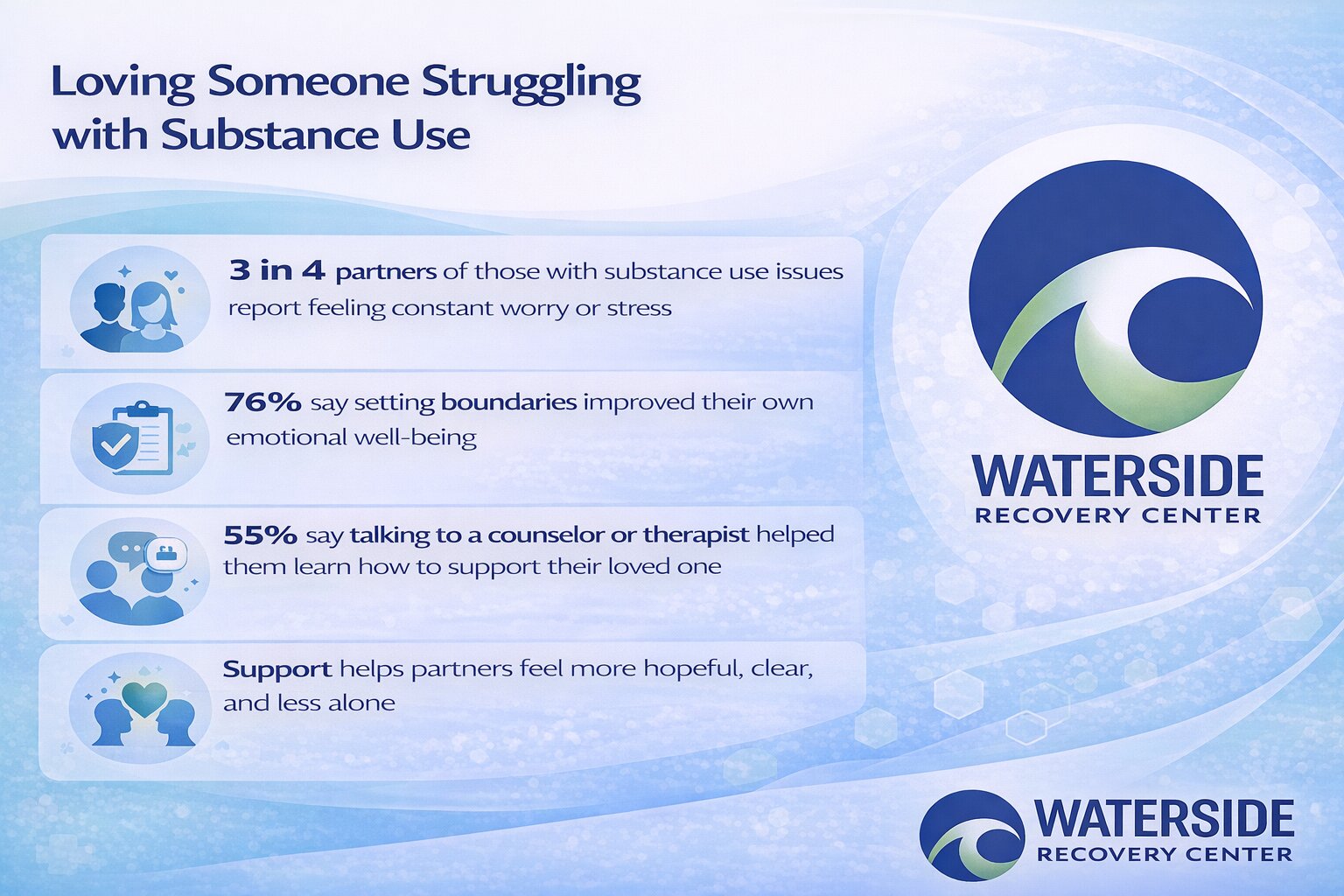
Helping might look like encouraging treatment, setting healthy limits, and being emotionally present.
Carrying everything often looks like:
- Covering up problems
- Taking on their responsibilities
- Constantly rescuing them from consequences
These behaviors usually come from love, not weakness.
But they can slowly create a relationship dynamic where one person is drowning and the other is trying to hold both of them above water.
Professional guidance can help partners step out of survival mode and start rebuilding balance.
What Support Looks Like for Partners
Many people assume support services are only for the person struggling with substances.
In reality, partners benefit tremendously from having their own space to process what they’re going through.
A clinician often helps partners:
Understand the patterns addiction creates inside relationships
Addiction affects communication, trust, and emotional safety. Understanding these patterns helps partners stop blaming themselves.
Learn healthier ways to respond to difficult situations
Instead of reacting from fear or frustration, partners can learn responses that protect their well-being while still offering compassion.
Set boundaries that protect both people
Boundaries aren’t punishments. They are ways of defining what is and isn’t healthy inside a relationship.
Reconnect with their own emotional stability
Partners often lose their sense of calm after months or years of chaos. Support can help rebuild that inner steadiness.
Think of it like learning how to navigate unfamiliar terrain with a guide.
The journey becomes less overwhelming when someone walks beside you.
Why Boundaries Are an Act of Love
Many partners fear that setting boundaries will push their loved one away.
But healthy boundaries often strengthen relationships rather than weaken them.
Boundaries might include things like:
- Refusing to cover up missed work or responsibilities
- Being honest about how substance use affects the relationship
- Protecting your own emotional or financial stability
These choices aren’t about punishment.
They are about creating a space where real change can become possible.
Without boundaries, relationships often become trapped in cycles of crisis and repair.
With boundaries, both people have room to breathe.
Finding Support Close to Home
One of the most reassuring steps partners can take is learning that support exists nearby.
Local treatment providers and counseling teams often help families navigate these situations with compassion and clarity.
Some families start by exploring treatment and support options available in their community, including services offering care in places like treatment in Worcester or broader resources across the Metrowest area.
Simply knowing that guidance is available can relieve some of the loneliness partners often feel.
A Moment Many Partners Recognize
There is often a quiet moment partners remember clearly.
Maybe it was after another late-night argument.
Or a conversation that went in circles.
Or the moment you realized you were more anxious than hopeful.
It’s the moment when you think:
“I can’t keep doing this alone.”
That realization isn’t a failure.
It’s often the beginning of clarity.
Because loving someone shouldn’t mean losing yourself in the process.
Frequently Asked Questions
How can I help my partner if they refuse treatment?
This is one of the most common situations partners face. You can’t force someone to seek help, but you can change how you respond to the situation. Setting healthy boundaries, seeking guidance for yourself, and creating honest conversations can sometimes open the door to change.
Is it normal to feel angry at my partner?
Yes. Love and frustration often exist together in relationships affected by substance use. Feeling angry, hurt, or confused doesn’t mean you don’t care—it means you’re human.
Should I stay or leave the relationship?
This is a deeply personal decision. Every relationship is different. Professional guidance can help you explore your options, understand your boundaries, and make choices that protect your emotional well-being.
Can relationships recover after addiction?
Many relationships do rebuild after someone receives the right support and both partners begin working toward healthier communication and trust. Recovery often involves healing for both individuals—not just one person.
What if I feel completely emotionally drained?
That feeling is extremely common among partners. Living with ongoing uncertainty can take a serious emotional toll. Support services exist not only for people struggling with substances but also for the loved ones navigating the impact.
You Don’t Have to Carry This Alone
If you love someone who is struggling with substance use, you may feel like you’re constantly balancing hope and heartbreak.
You care deeply about them. But you also deserve stability, clarity, and support.
Many partners discover that the first step toward healing is simply talking to someone who understands the complexity of what they’re experiencing.
Call 866-671-8620 or visit our addiction therapy services to learn more about our addiction therapy services in Plymouth, MA.
Sometimes the path forward begins with one quiet step: asking for help.