
You thought the worst was behind you.
Maybe there was a stretch of calm—some laughter, some relief, a sense that things were finally turning.
And now, something feels off again.
If your 20-year-old has started drinking after trying to stop, it can feel like the ground dropped out beneath you. But relapse doesn’t erase what they’ve learned—and it doesn’t mean treatment failed. It means something deeper still needs support.
Early on, it can help to reconnect with what effective care actually looks like through alcohol addiction treatment, especially the second time around, when treatment can be more tailored and honest.
This Isn’t the End of the Story—Even If It Feels That Way
Relapse carries a particular kind of heartbreak for parents. It’s not just fear—it’s grief. The kind that whispers, “We were doing so well… what happened?”
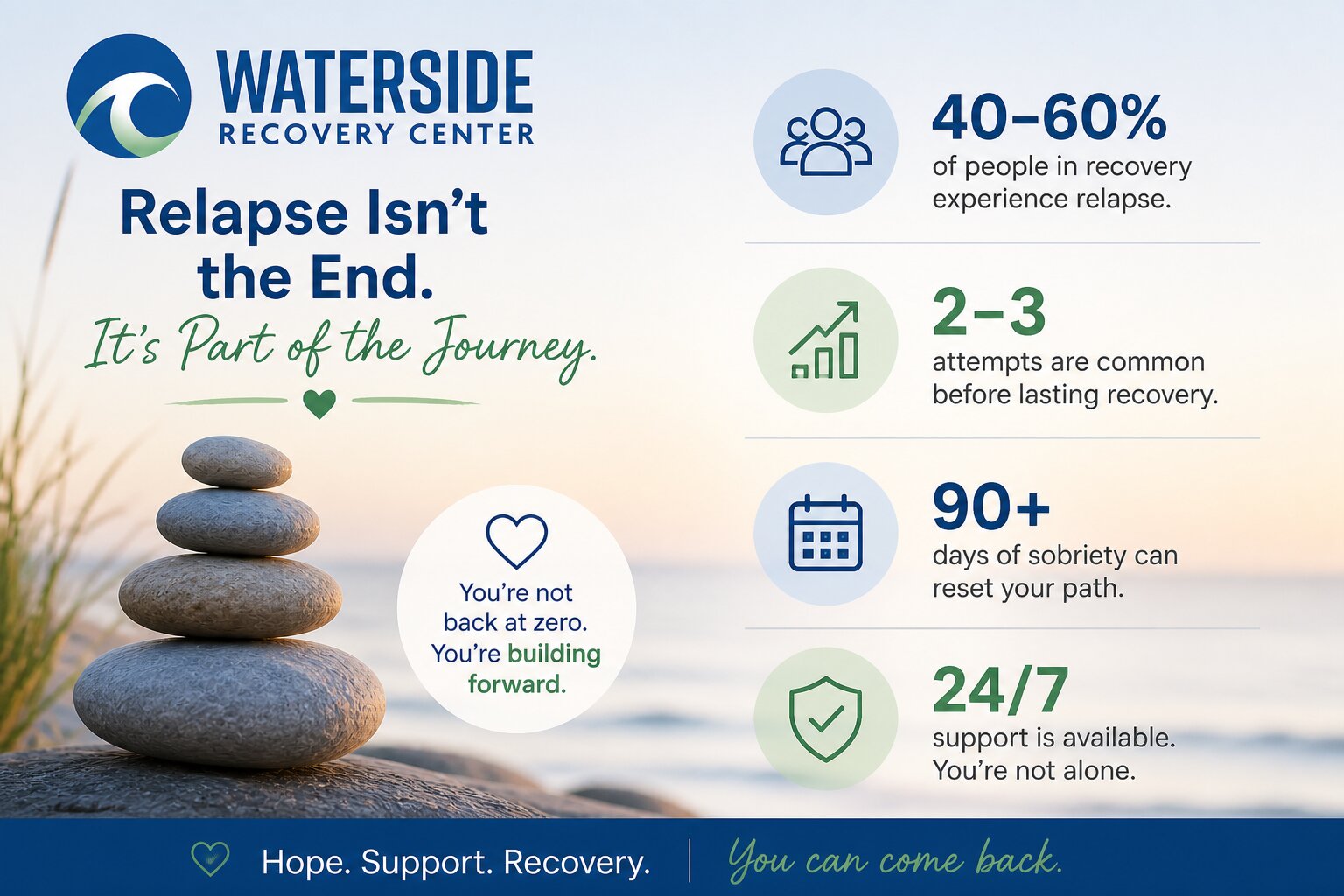
From a clinical perspective, relapse is not a reset to zero. It’s part of how many people eventually stabilize in recovery.
Think of it less like falling back to the beginning, and more like missing a step on a staircase. You don’t start over at the bottom—you regain your footing and continue, this time with more awareness of where that step is.
Your child didn’t lose everything they gained.
They ran into something they weren’t fully equipped to handle yet.
That matters. Because it tells us where to focus next.
Why This Happens So Often at 20
There’s something uniquely difficult about this stage of life.
At 20, your child is navigating independence—but often without the full emotional tools to manage it. They may look like an adult on the outside, but internally, many young adults are still building the skills needed to regulate stress, identity, and relationships.
Alcohol can quietly return as a solution.
Not because they want to hurt you.
But because, in some way, it still “works” for them.
Common underlying reasons include:
- Lingering anxiety or depression that wasn’t fully addressed
- Feeling disconnected from peers while trying to stay sober
- Overconfidence after a period of feeling stable
- Lack of structure after leaving a treatment program
- Unprocessed emotional pain or trauma
In many cases, relapse isn’t about wanting to drink—it’s about not knowing what else to do.
The Signs Are Often Quiet Before They’re Loud
You might not see a dramatic shift right away.
Instead, it often starts with small, almost dismissible changes. But those changes tend to follow a pattern.
You might notice:
- Alcohol being hidden, minimized, or lied about
- Subtle withdrawal from family or support systems
- Changes in sleep—either restless nights or excessive fatigue
- Irritability, defensiveness, or sudden mood swings
- Loss of interest in things that once mattered
- Broken promises around “cutting back”
These patterns can point to deeper signs of alcohol problem behavior returning—not just occasional drinking.
And here’s the difficult truth:
Parents often recognize it before anyone else does.
That intuition you have? It’s worth listening to.
Why the Second Treatment Experience Can Be More Powerful
It’s easy to assume, “If it didn’t work the first time, why would it work now?”
But clinically, the second experience is often where real traction begins.
Why?
Because your child is no longer walking in with the same assumptions.
They’ve felt what early recovery is like.
They’ve also felt what happens when support fades or coping tools fall short.
This creates an opportunity for:
- More honest conversations about triggers and resistance
- Deeper therapeutic work—not just surface-level change
- A better fit in terms of structure and support level
- More realistic expectations about what recovery requires
Treatment might look different this time. It could involve structured daytime care that provides stability, or multi-day weekly support that allows them to stay connected to real life while receiving consistent help.
The goal isn’t to repeat the same process.
It’s to refine it.
What Parents Often Carry (But Don’t Say Out Loud)
Many parents in your position carry a quiet, heavy question:
“Did I miss something?”
Or even harder:
“Did I cause this?”
It’s important to say this clearly—without minimizing your feelings:
You did not create this problem.
And you cannot solve it on your own.
What you can do is remain a steady presence in a moment that feels chaotic.
Your role is not to fix.
It’s to support without losing yourself.
How to Respond Without Making It Worse
This is where things get delicate.
When fear takes over, it’s natural to want to clamp down—to control, to lecture, to demand change. But those responses, while understandable, often push young adults further away.
Instead, focus on connection over control.
What tends to help:
- Speaking from concern, not accusation
- Naming what you’re noticing without exaggeration
- Keeping the door open for conversation—even if they’re not ready
- Encouraging support in a non-threatening way
What often backfires:
- Ultimatums given in emotional moments
- Trying to monitor or control their behavior constantly
- Arguing about whether there’s a problem
- Taking responsibility for their choices
One steady sentence can go further than ten emotional ones:
“I’m here, and I’m concerned. We don’t have to figure this out today—but we can figure it out together.”
You Don’t Have to Navigate This Alone
There are families across Massachusetts facing this same moment—quietly, painfully, and often without a clear roadmap.
Exploring support in areas we serve can be a starting point—not a commitment, just a way to understand what options are available and what kind of care might actually fit your child’s needs right now.
Sometimes the shift begins with a conversation, not a decision.
What Recovery Can Still Look Like From Here
It may not look like you imagined the first time.
It might be slower. Less linear. More honest.
Your child may need to rebuild trust—in themselves and in the process. They may need more support than before, or a different kind of environment altogether.
But recovery is still possible.
Not because everything goes perfectly.
But because people learn, adapt, and try again—with more truth than they had before.
And often, that’s what finally makes it stick.
Frequently Asked Questions
Is relapse normal for someone this young?
Relapse is common across all age groups, but especially in young adults who are still developing coping skills and independence. It doesn’t mean they can’t recover—it means their approach may need to change.
Should I confront my child about their drinking?
Yes—but gently. Focus on what you’ve observed and how you feel, rather than trying to prove they have a problem. The goal is to open a conversation, not win an argument.
How do I know if this is serious or just a phase?
If you’re noticing patterns like secrecy, emotional changes, or repeated failed attempts to cut back, those may be early signs of alcohol problem behavior. Trust your instincts—early support matters.
What if they refuse treatment again?
This is common. You can’t force readiness, but you can keep the door open. Continue expressing concern, offer options, and consider getting support for yourself as well.
Is a second treatment attempt really worth it?
Yes. In many cases, it’s more effective than the first because it’s based on real experience. Treatment can be adjusted to better meet your child where they are now.
What kind of treatment works best after relapse?
It depends on their needs. Some benefit from more structured daytime support, while others do well with multi-day weekly care that allows them to stay engaged in daily life while receiving treatment.
You’re Allowed to Feel Tired—and Still Keep Hope
This is exhausting.
The emotional back-and-forth, the fear, the waiting.
But this moment doesn’t define your child’s future.
And it doesn’t erase the love, effort, and care you’ve already given.
If anything, it shows how much you’ve stayed—through uncertainty, through setbacks, through the parts that don’t get talked about.
That matters more than you think.
If you’re unsure what to do next, you don’t have to carry that alone. Call (866)671-8620 or visit our alcohol addiction treatment services in Plymouth County, MA to learn more about our treatment, alcohol addiction treatment services in Bristol County, MA.