
Missing a few sessions—or even disappearing for weeks—doesn’t mean your recovery is over. It doesn’t mean you’re not serious. It doesn’t mean you failed. It just means you’re human. And being human is allowed here.
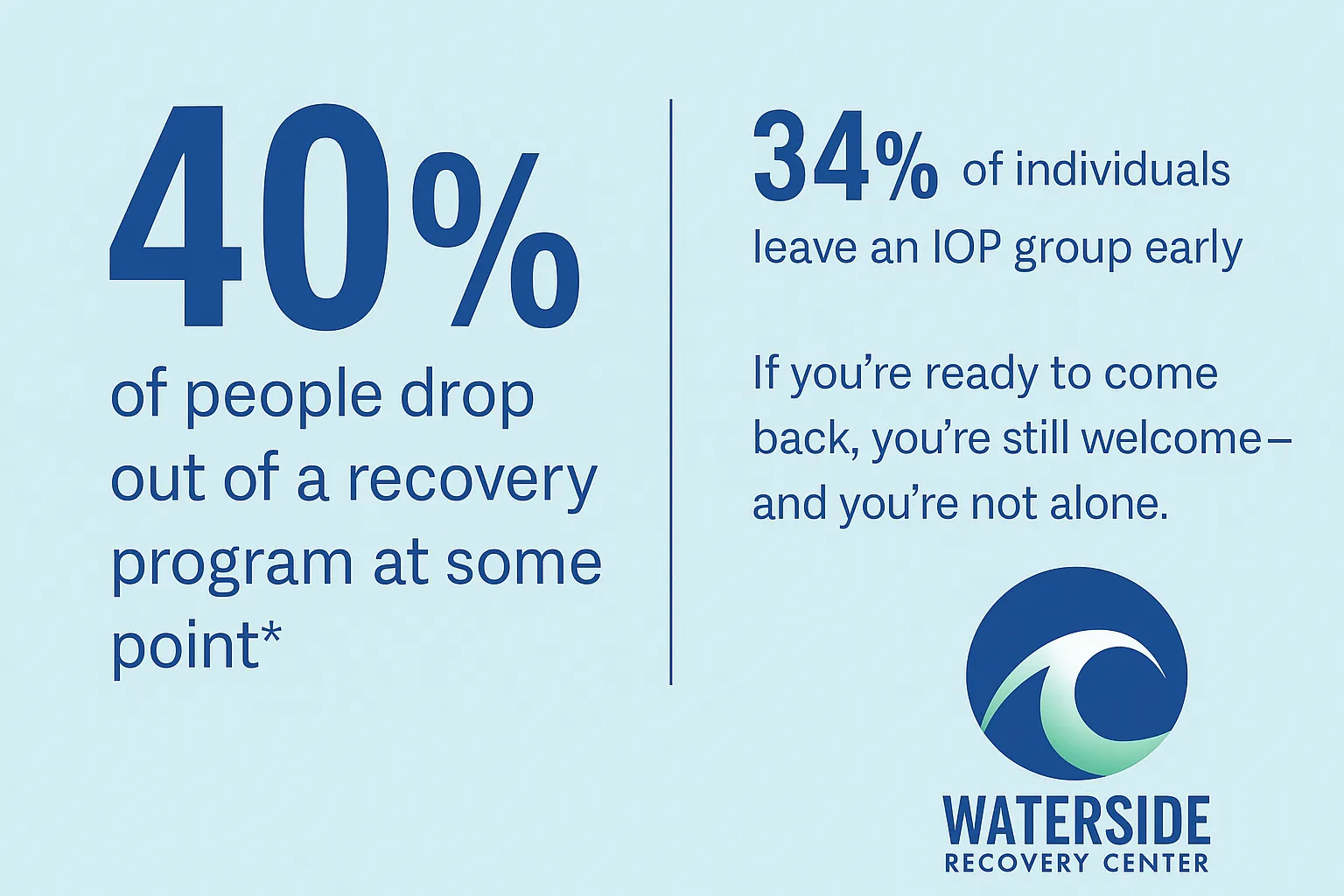
If you’ve dropped out of your outpatient treatment program or ghosted your IOP group, you’re not alone. It happens. A lot more than people talk about. Life gets in the way, motivation dips, shame creeps in, and suddenly it’s easier to avoid the whole thing than to pick up the phone.
But here’s what we want you to hear first: You’re still welcome. And it’s okay to come back.
At Waterside Recovery, we believe that returning after a setback is a sign of strength—not weakness. Whether it’s been three missed sessions or three months, this guide is for you. No shame. No pressure. Just a gentle roadmap for reconnecting with your outpatient program when you’re ready.
Step 1: Let Go of the Shame Spiral
Shame is a master at convincing you that you don’t belong anymore.
It says:
- “They probably replaced you.”
- “They’re going to judge you.”
- “You didn’t try hard enough.”
But none of that is true. Dropping out doesn’t erase the work you’ve already done. And it doesn’t disqualify you from continuing. You’re allowed to need a break. You’re allowed to struggle. And you’re absolutely allowed to come back.
Think of it like this: treatment is not a one-way street. You didn’t “get off the path”—you just paused on the side of the road. We’ll help you get back in the lane when you’re ready.
Step 2: Reach Out—Even If It’s Just One Line
You don’t need a speech. You don’t need to explain every detail. And you definitely don’t need to apologize.
Start small. A one-line email. A short voicemail. A simple message like:
“Hi, I’d like to talk about restarting treatment.”
That’s enough. That’s brave. And from our side? That’s a green light to support you—without questions or pressure.
If you’re looking for outpatient care that offers this kind of no-judgment re-entry, our outpatient treatment program in Duxbury, Massachusetts was built with that flexibility in mind.
Step 3: Don’t Wait to Feel 100% Ready
Waiting until you feel totally ready, totally motivated, or totally put together can keep you stuck. And stuck is exactly where shame wants you to stay.
The truth is, most people who return to outpatient treatment don’t feel completely ready. They feel unsure. Nervous. Embarrassed. That’s normal.
Start anyway.
Start awkwardly. Start imperfectly. Start while still doubting yourself. The important part is starting again. You’ll find your footing as you go.
Step 4: Re-entry Doesn’t Mean Starting Over
One of the biggest fears people have when they return is that they’ll have to “start from scratch.” That everything they learned, every session they attended, is gone.
Not true.
Recovery isn’t a test you fail. It’s a relationship you return to. And like any relationship, reconnection is possible—even if it takes a moment to settle back in.
Your care team at Waterside Recovery will work with you to adjust your treatment plan, check in on your goals, and make sure you feel supported from where you are now—not from where you were before.
Step 5: Expect a Little Discomfort at First
We won’t sugarcoat this: the first session back might feel a little strange.
You might worry about walking into group and facing old peers. You might feel exposed or unsure. That’s completely normal.
But that awkwardness? It usually lasts ten minutes—fifteen tops.
Most clients tell us that once they hear someone else share honestly, the tension drops. They remember why they came. And often, others in the room nod with understanding, because they’ve done the exact same thing.
Setbacks are part of many people’s recovery stories. Yours isn’t the first. It won’t be the last. And it absolutely doesn’t make you less worthy of support.
Step 6: Reconnect With Why You Started
You don’t have to recreate the intensity of your first breakthrough. But it can help to pause and remember: Why did I start this in the first place?
Maybe you were tired of lying about your drinking. Maybe anxiety was running your life. Maybe you wanted your relationships to feel real again.
That “why” doesn’t go away just because you took a detour.
Sometimes we forget our reasons when we’re in survival mode. Reconnecting with your “why” can reignite just enough clarity to keep going.
Step 7: You’re Not Behind
There’s no finish line you missed. No scoreboard to catch up on. Recovery isn’t linear—it’s cyclical, lopsided, and often messy.
Some people take a break and come back stronger. Others take a while to re-engage. Both are valid. What matters is that you’re circling back at all.
If you’re looking for outpatient treatment in Bristol County, MA, we’re ready to meet you right where you are—not where you think you should be.
Frequently Asked Questions: Restarting Outpatient Treatment
What if I ghosted completely—can I still come back?
Yes. You don’t need to explain your absence to be welcomed back. At Waterside Recovery, we understand that ghosting sometimes comes from shame, exhaustion, or just life getting in the way. We’re not here to shame you—we’re here to help you reconnect.
Will I have to start from scratch?
Not at all. We honor the work you’ve already done. Your care plan may need a little adjusting, but your past progress still counts.
I feel embarrassed to see the same people in group. What do I do?
That’s completely normal. But most clients are met with warmth, not judgment. Group members often understand because many have been in the same position. If needed, we can explore alternate groups or times to ease your return.
Do I need to detox again before returning?
If you’ve been using again and have concerns about withdrawal, let us know. We’ll help you assess whether you need medical support before resuming treatment. But often, clients can return directly to outpatient care safely.
What if I’m not sure I want to fully commit?
That’s okay. You don’t have to know everything to start again. We’ll meet you with curiosity, not pressure. Your goals and pace are yours to decide.
A Note from Your Clinician: We’re Still Here
We understand that re-engaging with treatment after a pause can feel intimidating. You might wonder if you’re allowed to come back, if we’ll be disappointed, or if the door is still open.
Let us be clear: The door is open. Always.
You don’t need to prove anything. You don’t need a big reason. And you definitely don’t need to be ashamed.
We’re not here to ask why you left. We’re here to ask: What do you need today?
Ready to give it another try—your way?
Call (866)671-8620 to learn more about our Outpatient Treatment Program services in Plymouth County, MA.
We’re still here. When you’re ready, so is your spot.