
Nobody talks enough about year three.
Or year five.
Or year eight—when you’re still sober, still showing up, still technically “doing well”… but something feels off.
Not a craving exactly.
Not a crisis.
Just a quiet disconnection.
If you’ve been through opiate addiction treatment and you’ve built a stable life—but lately you feel restless, numb, or stuck—this is for you.
Life after treatment isn’t always a straight line.
And feeling flat doesn’t mean you’re failing.
Sobriety Solved The Emergency — Not The Entire Story
Early recovery is intense.
You’re rebuilding relationships. Repairing finances. Learning how to exist without chaos. Every day feels like a milestone.
Then one day… the urgency fades.
The crisis is over. The phone stops ringing with bad news. You’re not fighting for survival anymore.
And that’s when something unexpected can happen.
You look around and think:
Is this all there is?
The adrenaline that once fueled your determination is gone. What’s left is normal life. And normal life can feel strangely quiet.
Quiet enough that you start hearing parts of yourself you never fully addressed.
The Work Evolves — Whether You Do Or Not
The first phase of recovery is about not using.
The second phase is about building.
The third? It’s about meaning.
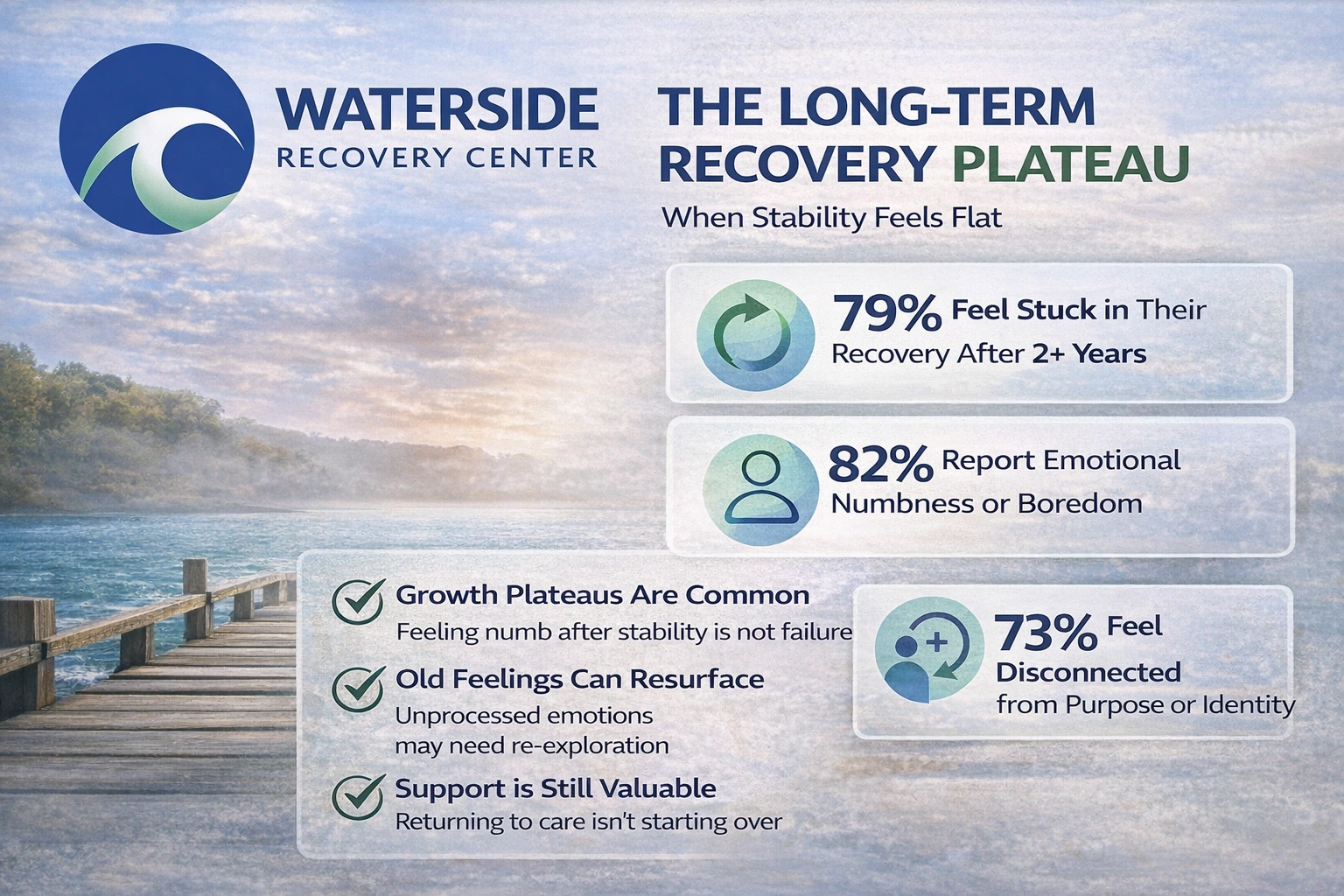
Long-term alumni often hit a stretch where they’ve done everything “right.” They’re sober. Responsible. Stable.
But inside, they feel:
- Disconnected from purpose
- Emotionally flat
- Restless despite success
- Unsure who they are now
That doesn’t mean relapse is around the corner.
It means you’ve outgrown the version of recovery that was only about staying clean.
Stability Can Feel Boring When You’re Used To Chaos
This part is uncomfortable to admit.
Some of us got used to intensity.
Not the destruction. Not the withdrawals. But the heightened feeling. The urgency. The drama.
Stable life doesn’t come with that same emotional charge.
Paying bills. Going to work. Attending family gatherings. These are wins—but they don’t spike your nervous system.
If your brain was wired for survival mode for years, calm can feel… dull.
That doesn’t mean you miss using.
It means your nervous system is still recalibrating.
You Might Be Grieving The Version Of You That Was Fighting
In early recovery, you had a clear identity.
You were rebuilding. You were overcoming. You were transforming.
Years later, that identity can fade.
You’re no longer “the comeback story.”
You’re just… living.
And sometimes that feels anticlimactic.
We’ve seen alumni in Framingham, Massachusetts describe this stage as “successful but empty.”
That doesn’t mean recovery failed.
It means you’re ready for deeper work.
Disconnection Is A Signal — Not A Sentence
When you feel stuck, your brain might whisper:
“You’re ungrateful.”
“You should be happier.”
“Other people would love your stability.”
But emotional flatness isn’t ingratitude.
It’s information.
Maybe there’s trauma that was stabilized but never fully processed.
Maybe your relationships need strengthening.
Maybe your career doesn’t align with who you’ve become.
Recovery removed substances.
Now it’s inviting you to expand.
Returning To Support Isn’t Regression
There’s a quiet shame long-term alumni carry.
“I shouldn’t need help anymore.”
That belief keeps people isolated.
But needing support in year six doesn’t erase year one.
It builds on it.
Some alumni return to structured daytime care not because they relapsed—but because they want depth. Others re-engage therapy to explore identity, purpose, or unresolved grief.
For those exploring treatment options in areas we serve, returning isn’t about crisis. It’s about refinement.
You’re not starting over.
You’re leveling up.
A Story That Might Sound Familiar
One alumnus came back after four years sober.
No relapse. No legal trouble. No dramatic collapse.
He said, “I’m not in danger. I’m just not alive.”
He had built a stable career and repaired family ties. But emotionally, he felt gray.
Through deeper therapy work and structured accountability, he began reconnecting with creativity and long-ignored trauma.
Sobriety didn’t change.
But vitality returned.
Another alum returned because complacency scared her more than chaos ever did. She knew disconnection was a warning sign—not of relapse, but of stagnation.
Both left stronger than when they first got clean.
Recovery Is A Spiral, Not A Straight Line
We tend to picture recovery as a road.
Forward. Upward. Linear.
It’s not.
It’s a spiral staircase.
You revisit old fears. Old insecurities. Old questions.
But each time, you’re higher up.
More aware. More resourced. Less reactive.
If you’re feeling stuck, you may not be sliding backward.
You may be circling upward toward a new layer.
The Long-Term Emotional Landscape
Long-term sobriety often brings up themes like:
- Identity beyond addiction
- Intimacy without chaos
- Purpose beyond survival
- Spiritual emptiness
- Career misalignment
- Burnout from overcompensating
These aren’t relapse triggers in the traditional sense.
They’re growth invitations.
We’ve worked with alumni in Worcester, Massachusetts who thought they were losing progress—when in reality, they were entering a deeper stage.
The flatness wasn’t a warning.
It was a doorway.
You Don’t Have To Wait For A Crisis
Here’s the dangerous myth: you only seek help when you’re falling apart.
Long-term recovery doesn’t require crisis to justify support.
If you feel:
- Restless despite stability
- Disconnected from joy
- Irritable without clear cause
- Spiritually numb
- Emotionally distant in relationships
That’s enough.
Life after opiate addiction treatment isn’t supposed to plateau permanently.
It’s meant to deepen.
FAQs About Long-Term Recovery Plateaus
Is feeling stuck after years sober normal?
Yes. Long-term recovery often shifts from crisis management to identity exploration. That transition can feel disorienting or flat. It’s common—and workable.
Does emotional numbness mean relapse is coming?
Not necessarily. Numbness can signal burnout, unresolved trauma, or stagnation—not imminent relapse. Addressing it early strengthens long-term stability.
Why do I miss the intensity of early recovery?
Early recovery is emotionally charged. It’s high stakes. There’s urgency. Once life stabilizes, that intensity fades. Missing the feeling doesn’t mean you miss the substance. It means your nervous system is adjusting.
Should I go back to structured support if I haven’t relapsed?
It can be incredibly helpful. Re-engaging care for growth—not crisis—often prevents future setbacks. Support isn’t only for emergencies.
How do I rebuild purpose after survival mode ends?
Start small. Revisit interests. Explore creativity. Reassess career goals. Deepen therapy work. Volunteer. Mentor. Purpose isn’t found—it’s built.
What if I’m embarrassed to ask for help again?
Most alumni share that fear. But asking for support in year five shows maturity, not weakness. Recovery evolves. So should your support system.
You’re Not Done — You’re Expanding
Long-term sobriety isn’t the final chapter.
It’s the foundation.
If you feel flat, restless, or disconnected, you’re not broken.
You may simply be ready for the next layer.
Growth after stabilization is quieter than early recovery.
But it’s just as important.
You don’t have to navigate this alone. Call (866)671-8620 or visit our opiate addiction treatment in Plymouth, Massachusetts to learn more about how Waterside Recovery can support your next chapter.