
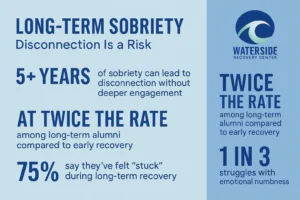
I didn’t think I’d need help again. Not after five years sober. Not after building a life around structure, purpose, and recovery. But the truth? I was coasting. And coasting turns into drifting. Drifting turns into disappearing—from people, from purpose, even from myself.
There’s this unspoken assumption in long-term sobriety: once you hit a few milestones, you’re good. Solid. Done. But I wasn’t good. I wasn’t drinking—but I wasn’t really living either. If you’re feeling that too—like the light has dimmed, like you’re just checking boxes—you’re not alone. And if you’re searching for a way back through alcohol addiction treatment, it doesn’t mean you’ve failed. It might mean you’re finally ready for something deeper.
The Quiet Danger of “Fine”
I used to think the biggest risk to my recovery was a drink. Turns out, it was disconnection.
Not dramatic disconnection. Not burning bridges or ghosting friends. Just… emotional flatness. A low-grade loneliness I couldn’t name. I still went to work. Still went to meetings (sometimes). Still answered texts. But nothing hit. Not joy, not pain—just static.
There’s a quiet danger in being “fine.” Because when no one’s worried about you, you stop asking if you’re okay. I didn’t notice how far I’d drifted until I couldn’t remember the last time I really felt present. Felt joy. Felt anything, really.
I Thought I Had to Be the Example
Sobriety gave me so much. A job. A partner. Family back in my life. So when I started feeling hollow, I felt guilty. Like I wasn’t allowed to admit it. Like I’d betray recovery itself if I said out loud: “I’m not okay.”
Especially around newcomers. I thought I had to be the example. But hiding behind that smile just made it worse. I became an echo of my old self—saying the right things, but disconnected from the fire that made it real.
One Friend, One Question, Everything Changed
It wasn’t a therapist or a relapse or a rock bottom that snapped me awake. It was a friend from group. She looked at me one night and said, “Hey… when’s the last time you felt something real?”
I laughed. Shrugged. Said I was just tired.
But I wasn’t tired. I was spiritually bankrupt. That question haunted me. It stuck in my chest for weeks, until I finally admitted: something had to change.
Why I Reentered Alcohol Addiction Treatment (Without a Relapse)
When people think of alcohol addiction treatment in Plymouth County, MA, they picture someone who’s using again. But I hadn’t picked up. I wasn’t in danger of losing my job or going to jail. I wasn’t in acute crisis.
I was just lost.
And I realized that the version of recovery I built at 90 days wasn’t going to carry me at year five. I needed space to tell the truth—not just about cravings or triggers, but about emotional exhaustion, spiritual numbness, and the fear that maybe this was all there was.
So I reached out. And the decision to return to treatment, not from crisis but from craving more, was one of the most powerful moves I’ve ever made.
What Deeper Recovery Looked Like This Time
This time around, treatment wasn’t about detox or learning the basics. It was about re-rooting. Getting honest. Letting go of the image of the “perfect alum” and reconnecting to the parts of recovery that made me feel human.
Here’s what helped:
- Group therapy for long-term sobriety. Rooms where people got what it meant to be sober and still stuck. Where I didn’t have to perform wellness to belong.
- Therapists who challenged emotional numbness. Not everything needed to be fixed—but a lot needed to be felt.
- Purpose work. Rebuilding not just goals but a connection to what matters. Learning to want again, without shame.
- Letting go of spiritual perfectionism. My connection to a higher power had gone quiet. But silence doesn’t mean absence. I just needed to relearn how to listen.
If you’re looking for alcohol addiction treatment in Bristol County, MA, don’t let your years of sobriety talk you out of asking for help. Maturity in recovery isn’t about never needing support again. It’s about knowing when to seek it differently.
This Isn’t About Starting Over
One of my biggest fears was that returning to treatment would feel like going back to square one. Like I’d have to re-earn my place in recovery. But that’s not what happened.
I didn’t start over. I started deeper.
Returning to care wasn’t a demotion—it was a commitment. A way of saying, “My sobriety deserves more than autopilot.” And I do too.
Why Long-Term Alumni Sometimes Need a Reset
We don’t talk enough about the emotional reality of long-term sobriety. The way that milestones don’t always equal meaning. How you can stay “clean” and still feel spiritually dirty.
Here’s what I know now:
- Sobriety is not a static state.
- Emotional and spiritual health shift over time.
- You’re not weak for needing more care. You’re wise for noticing the drift.
You’re Allowed to Want More
You’re allowed to say, “This version of my recovery isn’t working anymore.” You’re allowed to want joy, connection, purpose—not just abstinence.
You’re allowed to feel stuck. You’re allowed to tell the truth. And you’re allowed to reach out for help, even if you’ve already been through it all before.
Because there is no graduation date in recovery. Just new chapters. New ways to return to yourself.
FAQs About Re-Engaging in Alcohol Addiction Treatment
Do I have to relapse to re-enter treatment?
No. You can return to treatment at any stage of recovery. Many long-term alumni seek support for emotional burnout, spiritual disconnection, or life transitions—not just relapse.
Will I have to go through detox again?
Not necessarily. If you’re still abstinent, detox isn’t part of the process. Many treatment centers offer alumni tracks or programs designed for people re-engaging without recent substance use.
Is returning to treatment a sign that I failed?
Not even close. Returning is a sign of emotional honesty and maturity. It takes strength to say, “This version of my recovery needs support.” That’s not failure—it’s evolution.
What if I feel ashamed or like I should “know better”?
Those feelings are normal—but not helpful. Shame thrives in silence. The moment you speak the truth, you take its power away. You don’t need to “know better.” You just need to be honest about where you are now.
What types of programs are available for alumni?
Depending on the treatment center, you may find:
- Group therapy for long-term recovery
- Individual therapy with relapse-prevention or meaning-building focus
- Day or evening IOP tracks
- Spiritual care and life coaching
- Alumni meetups and retreats
Waterside Recovery offers multiple ways for alumni to reconnect. Whether you need a touchpoint or a deeper reset, the door is open.
Final Thought: You Don’t Have to Go Back—You Can Go Forward
You’re not the same person who walked into treatment all those years ago. That’s the good news. And also the hard part. Because what got you sober isn’t always what keeps you fulfilled.
Sometimes, we need new tools. New questions. New space to ask what recovery means now—not back then.
And if you’re ready to do that work, you don’t need to apologize. You need a place that welcomes the complexity of long-term recovery and honors the courage it takes to begin again.
Feeling stuck doesn’t mean you’re broken.
Call (866)671-8620 to learn more about our alcohol addiction treatment services in Plymouth County, MA.