
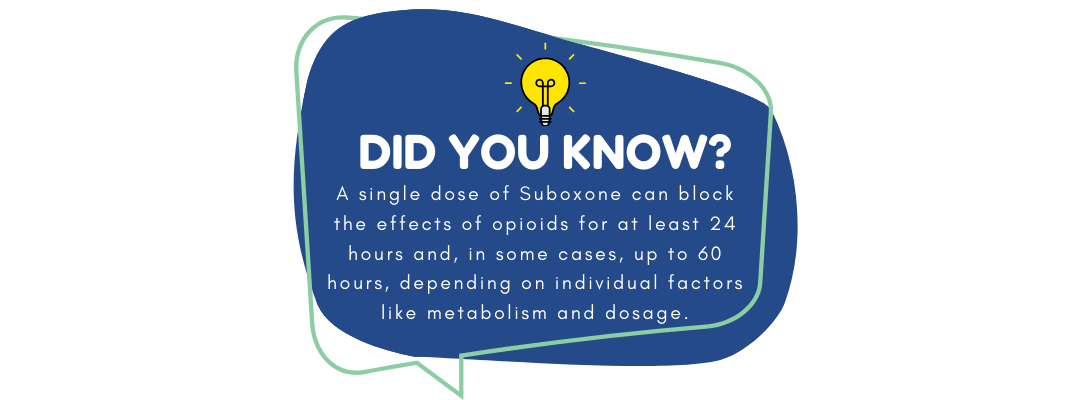
Suboxone usually blocks most of the effects of other opioids for about 24 to 60 hours after a dose. For people taking it daily, the blockade is close to continuous. Studies have measured meaningful blocking even up to about 72 hours after a single dose.
That range is wide for a reason: the blockade doesn’t switch off at a set hour. It fades gradually as buprenorphine levels drop, and how fast that happens depends on the dose, the person’s metabolism, and how long they’ve been taking it. Here’s how the blocking works and what it means in practice.
How Suboxone Blocks Opioids
Suboxone contains two medications: buprenorphine and naloxone. The blocking effect comes from buprenorphine.
Buprenorphine binds to the same mu-opioid receptors that heroin, fentanyl, oxycodone, and other opioids act on. It does two things at once:
- It holds on tightly: buprenorphine has a higher affinity for these receptors than most opioids, including heroin and fentanyl. Once it’s attached, other opioids have trouble pushing it off.
- It only partly activates them: buprenorphine is a partial agonist. It activates the receptor enough to ease withdrawal and cravings, but not enough to produce the full high of a full opioid.
With most receptors already occupied, another opioid has very little room to act. That’s the blockade.
The naloxone in Suboxone isn’t what blocks other opioids. Taken under the tongue as prescribed, very little naloxone is absorbed. It’s there to discourage injecting the medication.
How Long the Blockade Lasts at Different Doses
Blocking strength depends on how many receptors buprenorphine occupies, and that depends on the dose:
- Low doses (around 2 mg): occupy roughly 40% to 50% of mu-opioid receptors, which is not enough for a reliable blockade
- 8 mg: produces substantial blocking in most people, and in one study nearly complete blockade lasting up to 72 hours
- 16 mg: occupies roughly 80% to 95% of receptors in brain imaging studies, a strong and more consistent blockade
- Above 16 mg: adds only a little more occupancy; blockade largely levels off
So higher doses generally block more strongly and for longer, but only up to a point. There’s no reliable hour count for a given dose, because the blockade weakens gradually rather than ending at a fixed time.
What Affects How Long It Lasts
Several factors change how long buprenorphine keeps blocking opioids:
- Dose: higher doses keep receptor occupancy higher for longer, up to the plateau above
- Time on Suboxone: with steady daily dosing, buprenorphine builds up in the body, so the blockade becomes more consistent than after a single dose
- Metabolism: buprenorphine is broken down in the liver, so liver function and individual differences change how quickly levels fall
- Other medications: some drugs speed up or slow down the liver enzymes that process buprenorphine, shortening or lengthening its effect
- Missed doses: skipping doses lets levels drop, and the blockade weakens with them
What Happens If You Take Opioids on Suboxone
While buprenorphine is active, the effects of other opioids are blocked or sharply reduced. Most people feel little or nothing from a typical dose.
That’s where the danger starts. Someone who feels nothing may take more, and then more. At very high doses, especially with fentanyl, a full opioid can partly push through the blockade. And because the blockade fades gradually, opioids taken as it wears off can hit much harder than expected. Mixing opioids with alcohol, benzodiazepines, or other sedatives on top of Suboxone raises overdose risk further.
There’s no safe window for using opioids on or after Suboxone. If you’re struggling with cravings or have used while on Suboxone, tell your prescriber; adjusting the dose or plan is far safer than trying to work around the blockade.
Blocking vs. Precipitated Withdrawal
These two effects come from the same property of buprenorphine, but they’re opposites in practice.
| Blocking | Precipitated withdrawal | |
|---|---|---|
| When it happens | Opioids are taken after Suboxone is already in the system | Suboxone is taken while full opioids are still active |
| What’s going on | Buprenorphine already holds the receptors, so the other opioid can’t act | Buprenorphine knocks the full opioid off the receptors and replaces it with a weaker effect |
| What it feels like | Little or no effect from the other opioid | Sudden, intense withdrawal within about 30 to 60 minutes |
Precipitated withdrawal is why starting Suboxone is timed carefully, usually once withdrawal has already begun. It’s become more common with fentanyl, which lingers in the body longer than heroin. Providers now use several approaches to make starting Suboxone easier for people who use fentanyl.
Why the Blockade Matters in Treatment
The blockade is one of the reasons Suboxone works. When using opioids no longer produces a high, the cycle of craving and reward starts to weaken. Meanwhile, buprenorphine’s partial activation keeps withdrawal and cravings in check, so people can focus on therapy, work, and family instead of the next dose.
Suboxone works best as part of a full medication-assisted treatment plan. You can learn more about Suboxone treatment for opioids at Waterside, or see how it compares with a full blocker in our guide to Suboxone vs. Vivitrol.
Frequently Asked Questions
How Long Does 8 mg of Suboxone Block Opiates?
An 8 mg dose blocks most opioid effects in many people for at least 24 hours, and lab studies have measured near-complete blocking for up to about 72 hours. The effect fades gradually and varies from person to person.
Does Suboxone Block All Opiates?
It blocks most of the effects of most opioids, including heroin, oxycodone, and morphine. Very high doses of potent opioids like fentanyl can partly push through, which is why using on Suboxone is dangerous.
Does Suboxone Block Fentanyl?
Mostly, yes. Buprenorphine binds more tightly than fentanyl and blocks much of its effect. But fentanyl is extremely potent, and large amounts can partly override the blockade, raising overdose risk.
How Long After Taking Suboxone Can You Take Opiates?
There’s no safe time. The blockade fades gradually and unpredictably, and people who use as it wears off often take more than they would otherwise, which can lead to overdose. If you’re thinking about using, talking with your prescriber or care team is the safer next step.
What Happens to Tolerance After Stopping Suboxone?
Tolerance drops after stopping Suboxone. Using the amount of an opioid someone used before treatment can then cause an overdose, and with fentanyl in the drug supply, that risk is high. Keep Narcan on hand and stay connected to care when stopping. If you’re planning to stop, here’s what Suboxone withdrawal usually looks like.
How Waterside Recovery Can Help
If you’re on Suboxone and struggling, or thinking about starting it, the right support makes a difference. Waterside Recovery offers outpatient care across Plymouth County, the South Shore, and MetroWest, with medication support alongside therapy and relapse prevention.
Learn more about opioid treatment at Waterside, call (866) 671-8620, or verify your insurance to see what’s covered.