
When your child is in behavioral health crisis—drinking heavily, isolating, spiraling emotionally—it’s more than a phase. It’s terrifying. You may find yourself replaying every decision you made as a parent, wondering how things got this far and what else you could’ve done.
But here’s what’s most important to hear right now: you are not alone, and this is not your fault.
At Waterside Recovery, we work with young adults every day whose drinking is only part of a much larger emotional storm. Our alcohol addiction treatment is designed not just to stop substance use—but to stabilize the whole person. That includes mental health, emotional regulation, relationships, and the capacity to feel safe again in their own mind.
Here’s how alcohol addiction treatment can begin to restore more than sobriety.
Alcohol Use Is Often the Symptom—Not the Whole Story
In many young adults, drinking starts as a way to numb, distract, or cope. Maybe they’ve been living with undiagnosed anxiety. Maybe they experienced trauma no one knows about. Or maybe they feel like their life has no direction and alcohol makes the boredom bearable.
That means stopping alcohol use alone won’t solve the problem. In fact, if treatment only focuses on substance use without addressing the underlying emotional distress, the drinking might stop temporarily—but the pain will still be there, waiting.
Effective alcohol addiction treatment digs deeper. We ask: What is the alcohol covering up? What hurts when it’s quiet? Once we start healing those root causes, lasting change becomes possible.
Treatment Stabilizes the Nervous System First
Before therapy, before insight, before rebuilding—there has to be stabilization.
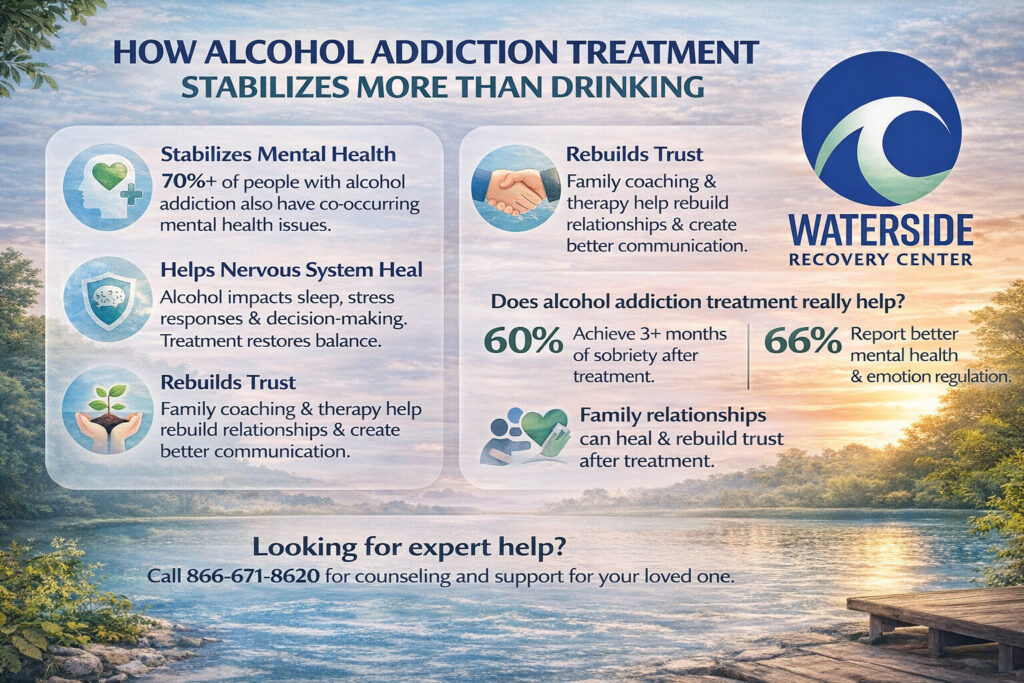
Heavy alcohol use throws off everything:
- Sleep cycles
- Brain chemistry
- Emotional regulation
- Appetite and nutrition
- Decision-making ability
Early stages of treatment focus on rebalancing the body and brain. This may include medical support for withdrawal, consistent meals, sleep hygiene, and regulated daily structure.
Why does this matter? Because until the brain and body are calmer, your child may not be able to fully participate in therapy or take in support. Stabilization creates the foundation for everything else that follows.
You May See Your Child’s Eyes Change Before Their Behavior Does
We’ve heard it from parents time and again:
“It was the first time in months I saw my child make eye contact.”
“They laughed. A real laugh. I hadn’t heard that in so long.”
“For a moment, it felt like they were back.”
Alcohol addiction treatment doesn’t just chip away at destructive behaviors—it makes space for connection to return. When the alcohol clears, so does some of the fog that’s kept your loved one from engaging with you, and with themselves.
It’s a fragile, beautiful beginning. And it often arrives before the “big” progress shows up. These early moments are worth noticing.
Healing Relationships Is Part of Treatment (Even When It’s Messy)
Addiction impacts families in complex and painful ways. Maybe there have been lies, late-night calls, or moments that broke your trust. Maybe you’ve had to make hard choices—like asking your child to leave the home—or struggled with enabling behaviors out of fear.
You’re not a bad parent. You’re a parent trying to love someone in crisis.
At Waterside, we offer family therapy, psychoeducation, and compassionate guidance to help you rebuild—at your own pace. You’ll gain tools for communication, boundary-setting, and understanding what your child is facing. And perhaps most importantly, you’ll be supported in healing your own emotional wounds along the way.
Explore care in areas we serve that includes resources for families—not just individuals.
It’s About More Than Not Drinking—It’s About Learning to Live
Once stabilized, our clients begin the deeper work of learning how to live without alcohol as a crutch. That includes:
- Processing trauma or unresolved grief
- Identifying triggers and building coping skills
- Developing structure, purpose, and long-term goals
- Building peer support and healthy community
We often describe this part of treatment as “rebuilding a life from the inside out.” For young adults who started drinking before ever learning how to manage life’s challenges, this phase is everything.
Long-Term Success Comes from Ongoing Support
One of the most harmful myths in behavioral health is that 30 days is enough. For many young adults, early treatment is just the starting line.
Sustainable recovery is a long-term process. That’s why our programs include extended outpatient care, trauma-informed therapy, alumni check-ins, and continued support for families. We walk with you—not just during the crisis—but through the healing that follows.
If you’re exploring treatment options in areas we serve, we can help match your family’s needs with the right level of care.
FAQ: Alcohol Addiction Treatment for Young Adults
How do I know if my child needs alcohol addiction treatment?
Look for signs beyond just drinking frequency: has their personality changed? Are they isolating, lying, losing motivation? If alcohol is impacting their mental health, safety, or ability to function—it’s time to consider treatment.
Can alcohol addiction treatment also help with mental health issues?
Yes. Many of our clients struggle with both alcohol use and co-occurring mental health disorders like anxiety, depression, or PTSD. Our programs are designed to treat both together, not separately.
What role do families play during treatment?
Families are often a critical part of the healing process. We offer family therapy, educational workshops, and individual parent coaching. The goal is to help you feel supported, informed, and equipped to rebuild trust—without feeling like you have to do it all alone.
Is outpatient care effective, or does my child need residential treatment?
The right level of care depends on severity, safety, and readiness. Outpatient programs can be highly effective, especially for young adults who are medically stable but need structured, therapeutic support multiple times per week. We help assess and recommend the best fit.
What if my child doesn’t want treatment?
It’s painful—but common—for young adults to resist help. We can support you in setting boundaries, having hard conversations, and understanding how to encourage treatment without pushing them away. Sometimes, treatment engagement begins with the family reaching out first.
Ready to find real support—for your child and for yourself?
Call (866)671-8620 or visit to learn more about our alcohol addiction treatment services in Plymouth, MA.