
When you’re in love with someone actively struggling with alcohol addiction, your heart often learns to live in two places at once. One part of you holds on fiercely—to love, to memories, to hope. The other part grows weary—of broken promises, of missed dinners, of wondering whether tonight will be better or worse than the last.
It’s an exhausting way to love.
And yet, many partners stay. Not out of weakness, but out of belief: “This isn’t all of them. This isn’t who they are when they’re well.”
Alcohol addiction treatment isn’t just about helping the person who drinks. When it works well, it helps both people in the relationship understand what’s happening, stop the cycles of denial, and begin to choose a new way forward—together or separately—with more clarity and compassion.
Denial Protects Us—Until It Starts to Hurt Us
Denial in couples affected by addiction doesn’t always look like blindness. It often shows up as minimizing, rationalizing, or quietly hoping things will resolve on their own. You might hear yourself thinking:
- “They’re under a lot of stress.”
- “Everyone drinks at this age.”
- “They’re not drinking every day. It’s not that bad.”
Sometimes, the person using alcohol is in denial. Sometimes, the partner is. Often, both are in some form of it—because denial softens the edges of reality. It buys time. It lets love speak louder than fear.
But denial also delays healing. One of the earliest gifts of alcohol addiction treatment is clarity. With professional assessment, behavioral patterns are named. The drinking is no longer a vague issue—it’s something concrete that can be addressed.
And when that happens, both people often feel a strange mix of relief and grief: “It’s real. But maybe now, something can change.”
Treatment Isn’t Just for the Person Using
It’s easy to think: “They’re the one drinking too much. They’re the one who needs help.”
But addiction impacts relational systems. You’ve likely adjusted your behavior, your expectations, and your own emotional health around their use. Whether you’ve taken on more responsibilities, hidden their behavior from family, or tiptoed around difficult conversations, your nervous system has been working overtime.
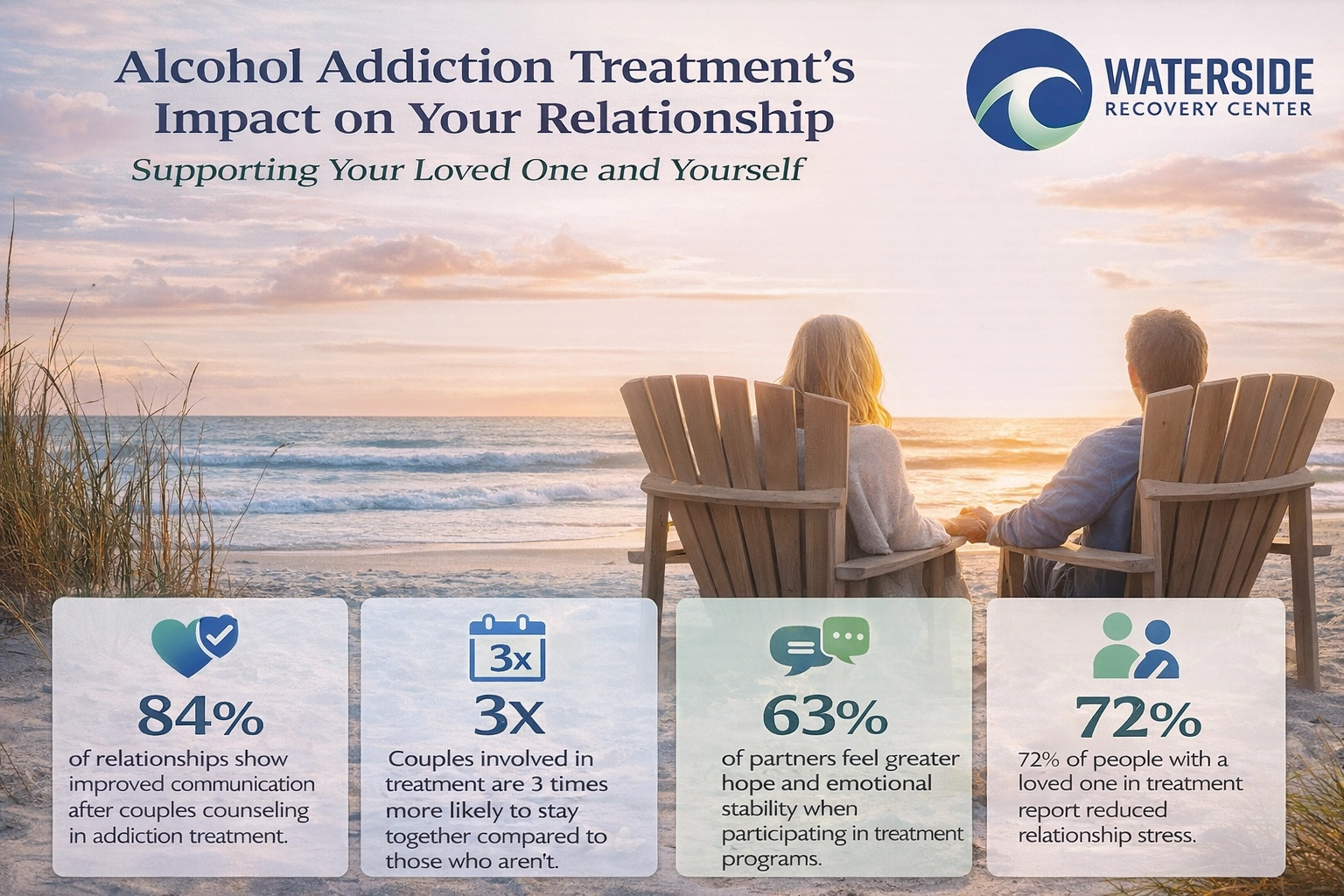
Alcohol addiction treatment opens space for you, too. Many programs include couples therapy, family education, and support groups for loved ones. These aren’t designed to blame or analyze the partner—but to give you a safe, structured place to be honest. About the hurt. About the hope. About the boundaries you didn’t know how to set.
When both partners feel seen and supported, the work becomes relational—not just individual. Healing becomes something you both participate in, even if it looks different for each person.
Hope After Hurt: What Real Recovery Can Offer
One of the hardest things about loving someone in active addiction is the erosion of trust. Not always through dramatic betrayals—but through a thousand small letdowns. The canceled plans. The forgotten promises. The moments when their words and actions didn’t line up.
This makes hope complicated. You might want to believe in change, but feel afraid to get hurt again.
Here’s where alcohol addiction treatment can rebuild a different kind of hope—one grounded in behavior, not just words. When your partner starts treatment, they’re not just saying “I want to change.” They’re showing it. With every therapy session attended, every group shared, every honest reflection made—they’re laying bricks of trust, slowly and deliberately.
And if you’re also receiving support, you begin to see more clearly:
- What’s real progress, and what’s performance?
- What’s your responsibility to carry, and what’s theirs?
- What kind of relationship do you want—and is this one capable of becoming that?
Hope, in this light, becomes less about clinging—and more about choosing.
Change Is Messy. That Doesn’t Mean It’s Failing.
Many partners expect that once their loved one enters treatment, things will start to feel better right away. But the early stages of recovery are often awkward, fragile, and emotionally raw. Your partner might be distant, irritable, or inconsistent as they detox from alcohol and adjust to new routines.
This doesn’t mean treatment isn’t working. It means your partner is learning to feel things they used to numb. It means they’re showing up for life—without the buffer.
As a clinician, one of the most important reminders we give couples is this: early recovery isn’t the finish line. It’s mile one.
You may need help redefining emotional safety. You may need to rebuild communication skills. You may even need to grieve the version of the relationship that existed in the fog of addiction.
This is all normal. Change is slow—but it’s real. And with the right support, it’s possible.
You’re Allowed to Love Them—and Still Need Boundaries
One of the most emotionally complex truths we see in couples affected by addiction is this: Love doesn’t cancel out the need for limits.
You can love someone deeply and still say:
- “I won’t lie for you.”
- “I need you to be sober at family events.”
- “I’m not okay with how I’m being treated.”
Boundaries don’t mean you’re giving up. They mean you’re giving structure to love. They protect your emotional wellbeing while allowing your partner to take full responsibility for their recovery.
And if they’re in treatment, this boundary-setting becomes part of their work, too. Couples therapy within an alcohol addiction program often includes honest conversations about:
- Emotional safety and respect
- Accountability and forgiveness
- What both people need in order to heal
Treatment Isn’t a Guarantee—But It Is a Turning Point
Not every relationship survives addiction. That’s the truth no one wants to hear—but it’s also not the only truth.
Many relationships do grow stronger through the process of recovery. Trust is rebuilt. New patterns are formed. Intimacy deepens. But these outcomes aren’t just the result of treatment—they’re the result of ongoing willingness, from both people, to show up honestly and do the work.
Even if a relationship doesn’t continue, treatment can still be a turning point. It can give you the clarity to make empowered decisions. It can show you where the line between support and self-sacrifice lies. And it can remind you that you are not alone.
If you’re searching for support in areas we serve, including Framingham and Worcester, Waterside Recovery offers care for both individuals and their loved ones.
FAQ: Alcohol Addiction Treatment & Couples
Is couples counseling part of alcohol addiction treatment?
Yes, many treatment programs—including ours—offer optional couples therapy or family sessions. These are facilitated by clinicians who understand the unique dynamics of addiction within relationships.
Can my partner get help even if they’re not ready to quit completely?
Yes. Treatment meets people where they are. While abstinence may be the long-term goal, many programs start by addressing readiness, motivation, and the reasons behind alcohol use.
What if I’m not sure whether their drinking is “bad enough”?
You don’t need a diagnosis to seek support. If their drinking is impacting your relationship, your stress levels, or your daily life—it’s valid to ask for help. We can help you assess the situation without pressure or judgment.
Should I stay with someone struggling with addiction?
That’s a deeply personal decision. Our role isn’t to tell you what to do—but to support you in making choices that are informed, grounded, and aligned with your wellbeing. Treatment can offer clarity, whether you stay together or not.
How do I support them without enabling them?
This is one of the most common (and complicated) questions we hear. Support means encouraging their recovery and setting clear boundaries. Enabling often involves removing natural consequences or protecting them from facing the impact of their behavior. Therapy can help you understand the difference.
Ready to Talk?
Call (866)671-8620 to learn more about our alcohol addiction treatment in Plymouth, Massachusetts. You don’t have to carry this alone. We’re here to help—whether it’s for you, your partner, or both.