
If you’ve stopped drinking but still feel angry, emotionally stuck, or disconnected, you may have come across the term dry drunk. While it isn’t a formal medical diagnosis, it describes a real experience that many people face during early recovery: being physically sober while still struggling with the emotional and behavioral patterns that fueled alcohol use. If you’re looking for additional support beyond simply quitting alcohol, learning about alcohol addiction treatment can help you understand how therapy and ongoing recovery services address the deeper causes of addiction.
Being a “dry drunk” does not mean you’ve failed. It simply means that removing alcohol is only one part of recovery. Lasting healing often requires addressing the thoughts, emotions, coping skills, and life experiences that alcohol once helped numb.
What Is Dry Drunk Syndrome?
The term dry drunk syndrome originated within Alcoholics Anonymous (AA) and has since been adopted more broadly to describe someone who has stopped drinking but continues to display many of the emotional and behavioral characteristics associated with active alcohol use disorder.
The word “dry” refers only to the absence of alcohol.
It does not necessarily mean the person has fully entered recovery.
Someone experiencing dry drunk syndrome may be sober for weeks, months, or even longer while still feeling emotionally overwhelmed, resentful, or trapped in the same unhealthy patterns that existed before they quit drinking.
One of the most important ideas to understand is this:
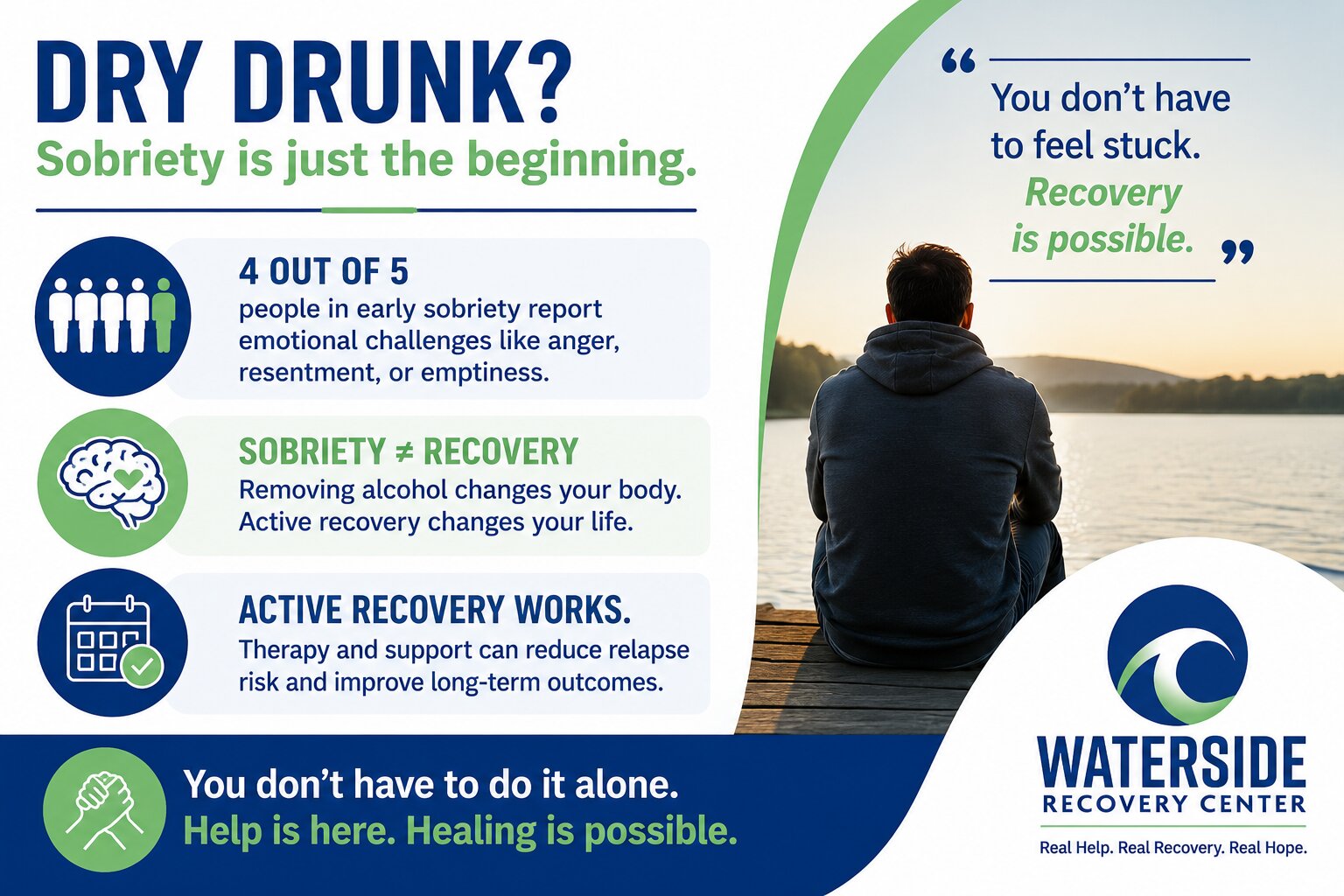
Sobriety and recovery are not the same thing.
Sobriety means alcohol is no longer being used.
Recovery involves learning healthier ways to think, cope, communicate, manage emotions, and build a fulfilling life without alcohol.
For many people, stopping drinking is the beginning of recovery—not the end.
Signs of Dry Drunk Syndrome
Everyone’s recovery journey is different, but several emotional and behavioral patterns are commonly associated with dry drunk syndrome.
Irritability and Anger
Many people describe feeling constantly frustrated or short-tempered after quitting alcohol.
Small inconveniences may trigger outsized emotional reactions, and patience can feel difficult to maintain.
Resentment
Lingering resentment toward family members, employers, friends, or even recovery itself is another common pattern.
Someone may continue focusing on past grievances instead of working through them in healthier ways.
Emotional Volatility
Mood swings may continue long after alcohol use stops.
Periods of hope may quickly give way to sadness, anger, anxiety, or discouragement without an obvious external cause.
Romanticizing Drinking
People experiencing dry drunk syndrome often begin remembering only the “good” parts of drinking while minimizing or forgetting the consequences.
This selective memory can increase the risk of relapse if left unaddressed.
Blaming Others
Instead of examining their own thoughts or behaviors, someone may continue believing other people are responsible for most of their problems.
Taking personal responsibility can feel especially difficult during this stage.
Isolation
Even though alcohol is no longer present, many people continue withdrawing from:
- Family
- Friends
- Support groups
- Healthy activities
Isolation can increase feelings of loneliness and make recovery more difficult.
Feeling Empty or Depressed
One of the most common experiences is wondering:
“What’s the point?”
Without alcohol, life may initially feel flat or emotionally empty.
This doesn’t mean recovery isn’t working—it often means deeper emotional healing still needs attention.
Rigid Thinking
Some people become inflexible in their thinking or struggle to adapt to challenges without relying on old coping patterns.
Learning healthier emotional flexibility is often an important part of long-term recovery.
Why It Happens: Sobriety ≠ Recovery
The central idea behind dry drunk syndrome is simple:
Stopping alcohol removes the substance, but it doesn’t automatically change everything underneath it.
Alcohol use disorder affects much more than physical dependence.
Over time, it can influence:
- Emotional regulation
- Stress management
- Relationships
- Self-esteem
- Decision-making
- Thought patterns
- Coping skills
For many people, alcohol also became a way of managing:
- Anxiety
- Depression
- Trauma
- Grief
- Loneliness
- Chronic stress
When alcohol is removed, those underlying challenges often remain.
Without new coping strategies, it’s understandable to feel overwhelmed.
That’s why some people feel surprised when sobriety alone doesn’t immediately bring happiness.
The emotional discomfort they once escaped with alcohol is now fully present.
This doesn’t mean recovery isn’t possible.
It simply highlights why active recovery is so important.
Therapy, support groups, education, and healthy relationships help replace the role alcohol once played with healthier, long-term coping skills.
How Therapy and Aftercare Help
Recovery involves much more than avoiding alcohol.
It also means building the emotional tools needed to live well without it.
Professional treatment and aftercare often focus on helping people:
- Identify triggers
- Manage stress more effectively
- Improve emotional regulation
- Build healthier relationships
- Challenge unhealthy thought patterns
- Develop relapse prevention strategies
Depending on individual needs, treatment may include evidence-based approaches such as:
- Cognitive Behavioral Therapy (CBT)
- Dialectical Behavior Therapy (DBT)
- Trauma-focused therapy
- Individual counseling
- Group therapy
- Family therapy
Support groups and structured aftercare programs also provide accountability, encouragement, and opportunities to practice new coping skills over time.
Rather than simply remaining sober, these approaches help people move toward genuine recovery—where emotional healing begins to match physical sobriety.
If you’ve stopped drinking but still feel emotionally stuck, you’re not alone, and it doesn’t mean you’ve failed. Many people discover that additional therapeutic support helps them experience the kind of lasting recovery they hoped sobriety would bring.
Learn more about alcohol addiction treatment at Waterside Recovery, or call (866) 671-8620 to speak with someone about your treatment options. If you’re seeking addiction treatment in Bristol County, MetroWest, or Plymouth County, Waterside Recovery offers personalized care to support lasting recovery.
Frequently Asked Questions
What is dry drunk syndrome?
Dry drunk syndrome is a term used to describe someone who has stopped drinking but continues to struggle with many of the emotional and behavioral patterns associated with active alcohol use disorder. While not a formal medical diagnosis, it is widely recognized in recovery communities and addiction treatment.
How long does dry drunk syndrome last?
There is no set timeline. For some people, these feelings improve as they become more engaged in therapy, support groups, and aftercare. Others may continue struggling until underlying emotional, behavioral, or mental health concerns are addressed through active recovery.
How do you overcome dry drunk syndrome?
Moving beyond dry drunk syndrome usually involves more than maintaining sobriety. Therapy, support groups, healthy coping skills, relapse prevention planning, and structured aftercare can help address the emotional and psychological factors that contribute to feeling stuck in recovery.