
It doesn’t always hit immediately. Sometimes, it lands late at night when the world has gone quiet—after the doctor’s words have stopped echoing, after the ride home, after you’ve gone through the motions of your day. Other times, it punches through the moment you hear it: alcohol use disorder.
Just three words—and yet they can feel like a sentence. A label. A verdict. A future you never imagined needing to navigate.
If you’re reading this after being diagnosed, here’s what we want you to know:
You’re not broken. You’re not beyond help. And you’re not alone.
At Waterside Recovery, we’ve walked with hundreds of individuals through this exact moment—the stunned stillness after hearing a diagnosis, the tightness in the chest, the spiral of fear. And what we’ve seen, over and over again, is that this moment doesn’t mark the end of who you are.
It’s the beginning of something else. Something quieter, gentler—and more honest.
The Thoughts You’re Too Afraid to Say Out Loud
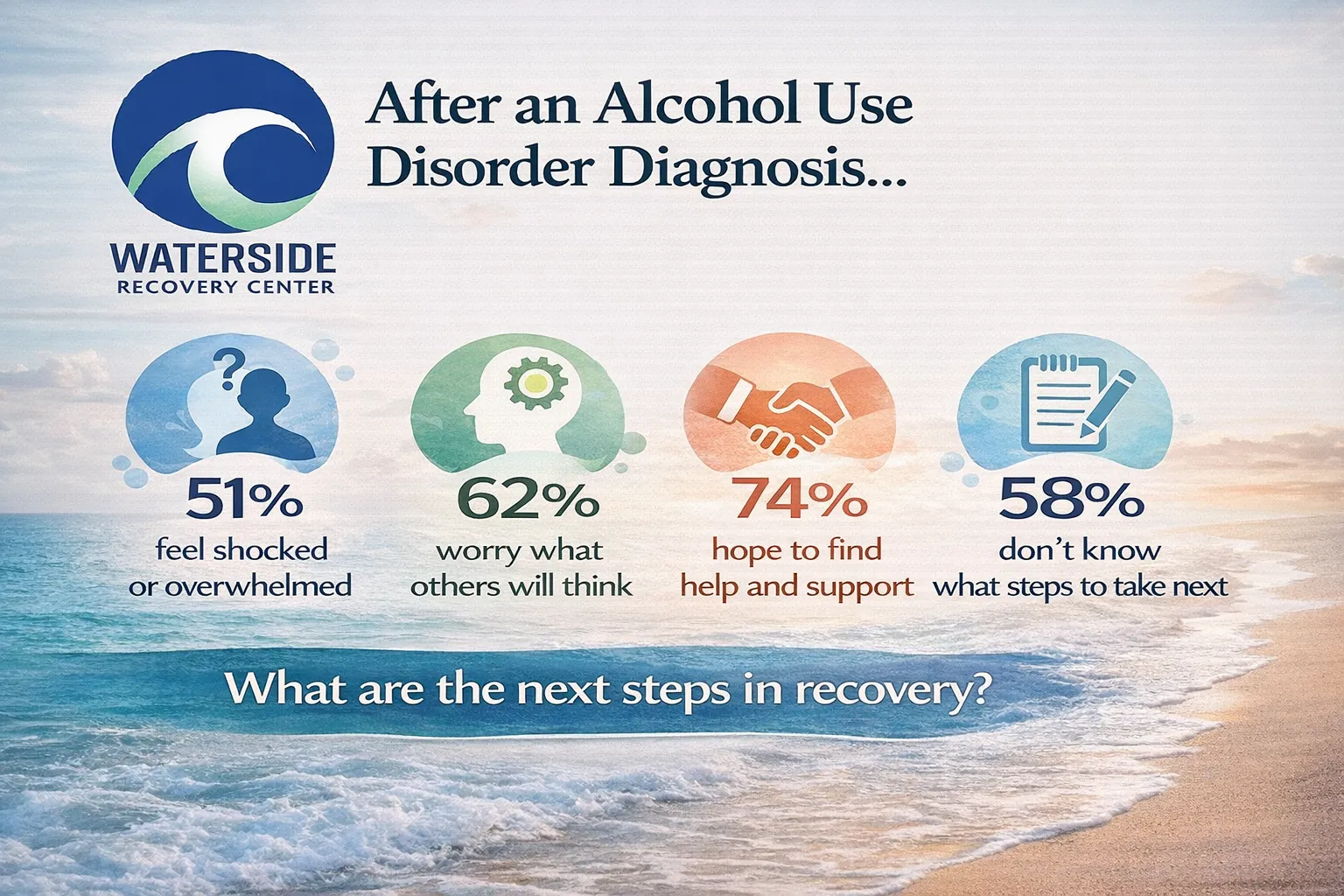
When the term “alcohol use disorder” is used in a room with you for the first time, a lot of thoughts may rush in:
- “Is this who I am now?”
- “What if this changes everything?”
- “Does this mean I’ve failed?”
We hear these thoughts more often than you might think. For many, alcohol wasn’t just a drink—it was a coping mechanism, a ritual, a relief. So even if it was hurting you, the idea of giving it up feels disorienting. Like losing part of yourself.
Diagnosis brings up fear—but also shame, anger, even grief. And all of that is valid.
There is no one “right way” to feel when you get that diagnosis. Some people feel relief—because now there’s a name for the thing that’s been quietly unraveling their life. Others feel panic, because naming it makes it real.
We don’t rush you past that moment. We honor it.
What Comes After the Label?
It’s normal to think that once you’ve been diagnosed, the next step has to be something big, something final, something permanent. But that’s a myth.
In real life, recovery begins quietly.
It begins with someone asking, “What are you feeling right now?”
It begins with taking one deep breath before making a call.
It begins with being scared—and going anyway.
Treatment isn’t one-size-fits-all. And at Waterside Recovery, we know the path forward needs to be one that fits your life, your fear, and your goals. Some people benefit from live-in care with round-the-clock support. Others find strength in structured daytime care or multi-day weekly treatment that still allows them to work, parent, or show up for life’s responsibilities.
What matters most isn’t where you begin—it’s that you begin.
Medication Doesn’t Erase Who You Are
For many people, the idea of taking medication after a diagnosis feels intimidating. Maybe you’ve seen others lose their spark. Maybe you’re afraid it will numb your creativity, your personality, your spirit. Those fears are real—and they deserve to be addressed, not brushed aside.
Here’s what we believe: the right support doesn’t mute who you are. It reveals you.
If you’ve been using alcohol to feel normal, safe, connected, or calm, then of course the idea of removing it feels risky. But support—whether therapeutic, medical, or both—is not about dulling you. It’s about helping you access those feelings without harm. Without cost.
At Waterside Recovery, we’ll never pressure you into treatment decisions that don’t feel right. We’ll talk through every option, every concern, and every “what if.”
Grieving the Role Alcohol Played
This might surprise you: many of our clients feel grief—not just about the damage alcohol caused, but about what it once gave them.
For some, drinking made social situations bearable. It made emotions easier to manage. It was part of their identity.
If that’s how it was for you, letting go might feel like a loss. And it is.
But grief doesn’t mean you’re wrong. It means you’re human.
We’ll help you move through that grief without guilt—because the goal isn’t to pretend alcohol was always bad. The goal is to build something better.
You Don’t Have to Know the Whole Path. Just the Next Step.
One of the biggest myths we hear is that after diagnosis, you have to be “ready for forever.” That’s not how recovery works. At least, not here.
At Waterside Recovery, we focus on today. Not forever. Not some perfect, sober version of yourself.
Just today.
And if all you can do today is read this blog, that’s enough.
You Are Still You
A diagnosis can feel like it redefines you. But that’s just fear talking.
You are still funny. You are still creative. You are still smart, caring, lovable, and capable. That diagnosis didn’t change that. It just gave us language for something that was already happening.
We don’t treat diagnoses. We treat people. And you are worth treating with care.
Whether you’ve never told a soul about your drinking or everyone around you already knows, this next chapter can be yours to shape—with real support and no shame.
If You’re in Worcester, Framingham, or Nearby—We’re Close Enough to Walk Beside You
If you’re seeking treatment options in areas we serve, we offer accessible, stigma-free care across Worcester, Framingham, and the wider MetroWest region.
We’ve worked with people from all walks of life—from busy parents to college students to professionals afraid their careers are on the line. What they all had in common was this: they were scared. And they showed up anyway.
FAQs: After the Diagnosis
What does alcohol use disorder really mean?
It means that alcohol is having a negative impact on your health, relationships, or daily functioning—and that stopping or controlling your use has become difficult. It doesn’t mean you’re weak. It means something real is happening, and there’s help.
Do I have to stop drinking forever?
Not immediately—and maybe not ever, depending on your goals. Some people commit to full abstinence, while others start with harm reduction. Our team will work with you to build a plan that matches your needs, not a one-size-fits-all rule.
What if I don’t want to take medication?
That’s completely okay. Medication is just one option among many. We never force a course of treatment. Instead, we explore what feels comfortable, and what has the best chance of helping you feel better—on your terms.
I’m afraid of being labeled. Will my job or family find out?
Confidentiality is a cornerstone of everything we do. No one is notified of your diagnosis or treatment unless you choose to share it. You are in control of your privacy.
How do I know which type of treatment is right for me?
That’s part of our intake process. We’ll talk about your schedule, symptoms, goals, and concerns. From there, we’ll help you choose between options like live-in support, structured daytime care, or multi-day weekly treatment. We work with your life—not against it.
What if I’m just not ready?
Then you’re not ready—and that’s okay. You’re allowed to be uncertain. You’re allowed to take your time. We’ll be here when you are.
You’re Not Starting Over. You’re Starting Fresh.
Being diagnosed with alcohol use disorder doesn’t erase who you were. It just explains why you’ve been feeling off. It gives us a place to start. And from that place, something honest and hopeful can grow.
Call 866-671-8620 or visit our alcohol addiction treatment in Plymouth Massachusetts to learn what healing can actually look like—for you. Not someday. Not forever. Just today.