
I remember sitting in my car staring at the building, trying to convince myself to leave.
Not because I didn’t need help. Deep down, I knew I did. But I had enough sober time behind me that returning to treatment felt humiliating in a way I wasn’t prepared for.
I kept thinking: You already did this once. You should know how to handle life by now.
That thought almost kept me sick.
At the time, I wasn’t drinking every day again. I was still functioning. Still going to work. Still paying bills. Still answering texts with fake enthusiasm. But internally, things were getting darker and smaller. My anxiety had gotten louder. I stopped sleeping properly. I isolated from people who actually knew me. Alcohol started becoming emotionally attractive again in this quiet, dangerous way.
Nothing dramatic had happened yet.
That’s the scary part.
A lot of people imagine relapse or emotional backsliding as some explosive collapse. For many long-term alumni, it happens more like a slow leak. You don’t notice how much of yourself is draining out until one day you realize you barely feel connected to your own life anymore.
Coming back to a day treatment program felt like failure at first.
Eventually, I realized it was one of the healthiest things I had done in years.
Long-Term Sobriety Doesn’t Protect You From Being Human
This is something I wish people talked about more honestly.
You can have years of sobriety and still struggle emotionally.
You can still become anxious, depressed, burned out, disconnected, emotionally numb, or quietly overwhelmed by life. Recovery doesn’t turn people into emotionless superheroes. It just gives them better chances at honesty and support—if they’re willing to use them.
But a lot of long-term alumni stop being honest when they begin struggling again.
Why?
Because people expect them to be okay.
And eventually, they expect that from themselves too.
I had built an identity around being “the recovered one.” The stable one. The dependable one. The person who figured it out.
So when things started slipping emotionally, I minimized everything. I told myself I was just stressed. Just tired. Just going through a rough patch.
Meanwhile, my nervous system was running on fumes.
Emotional Disconnection Can Become Its Own Relapse
I didn’t relapse physically overnight.
Emotionally, though? I had been drifting for a while.
I stopped reaching out to people. I disconnected from recovery communities because I felt emotionally flat and honestly kind of cynical. I started isolating in ways that looked normal from the outside because I was still functioning professionally.
But internally, I felt hollow.
That’s the part many people don’t understand about long-term recovery. Sometimes relapse starts long before alcohol enters the picture again. It begins with emotional withdrawal from yourself.
You stop saying what’s real.
You stop asking for help.
You stop letting people see you honestly.
You begin surviving quietly instead of actually living.
And eventually alcohol starts sounding less like destruction and more like relief.
That thought terrified me because I remembered exactly where it could lead.
Shame Hits Long-Term Alumni Differently
Early recovery shame is brutal.
But long-term alumni shame has its own flavor entirely.
It whispers things like:
You should know better.
Other people look up to you.
You already had your chance.
Needing help again means none of your recovery was real.
That mindset nearly kept me from coming back.
The irony is that people with longer sobriety often wait too long to reach out because they’re embarrassed they’re struggling at all. They think needing support again somehow erases their progress.
It doesn’t.
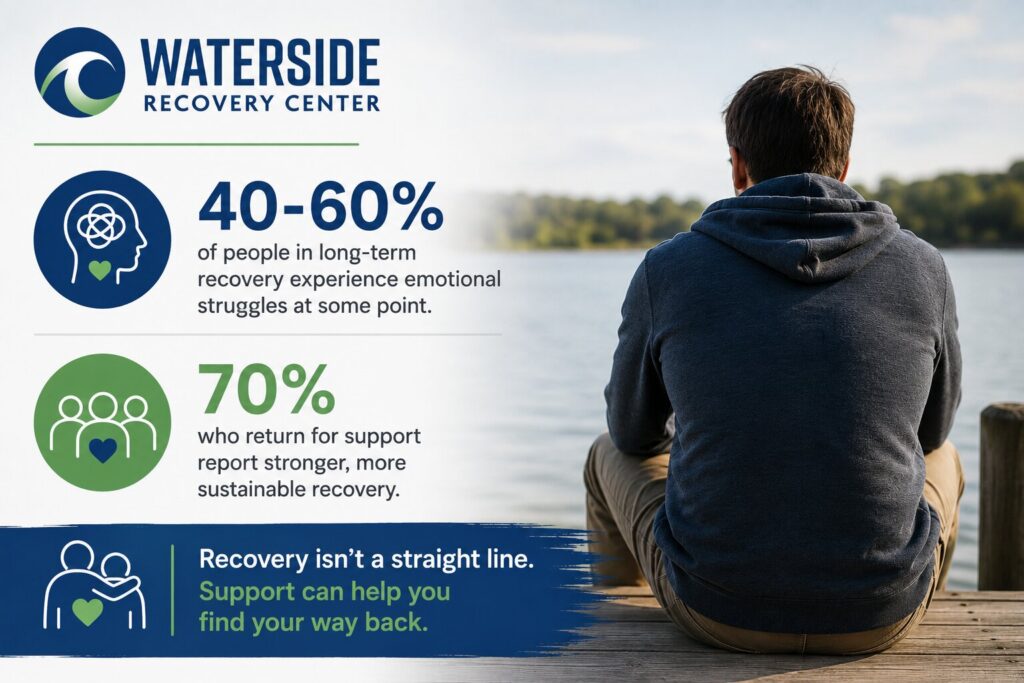
Human beings are not linear.
Mental health changes. Stress accumulates. Trauma resurfaces. Life happens. Sometimes people become emotionally exhausted in ways they don’t fully recognize until they’re already slipping.
One clinician told me something that stayed with me:
“Sobriety doesn’t remove your humanity. It just removes the anesthesia.”
I hated hearing that at first because it was true.
Walking Back Through the Door Felt Harder Than the First Time
The first time I went to treatment, I was desperate enough that fear didn’t matter anymore.
The second time was different.
I still looked “okay” externally, which made everything emotionally confusing. Part of me worried I was overreacting. Another part knew I was slowly moving toward something dangerous if I kept pretending things were manageable.
I remember expecting judgment when I came back.
Instead, what I found was recognition.
Not everyone there had relapsed. Some people were dealing with anxiety, trauma, depression, burnout, or emotional instability while trying to protect long-term sobriety. Others had quietly started drinking again after years sober and were terrified nobody would understand.
And honestly, many of us looked successful from the outside.
That mattered.
Because high-functioning suffering is incredibly isolating. People assume that if your life still looks stable, your internal world must be stable too.
That’s not always true.
Structured Support Felt Different This Time Around
The second experience in treatment wasn’t about crisis management for me.
It was about reconnection.
The first time, I was trying not to destroy my life. The second time, I was trying to get my emotional life back before I completely disappeared inside it.
That distinction changed everything.
Structured daytime care gave me enough space to stop performing wellness and actually look at what was happening underneath the surface. The anxiety. The emotional numbness. The exhaustion. The pressure I had been carrying silently for years.
And honestly? I realized I had been surviving on autopilot for a long time.
A lot of people searching PHP alcohol treatment MA are not actively falling apart in public. They’re quietly exhausted from holding themselves together while battling anxiety, depression, trauma, loneliness, or emotional burnout underneath the surface.
Alcohol often becomes less about partying and more about relief.
That’s a very different conversation than most people imagine.
I Had to Stop Treating Recovery Like a Personal Brand
This was probably the hardest realization.
Somewhere along the way, I had unconsciously turned recovery into another performance metric. I wanted to be the person who “made it.” The stable alumni story. The proof that healing worked permanently.
So I stopped admitting when I struggled emotionally.
I confused looking stable with actually being healthy.
That disconnect slowly became dangerous.
One of the biggest myths in long-term sobriety is the idea that healing means eventually becoming unaffected by stress, grief, anxiety, trauma, or emotional pain. In reality, recovery often means becoming more emotionally honest—not less emotional.
But honesty can feel terrifying for people who built their identity around being the strong one.
Especially high-functioning people.
Especially people others admire.
Especially people who secretly feel exhausted all the time.
The Second Round of Healing Was Quieter
I expected dramatic breakthroughs when I came back.
What actually happened felt smaller and more human.
I started sleeping again.
I laughed naturally for the first time in months.
My nervous system stopped feeling constantly activated.
I stopped fantasizing about escape every evening.
Conversations felt emotionally real again.
Little things started returning slowly.
And honestly, that’s what long-term recovery often looks like. Not giant inspirational moments. Just gradually becoming emotionally present in your own life again.
One afternoon in group, someone said:
“I didn’t realize how disconnected I’d become until I started feeling things again.”
That sentence hit me harder than almost anything else.
Because emotional numbness can become normal after years of stress, trauma, addiction, or high-functioning survival mode.
People forget what connection even feels like.
Returning for Help Didn’t Erase My Recovery
This is the part I wish every long-term alumni understood deeply.
Going back to treatment did not erase my sober years. It did not invalidate my progress. It did not mean I failed recovery.
It meant I was finally honest enough to admit I needed support again before things became catastrophic.
That’s not weakness.
That’s maturity.
A lot of people wait until they completely implode because they’re ashamed of struggling again. They think asking for help means starting over from zero.
But healing is not a staircase where one hard season throws you back to the bottom.
Sometimes recovery means recognizing you need more support during certain chapters of life. More structure. More honesty. More connection. More care than you’ve been giving yourself.
And honestly, some of the strongest people I’ve met in recovery are the ones willing to come back before everything burns down.
For individuals exploring treatment options in areas we serve or looking for help in areas we serve, returning to care doesn’t have to mean starting over. Sometimes it simply means refusing to abandon yourself again.
You are still allowed to need support. Even now.
Frequently Asked Questions
Is it normal to struggle emotionally after years of sobriety?
Yes. Long-term sobriety does not make someone immune to anxiety, depression, burnout, trauma responses, grief, or emotional exhaustion. Many people experience periods where they feel disconnected or overwhelmed again.
Does going back to treatment mean I failed?
No. Returning for support means you recognized you needed help before things became worse. Recovery is rarely linear, and seeking support again does not erase previous progress.
Can people relapse emotionally before drinking again?
Absolutely. Many people describe relapse beginning emotionally long before substances return. Isolation, emotional suppression, stress, disconnection, and loss of support often happen first.
Why do long-term alumni sometimes avoid asking for help?
Shame is a major reason. Many people believe they “should” have everything figured out after years sober. That pressure can make honesty feel difficult, especially for high-functioning individuals.
What if I’m struggling but haven’t relapsed yet?
You still deserve support. Many people return to treatment or structured care before physical relapse occurs because they recognize emotional warning signs early.
Can structured daytime care help even if I’m functioning outwardly?
Yes. Many high-functioning individuals seek support while still maintaining jobs, relationships, and responsibilities. External stability does not always reflect emotional wellbeing.
What if I’m embarrassed to come back?
This feeling is extremely common. Many people fear judgment when returning to care, but treatment professionals understand that recovery journeys are rarely perfect or linear.
How do I know if I need more support again?
If you feel emotionally disconnected, increasingly overwhelmed, isolated, exhausted, or preoccupied with drinking again, it may help to reconnect with professional support before things escalate further.
Call (866)671-8620 or visit our day treatment program to learn more about our program and day treatment program services Plymouth, MA.