
Pinpoint pupils can be alarming, especially if you notice them in someone you suspect has used opioids. While pinpoint pupils alone do not always indicate an emergency, they become a critical warning sign when they occur alongside slowed breathing and unresponsiveness.
If you’re searching for information because you’re worried about a loved one, you’re not alone. Many parents and family members notice changes in someone’s eyes before they understand what those changes could mean. If opioid use has become an ongoing concern, learning more about opioid addiction treatment may be an important step toward protecting your loved one’s health.
Recognizing the difference between opioid intoxication and an opioid overdose could save a life.
What Are Pinpoint Pupils?
The medical term for pinpoint pupils is miosis.
Normally, the pupils continuously adjust their size based on lighting conditions:
- They become larger (dilate) in dim light.
- They become smaller (constrict) in bright light.
With miosis, however, the pupils remain abnormally small—typically less than 2 millimeters in diameter—even when lighting changes. They also respond less to light than healthy pupils normally would.
Pinpoint pupils themselves are not a disease.
Instead, they are a physical sign that can occur because of medications, neurological conditions, toxins, or opioid use.
How Opioids Cause Pinpoint Pupils
One of the reasons opioid pinpoint pupils are considered such a classic finding is that opioids affect the nervous system in a predictable way.
Opioids bind to mu-opioid receptors throughout the central nervous system.
Among the areas affected is the Edinger-Westphal nucleus, a part of the brain responsible for controlling the muscles that constrict the pupils.
When opioids stimulate this pathway:
- The pupil constrictor muscles become more active.
- The pupils become very small.
- The pupils remain constricted even when lighting changes.
This effect occurs with many opioids, including:
- Heroin
- Fentanyl
- Oxycodone
- Hydrocodone
- Morphine
- Methadone
Because this response is directly related to opioid activity, miosis from opioids is one of the most recognizable physical signs of opioid intoxication.
However, pupil size alone cannot determine whether someone has overdosed.
That requires looking at the entire clinical picture.
Other Causes of Pinpoint Pupils
Although opioids are one of the best-known causes, they are not the only explanation for miosis.
Other possible causes include:
Certain Medications
Some prescription medications can constrict the pupils, including:
- Clonidine
- Pilocarpine eye drops
- Certain glaucoma medications
Pontine Hemorrhage
A pontine hemorrhage, a type of bleeding stroke affecting the brainstem, can produce pinpoint pupils.
This is a medical emergency requiring immediate treatment.
Horner’s Syndrome
Horner’s syndrome occurs when part of the sympathetic nervous system is damaged.
Symptoms often include:
- One small pupil
- Drooping eyelid
- Reduced sweating on one side of the face
Unlike opioid-related miosis, Horner’s syndrome usually affects only one eye.
Organophosphate Poisoning
Exposure to certain pesticides and industrial chemicals may also cause pinpoint pupils, along with excessive sweating, drooling, muscle twitching, and breathing problems.
Although these conditions can all produce miosis, if someone is known or suspected to have used opioids, pinpoint pupils should always be considered in the context of possible opioid intoxication or overdose.
When Pinpoint Pupils Mean an Opioid Overdose
This is the most important section for families to understand.
Pinpoint pupils alone do not necessarily mean someone is overdosing.
The danger comes when they occur together with other signs.
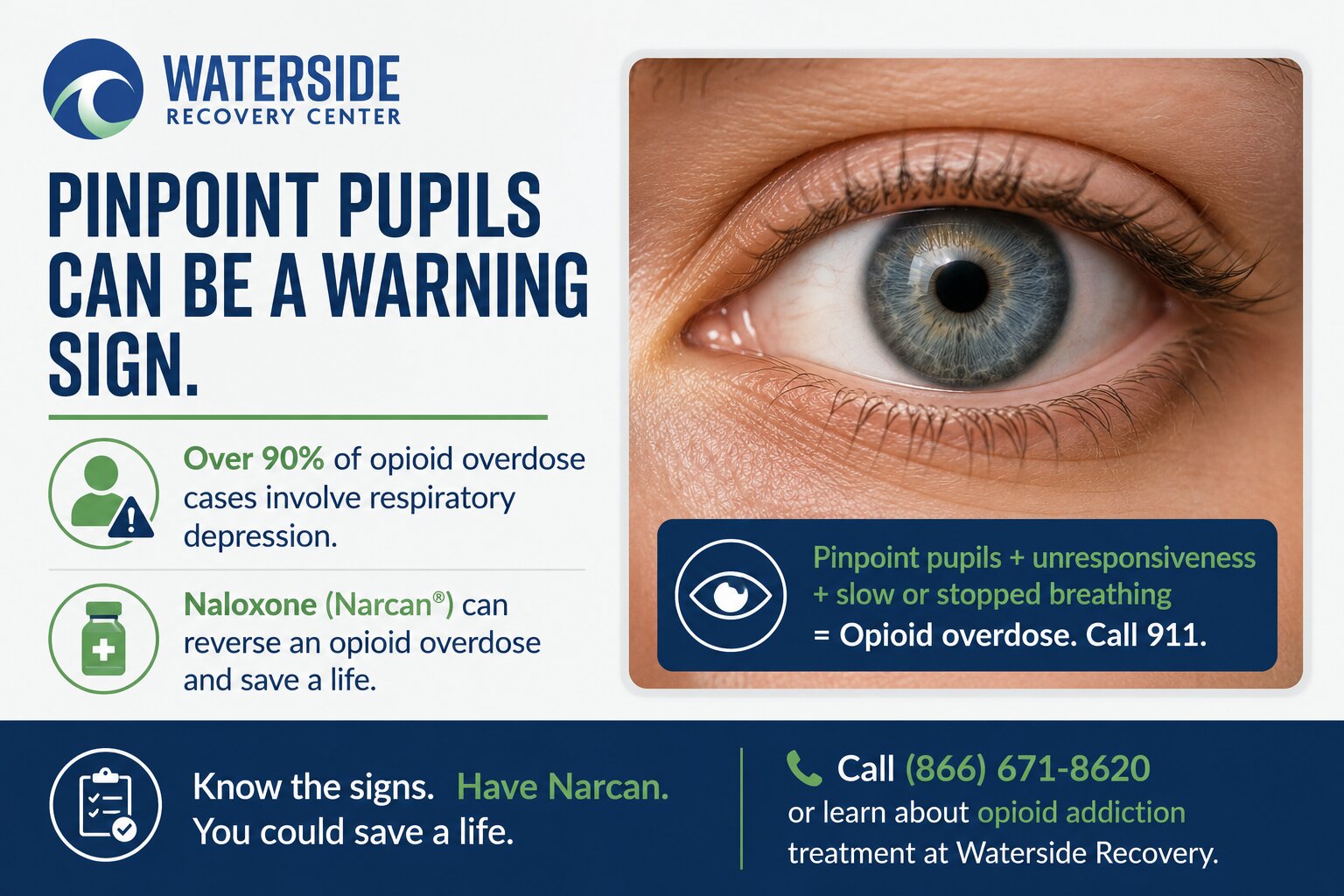
Healthcare providers often look for the classic opioid overdose triad:
- Pinpoint pupils
- Unconsciousness or inability to wake the person
- Slow, shallow, or absent breathing
When these three signs appear together, assume an opioid overdose is occurring.
Other warning signs may include:
- Blue or gray lips or fingernails
- Gurgling, choking, or snoring-like sounds
- Limp body
- Cold or clammy skin
- Weak or absent pulse
Today, fentanyl has made opioid overdoses even more dangerous because extremely small amounts can severely suppress breathing.
Waiting to see whether someone “sleeps it off” can be life-threatening.
What to Do During a Suspected Opioid Overdose
If someone has pinpoint pupils and is difficult or impossible to wake, treat the situation as an emergency.
Call 911 Immediately
Emergency medical services should be contacted as soon as possible.
Even if someone wakes after receiving naloxone, they still need medical evaluation because the effects of opioids may outlast the medication.
Administer Narcan (Naloxone)
Naloxone rapidly reverses opioid overdose by blocking opioid receptors.
If available:
- Administer Narcan immediately.
- If there is no response after 2 to 3 minutes, administer another dose if available.
- Continue following dispatcher instructions until emergency responders arrive.
Narcan is available without a prescription at pharmacies throughout Massachusetts, and many statewide harm reduction organizations distribute it free of charge.
Place the Person in the Recovery Position
If the person begins breathing but remains unconscious:
- Roll them onto their side.
- Keep the airway clear.
- Continue monitoring breathing until emergency personnel arrive.
Stay With Them
Never leave someone alone after administering Narcan.
The medication can wear off before the opioid leaves the body, allowing overdose symptoms to return.
Why Every Household Affected by Opioid Use Should Have Narcan
Families often hope they will never need naloxone.
Unfortunately, overdose can occur unexpectedly—even among people who have used opioids for years.
The risk is especially high because:
- Fentanyl is increasingly found in illicit drugs.
- Drug potency varies from one use to the next.
- Tolerance changes after periods of reduced use or treatment.
Keeping Narcan available provides an opportunity to save a life while waiting for emergency medical care.
It is one of the most important harm reduction tools available today.
When Pinpoint Pupils May Signal a Bigger Problem
Repeated episodes of opioid intoxication often indicate more than occasional use.
They may suggest:
- Increasing opioid tolerance
- Physical dependence
- Opioid use disorder
- Escalating opioid use despite negative consequences
Recognizing physical warning signs early can help families intervene before another overdose occurs.
Waterside Recovery proudly serves individuals and families throughout Bristol County, MetroWest, and Plymouth County with compassionate, evidence-based addiction treatment.
Treatment Can Help Prevent Future Overdoses
Overdose prevention is essential, but it addresses only the immediate emergency.
Long-term recovery involves treating the underlying opioid use disorder through comprehensive, evidence-based care.
Treatment may include:
- Medical detoxification
- Medication-assisted treatment (MAT)
- Individual therapy
- Group counseling
- Family education
- Relapse prevention planning
- Continuing recovery support
Seeking treatment after repeated opioid intoxication can significantly reduce the risk of future overdose while helping individuals build a healthier future.
Frequently Asked Questions
What causes pinpoint pupils?
Pinpoint pupils (miosis) can result from opioid use, certain medications, neurological conditions such as pontine hemorrhage, Horner’s syndrome, or exposure to organophosphate chemicals. In someone suspected of using opioids, pinpoint pupils should always raise concern for opioid intoxication.
Are pinpoint pupils always an overdose sign?
No. Pinpoint pupils alone do not always mean someone is overdosing. They become a medical emergency when combined with unresponsiveness and slow, shallow, or absent breathing.
What are the signs of an opioid overdose?
Common signs include pinpoint pupils, inability to wake the person, slow or stopped breathing, blue lips or fingernails, gurgling or choking sounds, limpness, and loss of consciousness. If these signs are present, call 911 immediately and administer Narcan if available.
Final Thoughts
Pinpoint pupils are one of the most recognizable physical signs of opioid use, but they should never be evaluated in isolation. When they occur alongside unconsciousness and slowed or stopped breathing, they are a hallmark of an opioid overdose and require immediate emergency action.
Having Narcan readily available and knowing how to recognize an overdose can save a life. If opioid use has become an ongoing concern for you or someone you love, professional treatment can provide the support needed to begin recovery.
Call (866) 671-8620 or learn more about opioid addiction treatment at Waterside Recovery.