
You’ve probably had the thought—quiet, but persistent.
I know something needs to change… but what if I lose the version of me I actually recognize?
It doesn’t always sound dramatic. It’s more subtle than that.
A hesitation. A pause before reaching out.
At Waterside Recovery, we hear this fear often—especially from people who feel deeply, think creatively, or experience life with intensity. If that’s you, you’re not alone in this. And if you’re exploring options, you can begin by learning about drug treatment services in a way that feels steady, not overwhelming.
The Fear Isn’t Irrational—It’s Protective
There’s a reason this fear shows up.
For many people, substances didn’t enter their life randomly. They served a purpose.
Maybe they helped you:
- Feel more open in social situations
- Access emotions that felt blocked or distant
- Quiet the constant noise in your mind
- Tap into creativity or flow
So the idea of removing that can feel like pulling a thread that holds everything together.
From a clinical perspective, this isn’t resistance—it’s protection.
A part of you is trying to make sure you don’t lose something meaningful.
That part deserves to be heard, not pushed aside.
You’re Not Just Afraid of Change—You’re Afraid of Disappearing
There’s a difference between change and loss.
And what many people fear isn’t change—it’s disappearance.
What if I become dull?
What if I stop feeling things the way I do now?
What if I lose the spark that makes me… me?
These questions often come from people who value depth—emotionally, creatively, relationally.
The goal of care is not to flatten that.
It’s to help you hold onto it without it costing you everything else.
Substances Can Feel Like a Bridge—Until They Become the Gatekeeper
At first, substances can feel like access.
Access to:
- Confidence
- Expression
- Relief
- Connection
But over time, something shifts.
What once felt like a bridge can start acting like a gatekeeper.
You might notice:
- You can’t access certain feelings without using
- Creativity feels harder unless something is “on board”
- Social ease becomes dependent on external support
This isn’t a failure on your part.
It’s a sign that something that once helped is now limiting.
And that’s often where the internal conflict begins.
You Don’t Lose Your Identity—You Separate It From Survival
One of the most important shifts in care is this:
You begin to separate who you are from what you’ve needed to cope.
Those two things can feel tightly woven together.
But they’re not the same.
You are not:
- Your coping strategy
- Your substance use
- Your hardest days
You are the person underneath all of that.
And often, that person hasn’t disappeared—they’ve just been harder to access consistently.
Real Change Feels Subtle Before It Feels Strong
There’s an expectation that if you step into care, everything will suddenly feel different.
But most of the time, it starts quietly.
You might notice:
- A little more space between impulse and action
- A moment of pause where there used to be urgency
- A slightly clearer head in situations that used to feel overwhelming
These aren’t dramatic changes.
But they matter.
Because over time, those small shifts begin to rebuild trust—with yourself.
You Stay in Control of the Process
Another common fear: What if I lose control?
It’s understandable.
But ethical, compassionate care is collaborative—not controlling.
You’re part of:
- Every decision about your care
- Conversations about pacing and intensity
- Adjustments based on what you’re experiencing
Whether that looks like structured daytime care, multi-day weekly support, or something less intensive, the goal is to meet you where you are—not force you into something that doesn’t fit.
If you’re looking for something local and flexible, you can explore support in areas we serve and find options that align with your life.
Creativity and Depth Don’t Disappear—They Stabilize
This is one of the biggest surprises people share after some time in recovery.
They expected to feel less.
Instead, they feel more—just without the chaos attached.
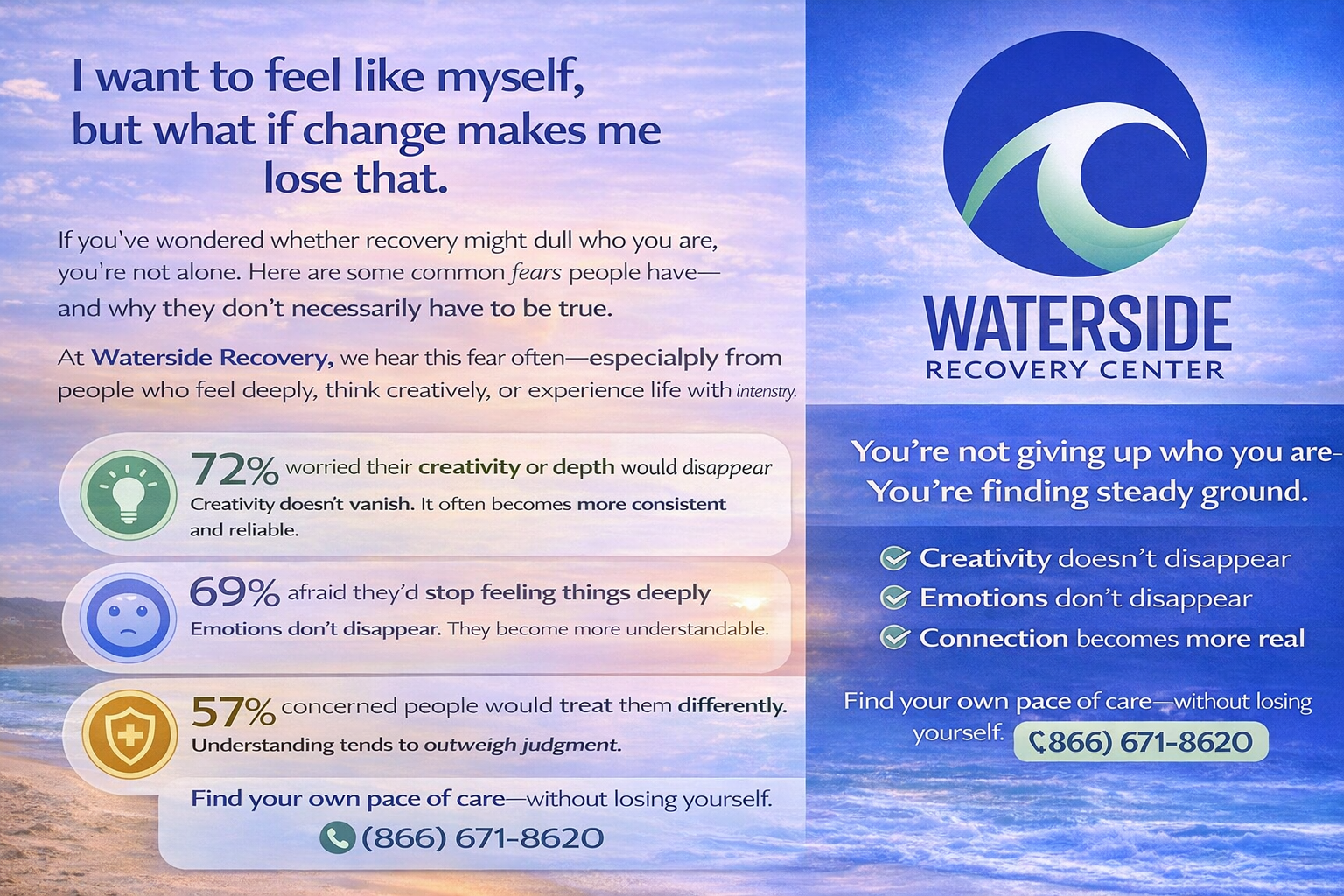
Creativity doesn’t vanish.
It becomes more consistent.
Emotions don’t disappear.
They become more understandable.
Connection doesn’t fade.
It becomes more real.
It’s not about losing intensity.
It’s about not being controlled by it.
There’s Space for Ambivalence Here
You don’t have to be fully ready.
You don’t have to feel 100% certain.
It’s okay to hold two truths at once:
- Something isn’t working
- I’m scared to change it
That space in between is where a lot of people begin.
Not with confidence—but with curiosity.
The First Step Might Just Be Letting Yourself Wonder
Not committing.
Not deciding everything.
Just wondering:
What if I could feel more like myself—not less?
What if I didn’t have to give up who I am to feel better?
That question alone is enough for now.
Frequently Asked Questions
Will I lose my creativity if I stop using?
This is one of the most common fears—and one of the most understandable. In reality, creativity doesn’t come from substances. It comes from you. What often changes is consistency. Many people find they can access creativity more reliably without depending on something external.
What if substances are the only way I feel confident socially?
It can feel that way, especially if it’s been part of your routine for a long time. In care, we work on building that confidence in ways that don’t rely on substances—so it feels more natural and sustainable over time.
Do I have to change everything about my life?
No. This isn’t about becoming a completely different person. It’s about identifying what’s helping you and what’s hurting you—and adjusting from there. Many parts of your life can stay the same.
What if I’m not ready to stop completely?
You don’t have to have everything figured out before reaching out. Conversations can start wherever you are. Readiness isn’t a requirement—it often develops along the way.
Will people treat me differently if I get help?
That fear is real. But seeking support is often something people respect more than they expect. And in the right environment, you’ll be met with understanding—not judgment.
What does support actually feel like?
It should feel steady, not overwhelming. Clear, not confusing. You should feel heard, not managed. If something doesn’t feel right, it’s okay to speak up and adjust.
How do I take the first step without committing to everything?
Start with a conversation. Ask questions. Learn what your options are. You don’t have to decide your entire future—you just have to take one step.
If you’re holding this fear—of losing yourself, of becoming someone unfamiliar—you don’t have to push it away to move forward.
You can bring it with you.
Call (866)671-8620 or visit treatment, drug treatment services to learn more about our treatment, drug treatment services in Bristol County.