
If you’re here, there’s a good chance a quiet thought has been looping in the back of your mind:
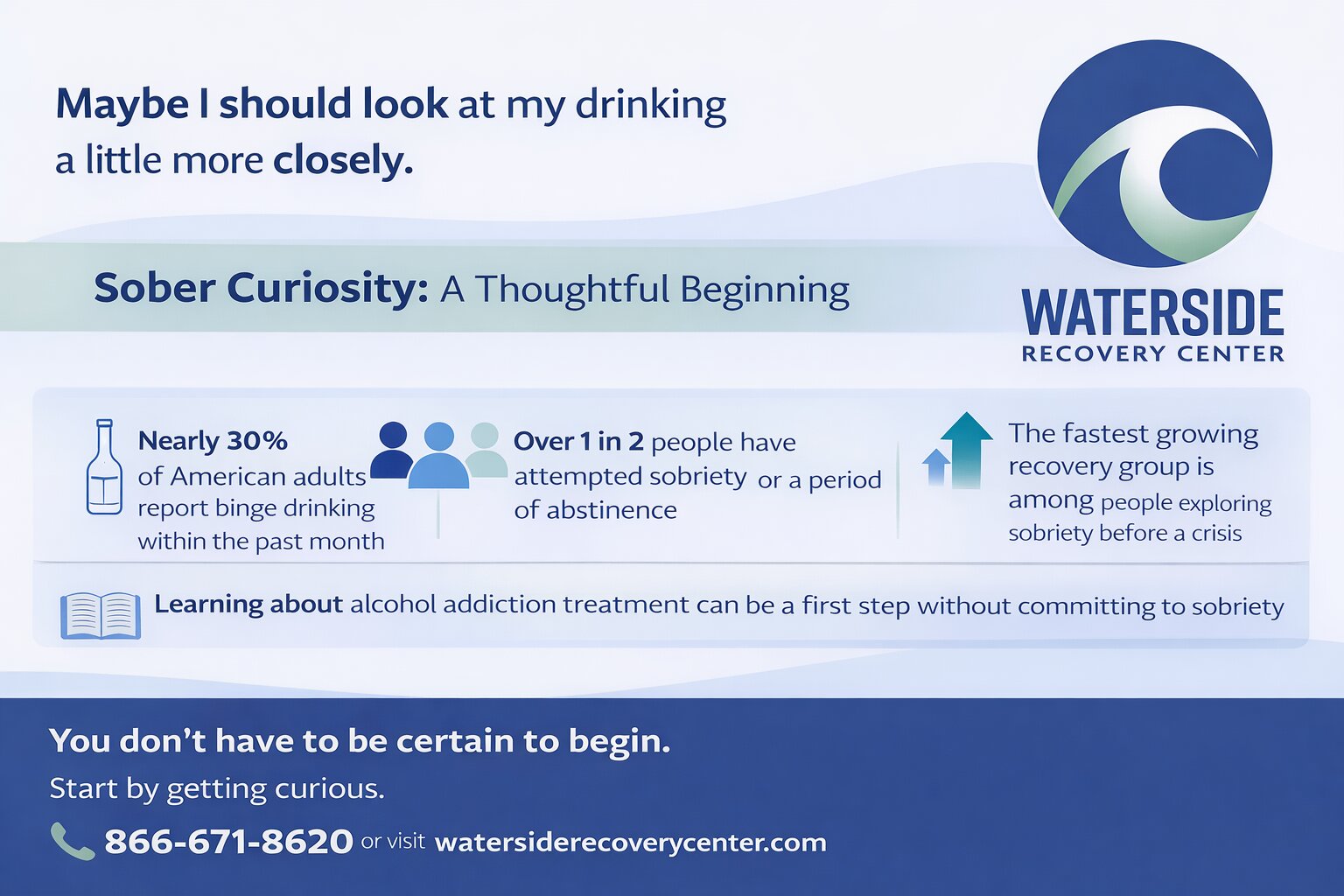
“Maybe I should look at my drinking a little more closely.”
Not because everything has fallen apart.
Not because someone forced you.
Just because something inside you keeps asking the question.
Many people who eventually explore recovery start exactly here—curious, thoughtful, and still unsure if help is actually necessary. Some begin by simply learning about options like alcohol addiction treatment support to understand what taking the first step might actually look like.
You don’t have to be completely convinced.
Most people aren’t when they begin.
1. Start With Curiosity Instead of Labels
One of the biggest barriers people face is the pressure to define themselves.
Words like “alcoholic” or “addiction” can feel heavy, even frightening. They make the decision feel permanent and overwhelming.
But the first step toward change rarely begins with labels.
It begins with curiosity.
Instead of asking yourself, “Do I have a problem?” try asking softer questions:
- Do I feel physically or mentally better when I don’t drink?
- Have I started thinking about alcohol more than I used to?
- Do I sometimes plan my day around when I’ll have a drink?
These questions open space for reflection rather than judgment.
And reflection is often where the real conversation with yourself begins.
2. Give Yourself Permission to Explore Without Commitment
Many people imagine that reaching out for help means making a life-altering decision immediately.
That fear stops them before they even begin.
But exploring help doesn’t mean committing to a full transformation overnight.
It can start with something very small.
Some people simply:
- Read articles about sobriety and recovery
- Listen to podcasts about changing drinking habits
- Speak privately with a counselor
- Ask questions about available support options
Think of it less like signing a contract and more like gathering information.
You’re not deciding your entire future.
You’re just learning what possibilities exist.
3. Notice What Alcohol Actually Does for You—and To You
Alcohol plays many roles in people’s lives.
It can feel social. Relaxing. Even comforting.
But part of becoming sober-curious is stepping back and observing the full picture.
Not just the moments when drinking feels good, but the moments that follow.
Ask yourself:
- Do I sleep better or worse after drinking?
- How do I feel emotionally the next day?
- Does alcohol make my stress disappear—or delay it?
Sometimes the biggest insights come from simply watching your patterns without trying to fix them right away.
Awareness often changes behavior naturally.
4. Talk to Someone Who Understands the Middle Ground
The sober-curious stage can feel strangely lonely.
You may not feel comfortable talking about it with friends who drink heavily.
But you might also feel hesitant speaking with people who already identify as sober.
That middle ground can feel confusing.
Talking with someone who understands this stage—whether a counselor, peer, or recovery professional—can make the experience far less isolating.
Often, people discover that many others started with the exact same uncertainty.
You don’t need to arrive with answers.
You just need a place where questions are welcome.
5. Let Go of the Rock Bottom Myth
For decades, addiction narratives focused on dramatic rock-bottom moments.
Losing everything. Hitting crisis points. Desperate turning points.
But many people today begin exploring recovery long before anything catastrophic happens.
They simply notice that drinking is taking up more mental space than it used to.
Or they realize they feel better during periods without alcohol.
Choosing to explore change early isn’t dramatic.
It’s thoughtful.
And often, the earlier someone begins reflecting on their relationship with alcohol, the easier that transition becomes.
6. Take One Small Step Toward Clarity
You don’t need to solve everything today.
The goal is simply to move one step closer to clarity.
That step might be:
- Scheduling a confidential conversation with a professional
- Talking honestly with someone you trust
- Reading more about recovery journeys
- Exploring different support options
Some people begin by looking into care in areas we serve, including programs offering guidance in Worcester or broader support in areas we serve throughout Framingham.
These steps aren’t commitments.
They’re exploration.
And exploration often leads to insight.
7. Trust That Uncertainty Is Completely Normal
One of the biggest misconceptions about recovery is that people begin with absolute certainty.
In reality, most people begin with doubt.
They wonder if they’re overreacting.
They question whether they really need help.
They worry about what life would look like without alcohol.
Those questions don’t disqualify you.
They’re part of the process.
In fact, curiosity often becomes the foundation of meaningful change.
Many people who now live happily alcohol-free once started exactly where you are—uncertain, thoughtful, and quietly exploring the possibility of something different.
What Happens After the First Step
Once someone begins exploring their relationship with alcohol, something interesting often happens.
Pressure decreases.
The fear of the unknown fades.
Instead of imagining dramatic life changes, people begin seeing recovery as something flexible and personal.
Some reduce their drinking gradually.
Some take a break to see how life feels.
Some eventually decide that sobriety offers them more peace.
The important part is that the decision becomes informed.
It becomes something you choose—not something forced on you.
Frequently Asked Questions
Do I have to identify as an alcoholic to seek help?
No. Many people explore support simply because they want to better understand their relationship with alcohol. Labels are not required to begin the conversation.
What if I’m not sure I want to quit drinking completely?
That’s okay. Many people begin by exploring their habits without committing to permanent sobriety. The goal is understanding what feels healthiest for you.
Is it normal to feel nervous about seeking help?
Yes. Uncertainty is extremely common at the sober-curious stage. Reaching out often feels intimidating at first, but many people find that a simple conversation makes things feel far less overwhelming.
What if my drinking doesn’t seem “bad enough”?
You don’t have to wait until things get worse to explore change. Many people seek guidance simply because they feel their relationship with alcohol could be healthier.
Will talking to someone force me into treatment?
No. Initial conversations are often just that—conversations. They’re an opportunity to ask questions and understand options without pressure.
You Don’t Have to Be Certain to Begin
If you’re still on the fence about your drinking, that’s completely normal.
Many people spend a long time sitting with the same quiet question you’re asking now.
But curiosity is often the beginning of clarity.
If you’d like to explore what support might look like, call 866-671-8620 or visit our alcohol addiction treatment services to learn more about our treatment, alcohol addiction treatment services in Plymouth, MA.
You don’t need to have everything figured out.
Sometimes the most important step is simply being willing to ask the question.