
Maybe you’re still functioning.
Still working. Still showing up. Still telling yourself it’s manageable.
But something has shifted.
You think about using more than you used to. You plan around it. You’ve tried to cut back and quietly struggled. And late at night, you’ve found yourself searching things like opiate addiction treatment — not because you’re in crisis, but because you’re worried about where this is headed.
That quiet concern matters.
You don’t have to wait for your life to fall apart before you look at your options.
If you’re sober curious — not fully committed to change, but not comfortable staying the same — here’s how to explore support before things get worse.
Step 1: Look At The Direction, Not Just The Damage
A lot of people delay getting help because “nothing catastrophic has happened.”
No arrests.
No overdoses.
No lost job.
But the better question isn’t, “How bad is it?”
It’s, “Where is this going?”
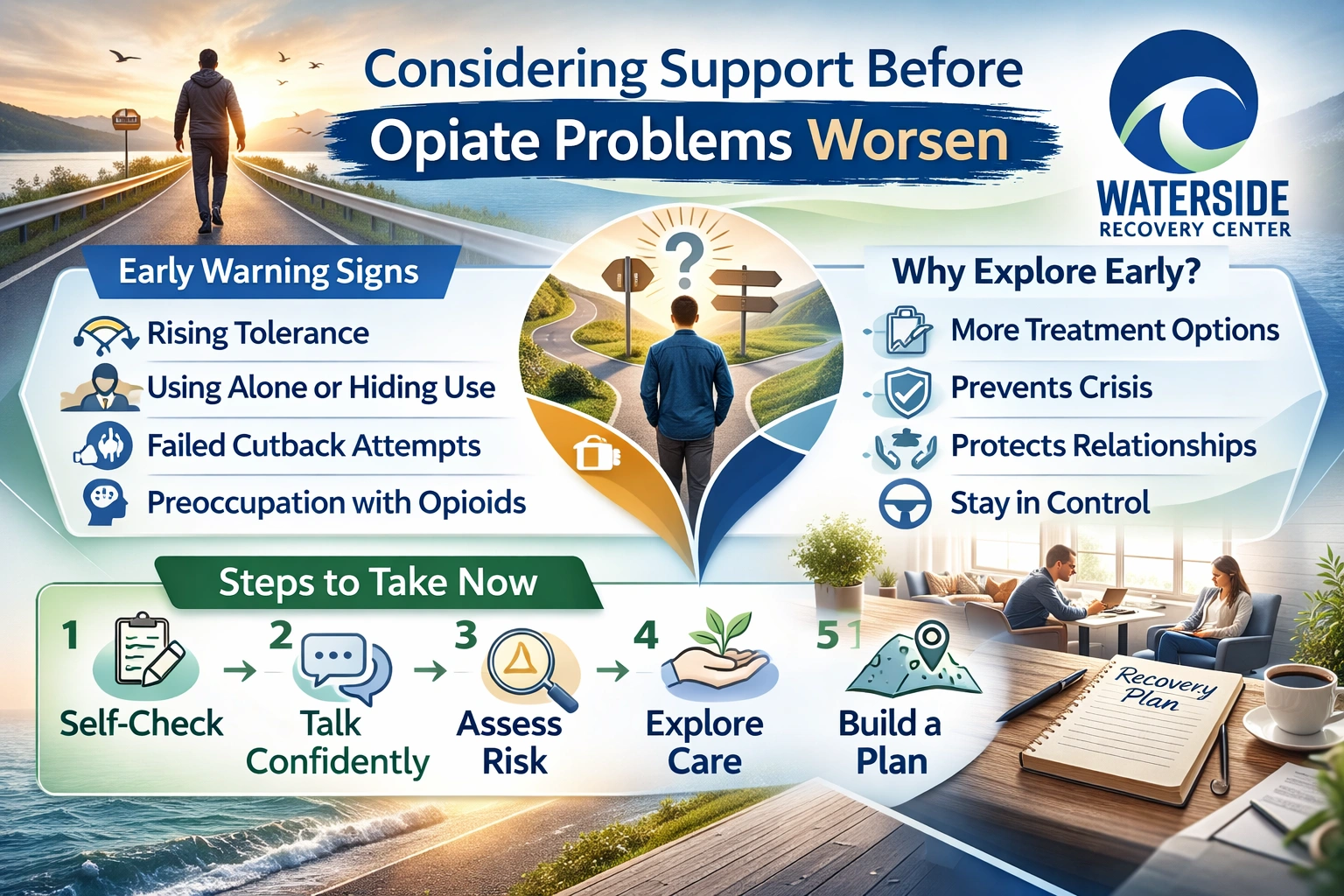
Is your tolerance increasing?
Are you needing more to feel the same effect?
Is it harder to go a day without thinking about it?
Are you hiding it from people you care about?
Addiction rarely explodes overnight. It creeps.
Exploring help early is about intercepting the trajectory — not reacting to disaster.
Step 2: Understand That Exploration Is Not Commitment
One of the biggest fears people have is:
“If I call, they’ll force me into something.”
That’s not how ethical treatment works.
Reaching out is a conversation. A confidential assessment. A chance to ask questions.
You are allowed to gather information without signing up for forever.
Curiosity is not surrender. It’s strength.
Step 3: Redefine What “Getting Help” Means
Many people imagine treatment as disappearing from life for months.
For some, that’s appropriate. For others, early support looks different.
It might mean:
- Structured daytime care while still living at home
- Multi-day weekly treatment that allows you to keep working
- Therapy and medical support working together
- A short-term stabilization plan
When you explore support early, you usually have more flexibility.
Waiting often reduces options.
Step 4: Address The “I’m Not That Bad” Narrative
This one is powerful.
“I still have control.”
“I don’t use every day.”
“I’m not like the stories I’ve heard.”
You might not be.
But addiction doesn’t require comparison to qualify as risky.
The question isn’t whether you’re the worst case scenario.
It’s whether your current path aligns with the life you want five years from now.
Early exploration is about prevention — not proving you’ve hit bottom.
Step 5: Consider What You’re Using It For
For many people, opioids aren’t just about physical sensation.
They soften anxiety.
They numb grief.
They slow racing thoughts.
They make stress manageable.
When mental health and substance use collide, simply “stopping” can feel destabilizing.
If anxiety spikes or depression intensifies when you try to cut back, that’s not weakness.
It’s a sign both issues may need to be addressed together.
Integrated care can support both — before the pattern deepens.
Step 6: Talk To Someone Outside Your Inner Circle
Friends and family care — but they’re often emotionally invested.
Some will minimize.
Some will panic.
Some will deny.
Speaking with a clinical team gives you space to tell the truth without drama.
If you’re exploring support in Kingston, Massachusetts, a confidential conversation can help you assess risk levels and options without forcing immediate decisions.
Clarity lowers fear.
Silence magnifies it.
Step 7: Act While You Still Feel In Control
Here’s something most people don’t realize:
It is far easier to change when you still feel somewhat in control.
When consequences escalate, decision-making becomes clouded by panic, shame, and urgency.
Exploring support while you still feel relatively stable gives you leverage.
You’re not reacting to crisis.
You’re choosing direction.
Step 8: Notice The Warning Signs You’ve Been Ignoring
You might be noticing:
- Needing higher doses
- Feeling anxious between uses
- Prioritizing access over responsibilities
- Avoiding people who question you
- Secretly planning exit strategies in case someone finds out
These are subtle but meaningful shifts.
You don’t need to wait until the shifts become collapses.
If you’re in communities like Marshfield, Massachusetts, early engagement can prevent the kind of disruption that affects work, relationships, and long-term health.
The goal isn’t fear.
It’s foresight.
Step 9: Know That Early Help Often Means Less Disruption
Many people assume that entering support will wreck their schedule.
Ironically, waiting until things worsen often causes far more disruption.
Early intervention can mean:
- Shorter treatment duration
- More outpatient flexibility
- Less legal or medical consequence
- Lower emotional damage to relationships
It’s easier to correct course when you’re drifting than when you’re already off-road.
Step 10: Let Your Quiet Concern Matter
There’s usually a small voice that starts this process.
It says, “This is changing.”
It says, “I don’t like how this feels.”
It says, “What if this keeps escalating?”
That voice deserves attention.
You don’t need external proof to validate it.
If you’ve already found yourself researching opiate addiction treatment, that curiosity isn’t random.
It’s protective.
Step 11: Understand That You’re Not Giving Up — You’re Taking Control
There’s a myth that getting help equals failure.
In reality, it’s strategic.
Choosing support early is a proactive decision.
You’re not collapsing.
You’re steering.
And steering before impact is a form of strength most people wish they had used sooner.
Step 12: Make The Call Before It Feels Urgent
Bottom-of-the-funnel decisions often feel dramatic.
But sometimes the strongest moves are the calm ones.
You don’t need to be desperate to deserve support.
You don’t need a disaster story to qualify.
Exploring opiate addiction treatment while you still feel functional can protect everything you’ve worked for.
Frequently Asked Questions
Do I have to be physically dependent to seek help?
No. Early patterns of misuse, increased tolerance, and psychological reliance are valid reasons to explore support. You don’t have to meet extreme criteria to benefit from guidance.
What if I try to stop on my own first?
You can. But if you’ve already attempted to cut back and struggled, additional support can make the process safer and more sustainable. Repeated failed attempts often increase shame — not success.
Will seeking help automatically mean inpatient care?
Not necessarily. Levels of care vary widely. Early engagement often allows for outpatient or structured daytime options rather than more intensive disruption.
What if my family finds out?
Conversations with treatment providers are confidential. You control who is informed and when. Support can begin privately if needed.
What if I’m just overthinking this?
Possibly. But exploring doesn’t harm you. Ignoring early warning signs can. Information reduces anxiety. Avoidance increases it.
What if I’m scared?
That’s normal. Fear doesn’t mean you shouldn’t act. It often means you’re standing at a turning point.
You Don’t Have To Wait For “Worse”
Addiction rarely sends a formal invitation before escalating.
But you’re already noticing the shift.
That awareness is a gift.
If you’re ready to explore opiate addiction treatment in a way that respects your autonomy and your future, we’re here to talk.
Call (866)671-8620 or visit our opiate addiction treatment in Plymouth, Massachusetts to learn more about how Waterside Recovery can support you.