
I used to say treatment didn’t work for me.
Not quietly. Not thoughtfully. I said it with edge. With proof. With a drink in my hand.
I went. I did the groups. I nodded at the right times. I left. And within months, I was drinking again. So obviously, it didn’t work. Right?
That’s the story I told people.
That’s the story I told myself.
But it wasn’t the whole truth.
When I finally walked back into Waterside Recovery, I didn’t come in hopeful. I came in irritated. Defensive. Convinced I already knew how this would go.
What changed wasn’t the building. It wasn’t the format. It wasn’t even the concept of alcohol addiction treatment.
It was me.
And that’s the part I missed the first time.
I Showed Up to Prove It Wouldn’t Work
If I’m being brutally honest, I didn’t go to get better the first time. I went to prove something.
I wanted to prove:
- I wasn’t “that bad.”
- I could handle it.
- I just needed a reset.
- Everyone else was overreacting.
I participated—but only enough to stay under the radar. I shared—but never the stuff that would actually expose me. I listened—but only long enough to poke holes in what I heard.
I wasn’t open. I was evaluating.
And you can’t receive help while you’re grading it.
I Thought My Relapse Meant the Whole Thing Was Useless
When I drank again after leaving, I took it as evidence.
“See?”
“Told you.”
“This stuff doesn’t stick.”
But here’s what I didn’t consider: I had never actually surrendered the idea that I could outthink my drinking.
I still believed I was different. Smarter. More self-aware.
I didn’t relapse because treatment failed.
I relapsed because I walked out still negotiating.
I Was High-Functioning—And Hiding Behind It
I paid my bills. I showed up to work. I didn’t get DUIs. I didn’t lose everything.
So I convinced myself I didn’t belong in recovery spaces.
That lie kept me comfortable for years.
There are a lot of people in MetroWest, Massachusetts living that exact story right now—functioning on the outside, unraveling on the inside, using “I’m still managing” as proof that things aren’t serious.
But functioning isn’t thriving. And it’s definitely not freedom.
The Second Time, I Didn’t Have a Speech Ready
When I came back, I didn’t have a plan to impress anyone.
I didn’t try to be insightful.
I didn’t try to sound self-aware.
I didn’t try to compare my story to anyone else’s.
I just told the truth.
The ugly parts.
The embarrassing parts.
The parts that made me look weak.
That’s when something shifted.
Not because the program changed—but because I stopped protecting my pride more than my recovery.
I Finally Understood That “It Didn’t Work” Wasn’t the Full Story
Treatment didn’t fail me. I kept one foot out the door.
I wanted relief—but not change.
Support—but not accountability.
Understanding—but not interruption.
The second time around, I let people challenge me. I stopped arguing internally every time someone suggested I wasn’t in control.
That’s when the tools actually landed.
The Work Isn’t Comfortable. That’s the Point.
If you’re skeptical, I won’t try to sugarcoat it.
This work is uncomfortable.
You’ll hear things you don’t like. You’ll confront patterns you’ve justified for years. You’ll sit in rooms where you feel exposed.
But discomfort isn’t a sign it’s not working.
It’s a sign you’re not hiding anymore.
I’ve met people from Framingham, Massachusetts who walked in convinced they were above treatment—and walked out humbled, steady, and more honest than they’d been in decades.
Not because they were forced.
Because they were finally ready.
I Stopped Looking for Proof It Would Fail
The first time, I was scanning for cracks. Every awkward group session. Every moment that didn’t resonate. Every person I didn’t relate to.
The second time, I looked for what might actually help.
That shift matters.
You don’t have to believe everything. You don’t have to agree with every approach.
But if you walk in trying to prove it won’t work, you’ll find what you’re looking for.
If you walk in trying to find one thing that might stick—you’ll find that too.
Structure Wasn’t the Enemy. My Ego Was.
I used to think structured care was overkill.
Now I know it was guardrails. And I needed them.
Whether it was live-in treatment or multi-day weekly support, what I really needed wasn’t freedom—I needed interruption.
The version of me that insisted on “handling it alone” was the same version that kept ending up drunk at 2 a.m. promising I’d do better tomorrow.
I didn’t need more independence. I needed more honesty.
If You Think It Didn’t Work, Ask Yourself This
Did you tell the whole truth?
Did you actually try the suggestions?
Did you let anyone see the parts of you that scare you?
Or did you protect your image while quietly keeping your habits intact?
That’s not judgment. That’s the question I had to answer for myself.
There are people in Worcester, Massachusetts right now who believe treatment failed them. Some of them are right—the fit wasn’t right, the timing wasn’t right, the approach wasn’t right.
But some of them, like me, weren’t ready to stop defending their drinking.
There’s a difference.
FAQs for the Skeptic Who’s Still Thinking About It
What if I already tried and relapsed?
Relapse doesn’t erase the progress you made. It reveals where the work wasn’t finished. That’s usable information—not a verdict.
How do I know I won’t just waste more time?
You don’t. Recovery isn’t a guarantee. It’s an effort. But continuing the same pattern is also an effort—and you already know where that leads.
What if I don’t think I’m “that bad”?
You don’t need to be catastrophic to deserve support. If alcohol keeps pulling you back despite your promises, that’s enough to explore help.
What if I’m embarrassed to come back?
You won’t shock anyone. You won’t disappoint anyone. You won’t be the first person to return. If anything, walking back in takes more courage than pretending you’re fine.
What makes this time different?
It’s not the building. It’s not the brochure. It’s your willingness to be honest—even when it’s uncomfortable.
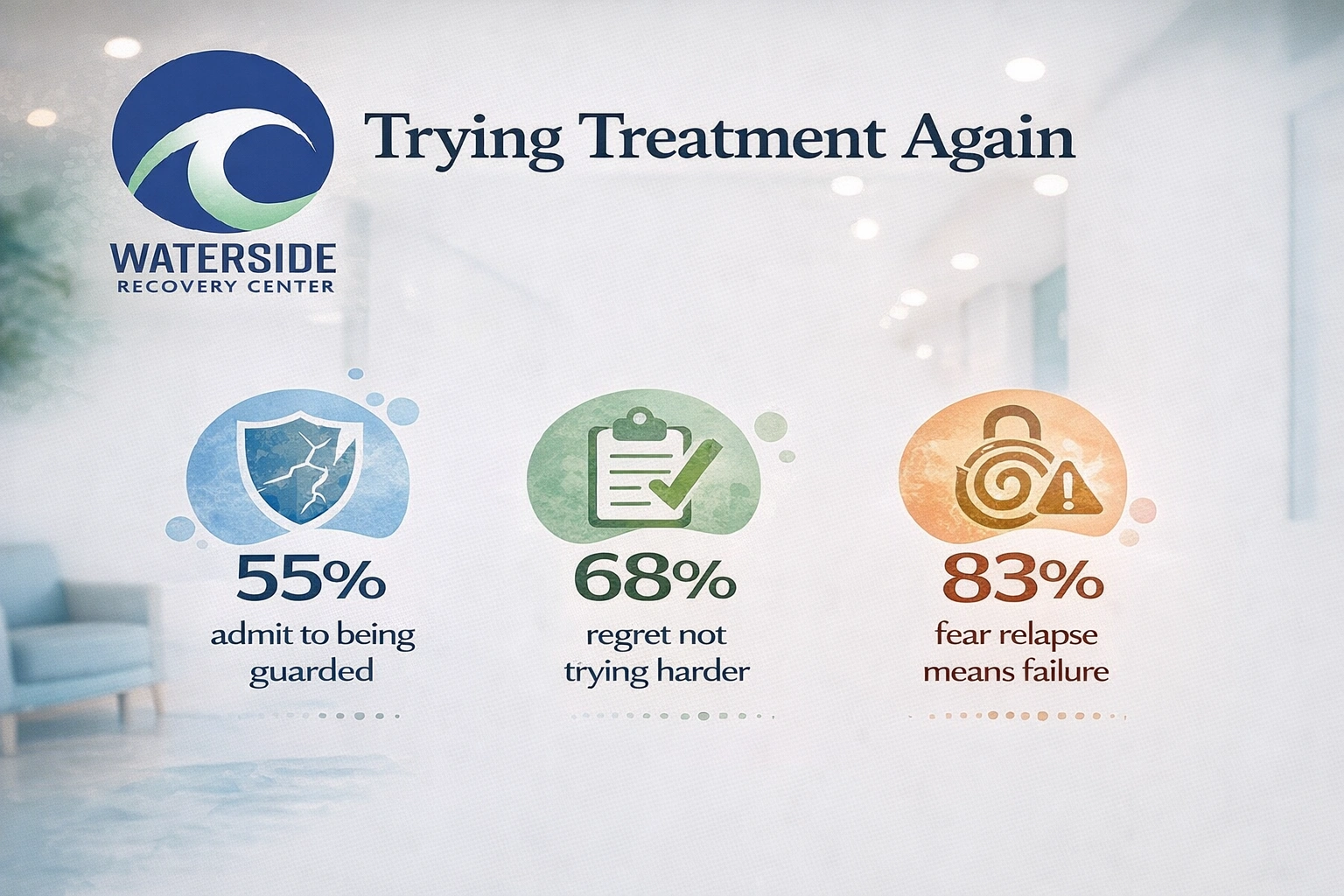
You’re Not Hopeless. You’re Guarded.
If you’re reading this and thinking, “Yeah, but…”—I get it.
I had a thousand “yeah, buts.”
Yeah, but I still have a job.
Yeah, but I don’t drink every day.
Yeah, but I’ve seen worse.
Yeah, but treatment didn’t work for me.
Maybe it didn’t work the way you hoped.
But maybe you weren’t done yet.
Maybe you weren’t ready to be seen.
Maybe you weren’t ready to stop negotiating.
That doesn’t make you hopeless. It makes you human.
If you’re willing to try again—with less armor this time—call 866-671-8620 to learn more about our alcohol addiction treatment in Plymouth Massachusetts. No speeches required. Just honesty.