
The idea of treatment can feel overwhelming—especially if you’re considering it for the first time. You already know things aren’t working. Maybe you’ve tried to stop on your own. Maybe you’ve been through withdrawal before… and then relapsed. And now, you’re wondering if treatment will actually help—or just get you through the first few miserable days.
At Waterside Recovery, we understand those fears. Opiate addiction treatment isn’t about “fixing” you. It’s about helping you feel like yourself again—maybe for the first time in a long time.
Explore our opiate addiction treatment services to see how we walk with you—beyond withdrawal, into healing.
Withdrawal Is Just One Layer—Not the Whole Story
Everyone talks about withdrawal—the chills, the restlessness, the pain. And yes, the first days are hard. That’s why medically supervised detox is such a crucial first step. We want your body to stabilize. We want you to feel safe.
But detox is not treatment. It’s the preparation for it.
Because once your body starts to clear out the drugs, your emotions start to show up. Sometimes in waves. Sometimes in silence. Sometimes in questions like:
- “Why did I start using in the first place?”
- “How do I live without numbing out?”
- “What if I’m still miserable sober?”
These aren’t problems—they’re signs that healing is starting.
Addiction Isn’t Just Physical—And Neither Is Recovery
It’s easy to think of opiate addiction as a physical dependency. But for many people, opiates were never just about pain relief. They were about escape. Comfort. Control. Or simply a way to quiet a mind that never turned off.
When the drugs go away, all the things they helped silence come back:
- Unresolved trauma
- Anxiety and racing thoughts
- Deep sadness or grief
- Shame you’ve carried for years
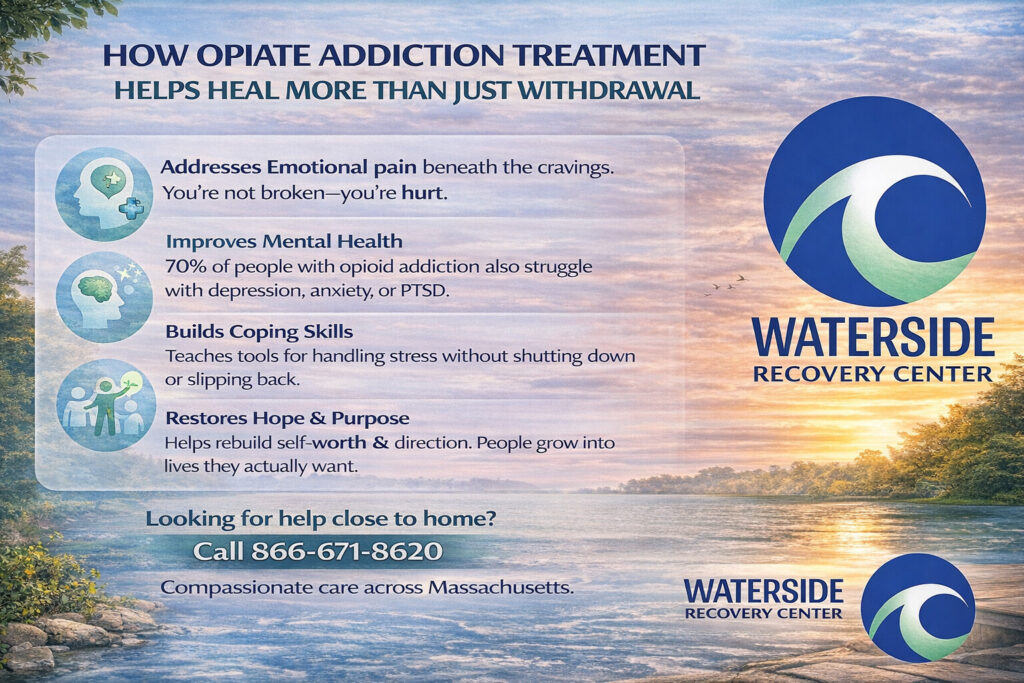
Opiate addiction treatment addresses this emotional pain, not just the cravings. You’re not weak for struggling. You’re human. And you don’t have to untangle it alone.
What Real Healing Looks Like in Treatment
Healing isn’t about becoming someone new—it’s about returning to who you’ve always been underneath the hurt. At Waterside Recovery, we build care plans around the whole person: your body, your mind, your relationships, and your hope.
Here’s what that might look like:
✅ Individual Therapy
A safe space to unpack the roots of your addiction with a licensed counselor. No pressure. No shame. Just clarity, care, and tools for self-understanding.
✅ Group Therapy
Connection with others who get it. Group sessions help reduce isolation and rebuild trust—with yourself and others.
✅ Holistic Care
From mindfulness to movement, we integrate practices that support nervous system regulation, emotional grounding, and physical recovery.
✅ Relapse Prevention Skills
Because recovery doesn’t stop when treatment ends. We’ll help you build a plan that supports real-life challenges—stress, temptation, and hard days included.
You’re Not Broken—You’re Hurt
One of the most powerful shifts in recovery is realizing: you’re not bad, you’re wounded. That wound might come from childhood, from grief, from trauma, from a life that felt too hard to handle without a buffer.
Opiate use becomes a survival tool—until it becomes the thing that’s hurting you.
We don’t believe in punishing people for how they’ve coped. We believe in helping them find new ways to live. With dignity. With choice. With support.
You Don’t Have to Know Who You’ll Be Yet
A lot of people hesitate to start treatment because they’re scared of what comes after. What if sobriety is boring? What if you lose friends? What if you don’t recognize yourself?
All valid fears.
But here’s something most people discover:
You don’t become someone else in recovery. You become more you. The parts that got buried under guilt, pain, or drugs—that’s what starts to come back.
We’ve seen it happen. Over and over. The light in someone’s eyes. The laugh that surprises them. The first time they say, “I actually felt proud of myself today.”
That’s what we’re here for.
Opiate Addiction Treatment Is Local, Too
If you’re worried about leaving your life behind, know this: you don’t have to travel across the country to get help.
Waterside Recovery serves communities across Massachusetts, including care in areas we serve like Worcester and Framingham. Whether you’re looking for outpatient support or need a more structured program, we’ll help you find a path that fits your life—not someone else’s idea of what it should look like.
Frequently Asked Questions About Opiate Addiction Treatment
How long does treatment usually last?
It depends on your needs. Some people benefit from short-term outpatient care, while others do best with more extended programs. We’ll help you figure out what makes sense for your life and goals.
Will I have to stop working or going to school?
Not necessarily. Many of our programs are designed to be flexible. If you need to keep working or caring for family, we’ll help build a schedule that supports both treatment and your responsibilities.
Do I have to hit “rock bottom” to qualify for treatment?
Absolutely not. If you’re struggling, that’s enough. You don’t have to prove anything. You’re allowed to want more for yourself—right now.
Is medication a requirement?
No. We offer medication-assisted treatment (MAT) as an option, not a requirement. We’ll talk openly with you about what feels right for your body, your recovery, and your goals.
What if I’ve tried treatment before and relapsed?
You’re still welcome. Relapse doesn’t erase the progress you made—it just means more healing is needed. We’ll meet you with compassion and support, not judgment.
You Deserve a Way Out That Doesn’t Hurt
We know the idea of treatment can feel like jumping into the unknown. But the truth is—you’ve already done hard things. You’ve survived days that no one sees. You’ve carried pain that wasn’t yours to carry. You’ve hoped and doubted and tried and failed.
And you’re still here. Reading this. Wondering if it could be different.
Call (866)671-8620 or visit to learn more about our opiate addiction treatment services in Plymouth, MA.