
Some people enter treatment because they feel broken.
Others arrive not because they’ve collapsed, but because they’re tired of holding it all together.
Then there’s another kind of person—someone who doesn’t quite fit the usual mold. You might be high-functioning. Creative. Deeply feeling. Smart enough to see your own patterns, but still not sure if sobriety is the right next move. Maybe you’ve built an entire identity around being intense, passionate, or socially magnetic—and alcohol has felt like part of that formula.
If this sounds familiar, you’re not alone. And you’re not wrong to have doubts.
But if you’re here, reading this, we’ll offer one possibility gently: maybe alcohol isn’t enhancing who you are—it’s just editing out the parts you’re most afraid to meet.
At Waterside Recovery, we meet many people who think differently. This is what we’ve learned, and what we want you to know.
You Don’t Have to Be “Falling Apart” to Want Something Better
There’s a myth that alcohol addiction treatment is only for people who’ve hit bottom. People who’ve lost their jobs, ruined relationships, or landed in the hospital.
But you might be holding it together on the outside. Maybe no one has confronted you. Maybe you’re still getting things done—working, parenting, creating, functioning. And yet… something feels off.
You’re tired in a way sleep doesn’t fix. You’re blurry in moments that used to feel sharp. You’re starting to wonder whether your connection to alcohol is costing you more than it’s giving you.
You don’t have to crash your life to be allowed to change it. The moment you feel like your relationship with alcohol is compromising your values, your clarity, your peace—that’s a valid moment to explore help.
You’ve Used Alcohol for a Reason. That Doesn’t Make You Weak.
For people who experience the world deeply, alcohol can feel like a way to tune the dial. It might help you quiet racing thoughts, manage social anxiety, or unlock vulnerability in ways that feel hard to access otherwise.
Many creative, emotionally attuned people describe alcohol not as a party drug—but as a bridge to something essential. Connection. Courage. Calm.
So the fear becomes: If I stop drinking, will I lose that part of me?
We get it. That’s not an irrational fear—it’s a wise question. And it deserves more than a quick “No, sobriety makes everything better!”
Here’s what we’ve seen: Sobriety isn’t a return to blandness. It’s a return to presence. That bridge you’ve been walking—alcohol—isn’t the only way across. In fact, it may be hiding the view.
Alcohol Addiction Treatment Isn’t One-Size-Fits-All
If your biggest fear is being misunderstood or flattened by a cookie-cutter program, take a breath.
The best alcohol addiction treatment meets you with curiosity, not prescription. It helps you explore the function of alcohol in your life without judgment. It honors your identity, your autonomy, and your complexity.
At Waterside Recovery Center, we work with people who’ve spent years building a self they’re proud of—and who worry recovery might strip that away. But here’s what happens more often: people find themselves again, under the layers. They learn how to show up as their full selves—without needing alcohol as a translator.
Recovery, for someone who thinks differently, isn’t about compliance. It’s about discovery.
You Can Bring Your Questions, Your Resistance, Your Whole Self
You don’t need to show up to treatment with total conviction. You don’t have to promise forever. You don’t even need to be sure you belong.
You can ask:
- “What if I’m not really addicted?”
- “What if I like who I am when I drink?”
- “What if sobriety makes me less creative?”
We’re not afraid of these questions. We invite them. Because they often point to the heart of what matters most to you—and that’s exactly where real change begins.
If you’re still sorting through the noise, that’s okay. We’re not here to push. We’re here to help you get quiet enough to hear your own answers.
Sobriety Isn’t the End of Your Spark
This fear shows up in so many different forms:
- “What if I get boring?”
- “What if I lose my edge?”
- “What if I become someone I don’t recognize?”
And we’ll be honest—early sobriety can feel a little disorienting. If alcohol has been your shortcut to emotion, creativity, or ease, those muscles may feel rusty at first.
But they’re still yours.
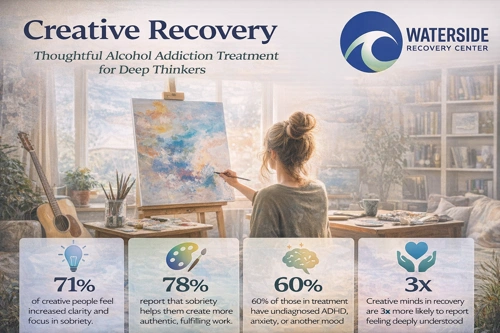
We’ve watched artists create with more depth than ever before—not because they’re buzzed, but because they’re finally present. We’ve seen introverts learn how to connect in ways that feel real instead of performative. We’ve watched people realize that their “edge” was never the alcohol—it was the courage underneath.
You don’t have to trade your magic for mental health. You just have to learn how to hold both at once.
There’s Real, Nonjudgmental Support Near You
You might be the kind of person who avoids help because it often comes with condescension. You’ve probably sat in rooms where you had to explain your thoughts three times to be understood. Or felt like the only person seeing things from your angle.
We work differently. Whether you’re looking for care in areas we serve, like Bristol County, Metrowest or Plymouth County, or just want a team who can speak human to human, you’ll find people here who respect your process.
We won’t ask you to become someone else. We’ll help you become more of who you already are.
You Get to Decide What Recovery Looks Like
Treatment isn’t about erasing who you’ve been. It’s about meeting who you could become, once alcohol isn’t in the way.
That version of you?
They’re not smaller. They’re not tamer. They’re clearer. More grounded. More whole.
You don’t have to rush toward it. But if you’re ready to be curious—really curious—about life without alcohol running the show, we’re ready too.
FAQ: Alcohol Addiction Treatment for Creative Thinkers
What if alcohol helps me create? Will sobriety take that away?
It’s a common fear. But many people find their creativity actually sharpens in sobriety. When your mind is clear and your emotions are real—not alcohol-induced—your work often gains depth and honesty.
I don’t feel out of control with alcohol. Can treatment still help me?
Yes. Treatment isn’t just for those in crisis. If alcohol is interfering with your peace, clarity, energy, or values, that’s reason enough to explore help.
Is the program customized to people with creative or neurodivergent minds?
While we don’t label people, we absolutely work with clients who think differently—artists, entrepreneurs, deep feelers, highly sensitive people. Our clinicians are trained to meet you where you are, not fit you into a box.
Will I lose my sense of self if I get sober?
No. But you might rediscover a version of yourself that hasn’t had space to breathe in a while. Treatment helps you reconnect with your identity—not replace it.
What if I don’t want to commit to long-term sobriety right now?
That’s okay. You don’t have to decide everything today. Treatment creates a space where you can explore what you want from life—and from alcohol—without pressure.
Ready to Talk?
Call (866)671-8620 to learn more about our alcohol addiction treatment in Plymouth, Massachusetts. Your creativity, identity, and questions are welcome here. Let’s start from there.