
You tried treatment. Maybe it was therapy once a week. Maybe it was a program someone else picked for you. Maybe it helped—briefly. Or maybe it didn’t do a damn thing. Either way, you’re here because something still hurts. The panic. The shutdown. The “normal” that everyone else seems to live in, but that still feels miles away for you.
You’re not broken. You’re not impossible to help. But you may need a kind of support that goes deeper than what you’ve been offered before.
This is what nobody tells you about real recovery from PTSD—and how a Day Treatment Program can help when everything else hasn’t.
“I Already Tried Treatment.” Let’s Start There.
We hear it all the time:
“I did therapy.”
“I did outpatient.”
“I’ve been on meds for years.”
“It didn’t work.”
And you know what? You’re allowed to say that.
It didn’t work—for you. At least not in the way it needed to.
But that doesn’t mean you’re too far gone. It probably means the support you got was too small for the size of your pain.
Most mental health systems are built around symptom management—calming the anxiety, helping you sleep, keeping you “functioning.” But functioning is not healing. And surviving is not the same thing as recovering.
PTSD Doesn’t Obey a Schedule
If you’ve lived through trauma—combat, abuse, a medical crisis, sudden loss, chronic chaos—then you know your nervous system didn’t get the memo that it’s safe now.
You’re always on. Or always off. Hyper-aware or totally numb. Shaky or frozen.
And because of that, healing from PTSD doesn’t move in straight lines.
You don’t just go from panic to peace in six sessions. You don’t journal your way out of body memories. And you sure as hell don’t “just get over it.”
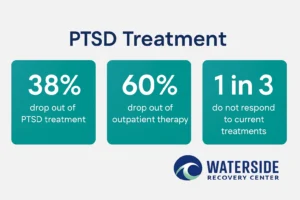
This is the brutal truth: most outpatient therapy doesn’t offer enough time, intensity, or structure to actually rewire a trauma-conditioned brain.
That’s where a Day Treatment Program comes in.
What a Day Treatment Program Really Offers (That You Probably Haven’t Had Yet)
A Day Treatment Program—also called Partial Hospitalization or PHP—isn’t just “more therapy.” It’s an immersive, multidisciplinary experience. You’re not just talking through your trauma. You’re learning how to live differently, moment by moment, day by day.
At Waterside Recovery in Plymouth County, MA, here’s what that actually looks like:
- 5 to 6 hours of care per day, 5 days a week. More than a check-in. Less than inpatient. Just enough to rebuild emotional stamina.
- Multiple therapeutic modalities. Group therapy, individual sessions, skill-building, trauma processing—different tools for different parts of the work.
- Real structure. A predictable environment when your nervous system needs calm and consistency more than chaos.
- Experienced staff who understand PTSD. Not just the symptoms, but the stuckness, the silence, the self-doubt.
- A treatment plan that adjusts to you. Not the other way around.
This is the difference between coping and healing. You don’t need to fake fine here. You don’t need to hold it together. You just need to show up.
What If You’ve Shut Down Emotionally?
Here’s something we don’t say enough:
Numbness is a trauma response.
If you walked out of a past program thinking, “Everyone else was feeling things—I was just blank,”—that doesn’t make you unfixable. It makes you someone who’s been in survival mode for too long.
We expect that here. We’re trained for it. And we don’t treat silence as resistance.
Our Day Treatment Program creates space for that shut-down version of you to slowly re-enter the world. Safely. Quietly. With clinicians who don’t push, but do persist.
Why This Isn’t Just “More of the Same”
What makes this different from what you’ve tried before?
- You’re not a number here. Our caseloads are smaller for a reason.
- We specialize in trauma—not just “depression with a side of PTSD.”
- Our facility isn’t clinical and cold. It feels human. Safe. Grounded.
- We know what it’s like to feel let down by the system—and we don’t make promises we can’t keep.
And if you’re in or near Plymouth County, MA, it means you’re not far from one of the only programs in the region built around this level of trauma-informed care.
We also support clients from Bristol County, where mental health resources can be limited. You don’t have to drive to Boston to get real support.
One Client Said It Best:
*“I didn’t believe anything could help anymore. I went because I had nothing else left. This was the first time someone actually saw me—*the me behind the mask. That’s when things started to change.”
— Day Treatment Client, 2023
You’re Allowed to Start Again—Even If You’re Skeptical
You don’t need to believe in this to try it. You don’t need to show up enthusiastic or hopeful or even willing to talk much.
You just have to be willing to give it one more try.
Because if you’re still suffering, that means you’re still here. And if you’re still here, there’s still a path forward. It just might not look like what you’ve seen before.
Frequently Asked Questions About Day Treatment Programs and PTSD
What exactly is a Day Treatment Program?
A Day Treatment Program (also known as PHP or Partial Hospitalization Program) offers intensive mental health care without overnight stays. You attend structured therapy and support services 5–6 hours a day, five days a week.
Is this program only for people with PTSD?
No. While our team has deep experience with PTSD and trauma-related conditions, we also support individuals dealing with anxiety, depression, panic, dissociation, and other mental health challenges.
How is this different from outpatient therapy?
Outpatient therapy typically involves one session a week. A Day Treatment Program is multiple hours per day, with a multidisciplinary team and coordinated treatment plan. It’s designed for people who need more than once-a-week support, but not full hospitalization.
Will I have to talk about my trauma right away?
No. We move at your pace. Some clients spend their first week just trying to feel safe in the room. That’s okay. You’ll never be forced to share before you’re ready.
Can I work or go to school while in the program?
Most people take a temporary break while in PHP due to the time commitment. However, we can support transitions back into work or school during or after treatment.
Is this covered by insurance?
Yes, most major insurance plans cover Day Treatment Programs. Our team can verify your benefits and explain your options before you start.
Do I need a diagnosis to start?
Not necessarily. If you’re struggling, we’ll help assess what’s going on and whether a Day Treatment Program is appropriate. We don’t expect you to have the right words yet. That’s our job.
If You’re Still Reading, Something in You Still Believes Healing Is Possible
And that something deserves to be taken seriously.
So let’s stop pretending that a one-hour weekly therapy session is enough for deep trauma.
Let’s stop telling people to “just try harder” when their nervous systems are still screaming “danger.”
Let’s do this the right way.
Call (866)671-8620 or visit Waterside’s Day Treatment Program page to see how our trauma-informed team in Plymouth County, MA can help.
Because you don’t need more platitudes. You need care that actually fits the weight of what you’ve lived through.